
For decades, US military aid has been treated as a strategic constant in Israel’s security planning. But constants change. As Israel’s economy, defense industry, and regional posture mature, the political and diplomatic cost of that aid may now outweigh its practical value.
The question is no longer emotional. It’s practical.
The Aid Deal That Once Made Sense
Back in 2016, the mood in Jerusalem was upbeat.
The Obama administration signed a 10-year, $38 billion security assistance agreement with Israel, the largest such pledge Washington had ever made. It followed a $30 billion deal signed in 2007. At the time, the logic felt solid. Israel faced volatile borders, limited procurement options, and a defense budget that needed help covering big-ticket items.
Under the 2016 Memorandum of Understanding, Israel received $33 billion in Foreign Military Financing and $5 billion dedicated to missile defense. The money was spread evenly, about $3.3 billion a year in FMF plus $500 million annually for systems like Iron Dome and David’s Sling.
That framework runs out in fiscal year 2028.
This matters because aid isn’t just money. It comes with rules, expectations, and politics that didn’t weigh as heavily a generation ago.
Political Strings Are No Longer Subtle
US military aid has always come with conditions, but those conditions are louder now.
On December 10, the US House passed the 2026 National Defense Authorization Act by a wide margin, setting up a defense budget north of $900 billion. Pro-Israel groups, including AIPAC, highlighted what they called “critical pro-Israel provisions,” including continued missile defense funding.
Yet the same debate exposed a deeper shift.
Aid to Israel is increasingly pulled into America’s internal political fights. Votes are tracked. Statements are parsed. Military support becomes leverage in disputes that have little to do with Israel’s actual security needs.
That pressure shows up in several ways, basically.
-
Delays or holds on weapons transfers
-
Public congressional debates over Israeli operations
-
Calls to attach human rights conditions to funding
For Israeli decision-makers, this creates friction. Strategic choices begin to feel reactive rather than sovereign. Even routine defense planning can trigger diplomatic fallout in Washington.
That’s a heavy price for a country that prides itself on independent defense judgment.
Israel’s Defense Industry Has Outgrown the Crutch
There’s another part of the story that often gets glossed over.
Israel no longer needs aid the way it once did.
Its defense sector is now a global exporter. Israeli companies sell air defense systems, drones, radar, cyber tools, and battlefield software across Europe, Asia, and Latin America. In 2023 alone, Israeli defense exports reportedly crossed $12 billion, according to data released by Israel’s Defense Ministry.
That’s not symbolic. It’s structural.
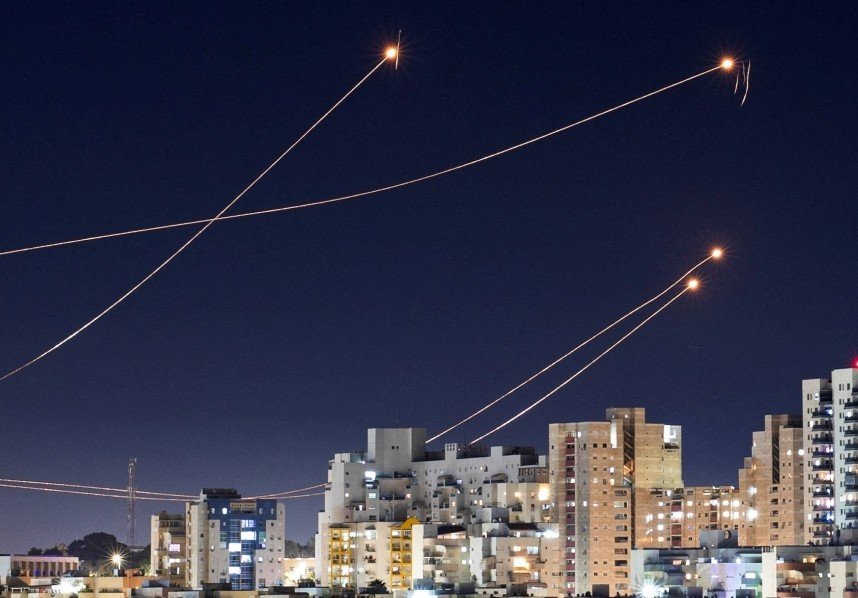
Israel designs its own interceptors. It upgrades its own aircraft. It builds layered missile defense that many NATO states now want to copy. Iron Dome, once partially dependent on US funding, has become a symbol of Israeli engineering rather than American generosity.
One short sentence says a lot.
Aid is no longer existential.
There’s also a quiet constraint buried in FMF rules.
Most US military aid must be spent on American-made equipment. That limits Israel’s freedom to fully back its own defense firms or choose suppliers purely on operational grounds.
As Israel’s economy grows, that tradeoff looks less attractive.
The Strategic Case for a Clean Break
Walking away from US military aid wouldn’t mean walking away from the US.
That distinction matters.
Security cooperation, intelligence sharing, joint exercises, and diplomatic alignment can continue without a formal aid package. In fact, removing the aid relationship might simplify things.
Here’s what changes if Israel funds its own defense fully:
| Area | With US Aid | Without US Aid |
|---|---|---|
| Procurement | Restricted to US systems | Fully flexible |
| Political Leverage | High | Reduced |
| Budget Predictability | Fixed aid amounts | Domestic control |
| Diplomatic Pressure | Frequent | Lower |
There’s also a messaging shift.
Israel would no longer be portrayed, fairly or not, as dependent on American taxpayers. That narrative fuels resentment in parts of US politics and weakens Israel’s standing in debates where optics matter.
A clean break wouldn’t be painless.
Defense budgets would need adjusting. Some procurement costs would rise. Certain joint programs might need renegotiation. But these are manageable issues for a $500-plus billion economy with deep capital markets.
One sentence worth sitting with.
Independence costs money, but dependence costs influence.
A Decision Israel Can No Longer Postpone
The current aid agreement expires in 2028.
That date isn’t far away in defense planning terms. Negotiations, if they happen, would begin well before then. The default assumption in Washington is likely that Israel will ask for another package, perhaps even larger.
Israel should pause before doing that.
Accepting another decade of aid locks Israel into another decade of political bargaining it increasingly doesn’t need. It keeps defense debates entangled with US election cycles, congressional moods, and lobbying battles.
There’s also a regional signal at stake.
Israel positioning itself as fully self-reliant sends a different message to allies and adversaries alike. It reinforces deterrence and projects confidence rather than dependency.
