
Saudi Arabia and Russia have struck a milestone agreement allowing citizens of both countries to visit each other for up to 90 days without a visa, marking one of the most sweeping mobility changes either side has made in years.
The deal signals a deeper political and economic embrace between Riyadh and Moscow.
A Signing Ceremony That Signals New Intent
The agreement was announced during the Saudi-Russian Investment and Business Forum in Riyadh on December 1, 2025.
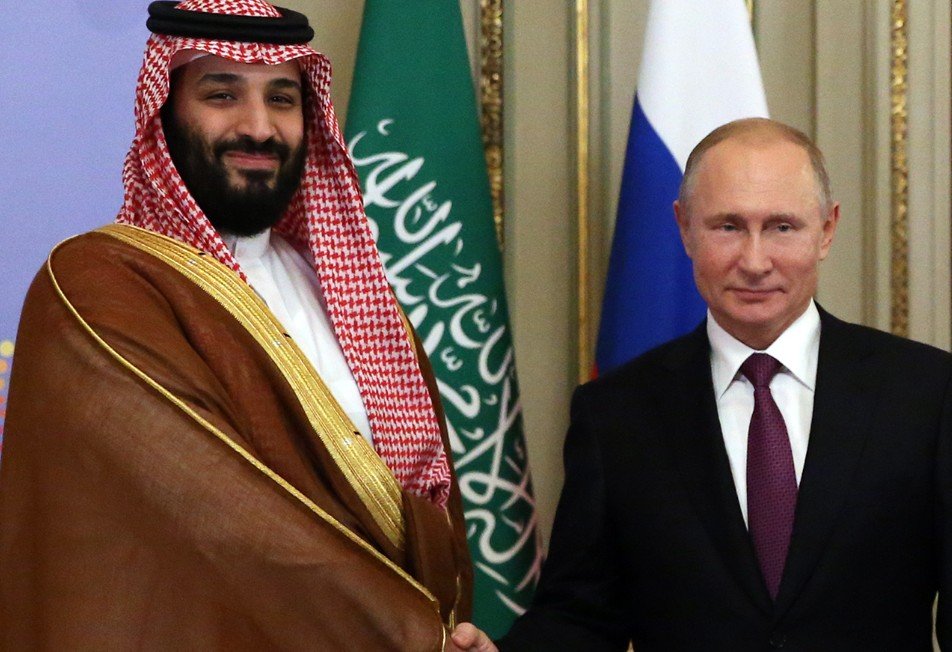
Saudi Foreign Minister Prince Faisal bin Farhan and Russian Deputy Prime Minister Alexander Novak signed the pact in a ceremony watched closely by diplomats, investors, and energy officials.
Prince Abdulaziz bin Salman, who heads the Saudi side of the Joint Saudi-Russian Committee, opened the session — a sign of how seriously both sides treat the partnership.
For many in the room, the signing looked like a moment that had been building for years.
Saudi Arabia has been steadily easing visa rules to boost travel and diversify its economy.
Russia, facing shifting global alliances, has been deepening ties with Gulf nations.
One short line here.
This agreement places the two energy giants on a new track of mobility and cooperation.
What the New Visa-Free Regime Actually Allows
Officials outlined the details with unusual clarity, stressing that the agreement applies to all categories of passports.
It includes diplomatic, special, and regular passport holders — a rare scope for Saudi policy.
Russia is now the first country to receive such broad exemptions covering ordinary travellers.
The terms give citizens of both states the freedom to stay up to 90 days in a calendar year.
That time can be continuous or broken into several trips.
The permitted reasons are straightforward: tourism, business, and visiting relatives or friends.
A brief one-sentence paragraph here.
But the exemptions do have limits.
Travel for work, study, residency, or participation in the Hajj pilgrimage is still restricted and will require separate visas from the relevant authorities.
In the middle of this section, the agreement’s essentials can be distilled into a quick bullet point that officials kept repeating during the forum:
• Visa-free entry covers tourism, business, and family visits for up to 90 days, but does not apply to work, study, residency, or Hajj.
Saudi diplomats emphasized the deal’s structure makes it easier for ordinary people — not just government officials — to travel.
Russian officials said they expect immediate demand from tourists and business delegations, particularly those involved in energy, construction, and cultural sectors.
Why the Deal Matters for Both Economies
The agreement was framed as more than a travel perk.
It’s an economic tool.
Officials from both sides spoke openly about the difficulties business travelers often face with documentation.
Removing that friction means trade visits, exhibitions, negotiations, and investment scouting can now happen with far fewer delays.
One short sentence.
That’s an attractive proposition for companies in energy, defense, finance, and transport.
Saudi Arabia’s Vision 2030 strategy depends on new investment streams and diversified partnerships.
Russia, meanwhile, has been expanding its network in Asia and the Middle East.
The forum where the deal was signed featured panels on logistics, agriculture, petrochemicals, and digital infrastructure.
Speakers stressed that easing travel helps accelerate deals.
A small table summarizing sector impacts circulated widely after the event:
| Sector | Expected Impact | Notes |
|---|---|---|
| Tourism | Higher two-way travel | First visa-free deal covering regular passports |
| Energy | Faster coordination | Supports OPEC+ dialogue and joint ventures |
| Business & Trade | Easier trip planning | Frees up multi-entry visits for investors |
| Culture/Education | More exchanges | Simplifies arts and heritage collaborations |
Saudi analysts said increased Russian tourism could complement recent surges from China, India, and Europe.
Russian travel agencies have already begun advertising new packages for Riyadh, Jeddah, and Al-Ula.
A one-sentence paragraph here.
Saudi travellers may soon be spotted more frequently in Moscow, St. Petersburg, and Kazan.
A Diplomatic Signal With Broader Implications
The timing of the agreement — during a major investment forum — was not accidental.
It telegraphed a message: Saudi-Russian relations are moving into a more predictable, structured phase.
Officials from both nations described the visa waiver as a “milestone,” though the language varied.
Analysts noted the accord reinforces years of coordination in oil markets and increasing cultural engagement.
The committee headed by Prince Abdulaziz bin Salman and Alexander Novak has been central to managing cooperation between the two nations during challenging global cycles.
Its influence grew especially during energy market shocks.
A standalone sentence here.
Visa-free travel adds a people-to-people dimension to what had long been a government-heavy relationship.
The agreement also signals Saudi Arabia’s growing confidence in opening its borders under reformed visa rules.
Over the past few years, Riyadh introduced electronic visas, transit visas, and tourist visas covering dozens of nationalities.
By including Russia in a mutual exemption deal — one that covers regular passport holders — Saudi Arabia is stepping deeper into global mobility arrangements that traditionally centered in Europe and Asia.
What Comes Next for Citizens and Institutions
Officials avoided making predictions about travel volumes, but privately acknowledged demand could surge once airlines adjust flight capacity.
Russian airlines are expected to evaluate new routes to Jeddah and Dammam.
Saudi carriers, particularly Saudia and Flynas, may explore broader connections into Russia.
For cultural organizations, the agreement could unlock museum tours, film delegations, and expanded language-exchange programs.
A single sentence to keep the flow.
Universities in both countries have been preparing partnerships that now seem easier to execute.
Business councils on both sides are already planning more frequent meetings.
Tourism ministries said they will develop new promotional material tailored to each other’s markets.
Energy companies hinted that smoother travel could simplify joint ventures.
Though the exemption excludes Hajj, officials said Russians performing Umrah — which follows different procedures — may still find Saudi Arabia easier to visit under other visa categories.
