Syria has accused Israel of launching fresh air strikes on several cities, including Homs, Latakia, and Palmyra, late on Monday. The attacks mark the latest escalation in tensions between the two nations, with Syria calling them a clear violation of its sovereignty amid ongoing regional instability.
Details of the Latest Strikes
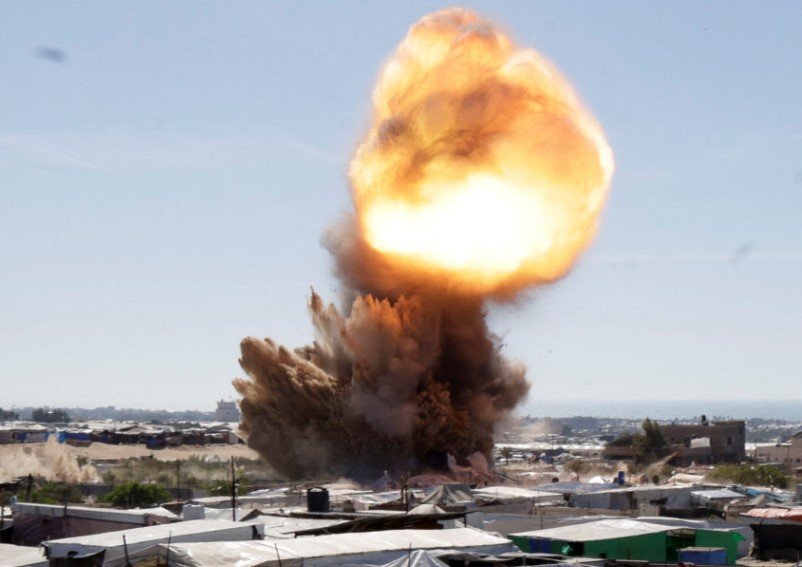
Reports indicate that Israeli warplanes targeted military sites in central and western Syria. The strikes hit areas near Homs, the coastal city of Latakia, and the historic site of Palmyra.
Local sources described explosions and fires at these locations. In Homs, a military unit south of the city took a direct hit. Latakia saw strikes on what appeared to be storage facilities, while Palmyra’s outskirts faced similar attacks.
No official casualty figures have emerged yet, but witnesses reported hearing ambulances and seeing smoke rising from the sites. These actions come just hours after similar reports surfaced, pointing to a coordinated operation.
The strikes targeted sites that some observers link to former regime assets or foreign influences in Syria.
Syria’s Strong Condemnation
Syria’s Foreign Ministry quickly denounced the attacks as a blatant infringement on its territory and a threat to regional peace. Officials urged the United Nations to take action against what they called repeated aggressions.
In a statement, the ministry highlighted how these strikes undermine Syria’s efforts to stabilize after years of conflict. They accused Israel of exploiting the country’s internal changes to advance its own security interests.
This response echoes past criticisms, where Syria has portrayed such incidents as part of a broader pattern of interference. The government in Damascus remains vocal about protecting its borders.
- Key points from Syria’s statement: Violation of sovereignty, call for UN intervention, threat to stability.
- Officials noted the timing, linking it to recent shifts in regional alliances.
Israel’s Position and Actions
Israel has not commented directly on these specific strikes, but its leaders have repeatedly stated they act to prevent threats. Defense Minister Israel Katz recently said forces operate around the clock to ensure national security.
In the past, Israel has justified strikes in Syria as measures to stop weapons from reaching extremist groups. This approach intensified after the fall of Bashar al-Assad in late 2024, when a new Islamist-led government took power.
Israeli officials claim many targets involve arms depots or sites used by groups like Hezbollah. The military often conducts these operations without prior warnings.
Recent data shows a spike in such activities. For instance, monitoring groups report nearly 100 attacks this year alone.
| Year | Number of Israeli Strikes in Syria | Key Targets |
|---|---|---|
| 2023 | 45 | Damascus suburbs, Aleppo |
| 2024 | 72 | Homs, coastal areas |
| 2025 | 97 (so far) | Homs, Latakia, Palmyra, Damascus |
This table illustrates the rising frequency, based on independent war monitors.
Experts suggest Israel’s strategy focuses on neutralizing potential risks along its borders. The Golan Heights, annexed by Israel, remains a flashpoint in these operations.
Historical Context of Tensions
Israel and Syria have a long history of conflict, dating back to the 1967 war when Israel captured the Golan Heights. Skirmishes and air strikes have continued, especially during Syria’s civil war.
Since Assad’s ouster, Israel has ramped up interventions. In July 2025, strikes hit Damascus and nearby areas following clashes in southern Syria. Another wave in August targeted sites near the capital, killing several soldiers.
These actions tie into broader Middle East dynamics, including Iran’s influence in Syria and ongoing Gaza conflicts. Israel views Syrian territory as a conduit for arms to hostile groups.
The Syrian Observatory for Human Rights tracks these incidents, noting a mix of air and ground operations. This year’s tally includes 86 air strikes and 11 land raids.
International Reactions and Implications
Global responses have been mixed. The United States often supports Israel’s right to self-defense, while Russia, a key player in Syria, has criticized the strikes as escalatory.
The UN has called for restraint from all sides, emphasizing the need for dialogue. Neighboring countries like Turkey watch closely, given their own interests in northern Syria.
These events could strain fragile ceasefires in the region. Analysts worry about spillover effects, potentially drawing in other actors like Iran or Hezbollah.
On the ground, civilians in affected areas face uncertainty. Reports from Latakia mention disrupted services and heightened fear among residents.
Potential Impact on Regional Stability
The strikes highlight Syria’s vulnerable position post-Assad. With a new government in place, rebuilding efforts could suffer from external pressures.
Economic fallout includes damage to infrastructure, like airports and military bases. Palmyra, a UNESCO site, raises concerns about cultural heritage amid military actions.
Looking ahead, experts predict more such incidents unless diplomatic channels open. Peace talks involving Israel, Syria, and international mediators remain stalled.
Share your thoughts on this developing story in the comments below, and spread the word by sharing this article with others interested in Middle East updates.