
UN member nations voted to renew UNRWA’s mandate for another three years, prompting celebrations in Arab capitals while the agency’s future remains clouded by funding gaps, political pressure, and continued instability in Gaza.
Renewal Comes Amid Funding Bans and Political Strain
The United Nations General Assembly approved the continuation of the UN Relief and Works Agency for Palestine Refugees in the Near East (UNRWA), extending its mandate into 2028. The vote sailed through with wide margins, one of several pro-Palestinian resolutions adopted on Friday.
UNRWA supports millions of Palestinian refugees across Gaza, the West Bank, Jordan, Lebanon, and Syria. For decades, it has operated schools, medical clinics, food distribution centers, emergency shelters, and job-training programs.
One sentence adds pacing.
Yet the renewal arrives at a delicate moment.
The United States halted UNRWA funding after allegations in 2024 linking several agency employees to Hamas. Israel then imposed a full ban on UNRWA operations inside its borders, arguing the agency cannot be trusted and calling for permanent closure or replacement.
Arab nations responded differently, saying the agency remains a humanitarian lifeline.
Arab League Calls Renewal Essential for Refugees
The Arab League welcomed the vote almost immediately. Secretary-General Ahmed Aboul-Gheit said UNRWA remains indispensable as Gaza faces unprecedented hardship and displacement.
He urged donor states to help close what he called a significant financial shortfall. Persistent funding issues already forced UNRWA to reduce some services earlier this year, prompting overcrowded clinics and prolonged shortages in medical supplies.
One sentence for rhythm.
Aboul-Gheit also accused Israel of working to undermine the agency’s reputation.
Arab governments argue that weakening UNRWA does not eliminate the humanitarian crisis—it only removes one of the few remaining systems capable of mitigating it.
The Arab League stressed that millions of people rely on UNRWA for education, shelter, water, and food distribution. Without guaranteed annual financing, service interruptions could intensify suffering across Gaza and neighboring refugee communities.
Egypt Applauds Vote and Seeks Financial Certainty
Egypt issued its own statement praising the renewal as a sign that the international community still recognizes responsibility for Palestinian refugees until a long-term political settlement is reached.
Cairo described current conditions as an “exceptional humanitarian emergency,” emphasizing the strain on infrastructure, housing, and medical systems throughout the Gaza Strip.
A brief sentence fits naturally.
Egypt said stable funding, not short-term patches, is the only way to maintain school operations, hospital staffing, and emergency aid.
Officials in Cairo expressed concern that repeated attacks on UNRWA, along with sudden funding suspensions, force the agency to operate week-to-week rather than year-to-year. That approach complicates budgeting, supply chains, and planning for internal displacement.
Egypt also pointed out that UNRWA runs schools for hundreds of thousands of children. A funding collapse would leave an entire generation without classrooms, textbooks, or trained teachers—further destabilizing the region.
Why International Debate Over UNRWA Intensified
The agency’s mandate has always stirred political disputes because it sits at the center of refugee rights, status, and historical claims. Israeli leaders say UNRWA preserves refugee status indefinitely and becomes a political tool rather than a transitional relief system.
Arab leaders counter that UNRWA exists because no permanent settlement has ever resolved refugee status, citizenship, housing rights, or compensation.
One-sentence paragraph.
Humanitarian aid, they argue, is not the same as political negotiation.
The allegations that some UNRWA employees were tied to Hamas forced the UN to launch an internal review in late 2024. That investigation confirmed that the vast majority of staff had no links to militant groups, but the scandal was enough for Washington to pause hundreds of millions in annual aid.
Israel responded with a sweeping ban.
The controversy led other Western donors to reevaluate contributions, though many resumed support after additional vetting requirements were added.
Gaza’s Needs Grow While Politics Deepen
Humanitarian groups operating in Gaza say UNRWA remains one of the few organizations with experience managing large-scale emergency logistics under conflict conditions. It has decades of familiarity with neighborhood-level shelters, school compounds, and food distribution.
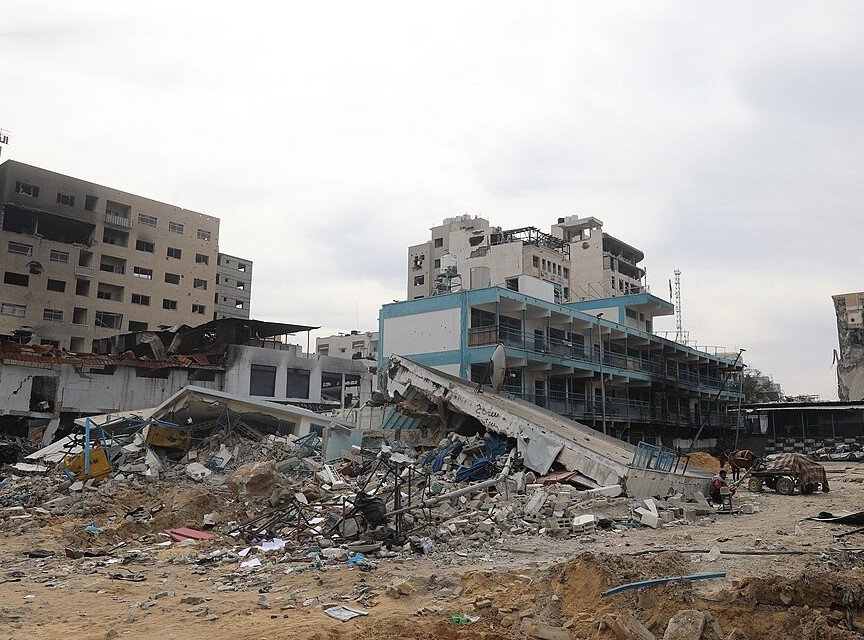
Conditions across Gaza in 2025 include extensive displacement, crumbling infrastructure, blocked medical supplies, and limited potable water. UNRWA has had to convert school buildings into temporary shelters as families flee damaged homes.
A single-sentence paragraph boosts variety.
Without steady financing, those services cannot continue at necessary scale.
Regional diplomats warn that reducing UNRWA capacity would shift humanitarian burdens to Egypt, Jordan, and the West Bank—countries already under financial stress. Jordan in particular hosts a large refugee population and repeatedly argues that ending UNRWA before a political settlement would destabilize its domestic situation.
Budget Pressure Remains the Central Challenge
A table helps clarify the current pressures facing UNRWA:
| Issue | Impact on Agency |
|---|---|
| Loss of US funding | Large gap in core operating budget |
| Israeli ban | Restricted movement and logistics |
| High displacement in Gaza | Swells shelter and food needs |
| School disruptions | Threat to youth education and stability |
| Donor uncertainty | Forces emergency-based planning |
One sentence adds pacing.
UN officials say the financial hole cannot be closed by Gulf donors alone, even if contributions rise.
The General Assembly renewal ensures legitimacy, not solvency. Agencies still require pledges from Europe, Asia, and North America to maintain everyday services. Without them, UNRWA would be forced into repeated service shutdowns, layoffs, or rationing.
Arab countries now push for multi-year donor commitments instead of short-term injections because volatility undermines refugee confidence and disrupts education cycles.
Looking Ahead: Political and Humanitarian Questions
UNRWA’s future remains intertwined with a broader question: what happens to humanitarian systems in Gaza if a political agreement remains elusive? Israel favors replacing UNRWA with new structures focused on economic development rather than refugee claims. Palestinians and Arab states reject that idea without a political settlement.
Short sentence.
Aid cannot replace diplomacy.
Meanwhile, global donor fatigue is building after years of conflict coverage, sanctions debates, and recurring humanitarian appeals. Relief specialists warn that cutting UNRWA without a replacement would create a humanitarian cliff.
Education for children, protection for displaced families, and food security for overcrowded shelters all hinge on operational continuity.
Arab states argue that Friday’s vote demonstrates ongoing international responsibility for Palestinian refugees until political talks produce a durable settlement. Western diplomats agree that humanitarian relief is necessary, even when political negotiations stall.
As Gaza’s humanitarian needs intensify and rebuilding timelines remain uncertain, the renewal signals that the crisis still demands global attention rather than withdrawal.
