
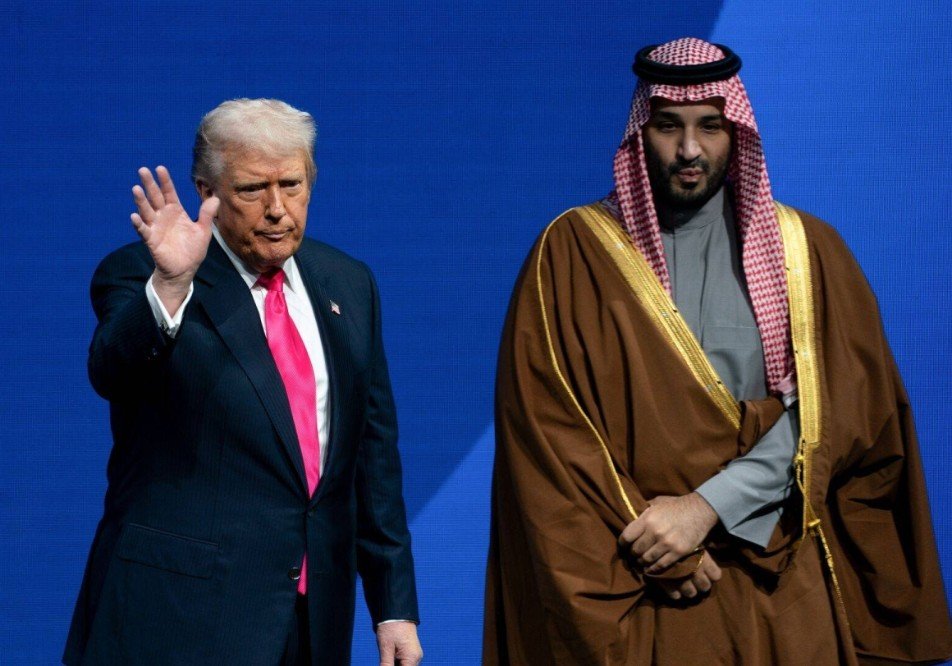
US President Donald Trump felt disappointed and angry after Saudi Crown Prince Mohammed bin Salman resisted quick normalization with Israel during their White House meeting on November 18, 2025. Reports say Trump pushed for immediate steps under the Abraham Accords, but the prince cited strong anti-Israel feelings in Saudi Arabia after the Gaza war as a key barrier.
Meeting Sparks Tension Over Peace Deals
The encounter at the White House drew global attention as Trump hosted the Saudi leader amid hopes for broader Middle East peace. Sources close to the talks revealed that Trump raised the normalization issue early, stressing its role in regional stability now that the Gaza conflict has ended and Iran’s nuclear program faces setbacks.
Bin Salman responded carefully, explaining that while he supports the idea in principle, public opinion in his country makes it tough right now. He pointed to widespread anger over the Gaza war’s impact, which has shifted views among Saudis. The prince left room for future talks but insisted on real progress toward a Palestinian state.
A senior US official described the exchange as polite yet firm, with Trump showing clear frustration. This moment highlighted ongoing challenges in expanding the Abraham Accords, which Trump first launched in 2020 to build ties between Israel and Arab nations.
Key Issues Blocking Normalization
Saudi Arabia has long tied any deal with Israel to Palestinian statehood, a demand that clashes with Israel’s current stance. Prime Minister Benjamin Netanyahu recently stated that no Palestinian state would form, even if it means missing out on Saudi ties.
During the meeting, bin Salman repeated this condition, saying normalization needs a clear, time-bound path to a two-state solution. He noted that Saudi society is not ready for such a step without it, given the backlash from the Gaza conflict that ended earlier this year.
Trump, eager to grow the accords, argued that recent wins like the end of the Gaza war and Iran’s weakened position create the perfect timing. Yet the prince held firm, focusing on domestic pressures and the need for broader Arab support.
Here are some main sticking points from the discussion:
- Public sentiment in Saudi Arabia remains highly critical of Israel post-Gaza.
- Demand for East Jerusalem as part of a Palestinian capital.
- Israel’s rejection of a two-state framework under its current government.
Reactions from Leaders and Experts
White House officials later emphasized Trump’s goal of uniting Middle East countries against common threats. One official said the president sees normalization as vital for lasting peace, especially with Iran’s influence reduced after recent strikes on its facilities.
In Israel, Netanyahu downplayed the tension but admitted conditions for a deal might evolve. Analysts suggest this pushback could slow Trump’s plans, as Saudi Arabia holds sway in the region with its economic power and oil influence.
On the Saudi side, the embassy stayed silent on the report, but public statements from bin Salman align with his meeting comments. Experts point out that recent US-Saudi deals on fighter jets and tech investments show strong ties in other areas, despite this disagreement.
| Recent US-Saudi Agreements | Details | Impact on Relations |
|---|---|---|
| Defense Pact | Includes sale of F-35 jets and security guarantees | Strengthens military alliance against regional threats |
| Tech Investments | Deals on chips and AI development | Boosts economic ties, worth billions in potential revenue |
| Energy Cooperation | Agreements on oil production and clean energy | Stabilizes global markets amid 2025 fluctuations |
This table shows how other deals moved forward smoothly, contrasting with the normalization snag.
Broader Context in Middle East Politics
The Abraham Accords have already linked Israel with countries like the UAE and Bahrain, reshaping alliances since 2020. Trump aims to add Saudi Arabia as a crown jewel, given its leadership in the Arab world.
Recent events, such as the Gaza war’s resolution in mid-2025 and diplomatic wins against Iran, fuel optimism. However, Palestinian issues remain a flashpoint. Bin Salman’s stance echoes calls from other Arab leaders for a fair resolution.
Logical reasoning suggests that without addressing Palestinian statehood, any deal risks backlash in the Arab street. Data from 2025 polls show over 70 percent of Saudis oppose normalization without concessions, up from previous years due to Gaza’s aftermath.
This tension also ties into global shifts, like Trump’s return to office in 2025 and his focus on “America First” policies that prioritize strong allies.
What Happens Next for Normalization
Looking ahead, experts believe talks could resume if Israel softens its position or if regional dynamics change. Trump might use upcoming summits to bridge gaps, perhaps involving other accord members.
Bin Salman has signaled openness, but timing depends on public mood and progress on Palestine. For now, the pushback serves as a reminder that peace deals need buy-in from all sides.
The situation underscores the complex balance of power, economics, and sentiment in the Middle East. As 2025 unfolds, watch for moves that could either stall or speed up these efforts.
Share your thoughts on this development in the comments below, and spread the word by sharing this article with friends interested in global news.
