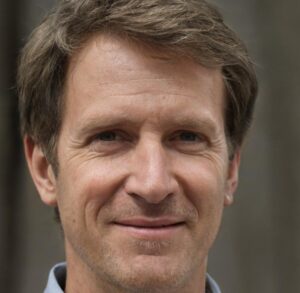
A celebrated Tel Aviv chef has left the city’s fine-dining spotlight to cook beside goats, sheep, and desert farms in southern Israel, introducing a tasting menu rooted in local Bedouin traditions and rural ingredients. His mission blends city-grade technique with the slow rhythms of the Negev.
A Chef Leaves the Urban Limelight
Tal Ashkenasi, formerly a sous-chef in one of Tel Aviv’s highly ranked restaurants, decided he needed fresh inspiration beyond concrete streets and sleek dining rooms. He moved to Mitzpeh Ramon, where he and a business partner launched Botz Dining, a seasonal kitchen that explores pastoral culture.
Two quick sentences. The move surprised many colleagues.
Ashkenasi spent years shaping elegant plates under white tablecloths. Now, evenings at Botz feel closer to a desert gathering than a luxury dining room. Guests sit around a wood-fire pit while the wind rolls through stones and shrubs. The first bite often comes straight from glowing embers, not a polished induction stove.
One sentence alone: It feels rustic and poetic all at once.
Locals say the project captures something missing from urban restaurants: food that emerges from the environment rather than being flown in from suppliers. Botz emphasizes ingredients like goat milk, lamb, desert herbs, and seasonal fruit grown in nearby farms. Every dish has a sense of place.
-
The tasting menu spotlights Bedouin techniques, including clay baking, pit roasting, coal grilling, and fermentation.
Guests appreciate how the flavors connect to a region still defined by shepherds, campfires, and daily outdoor cooking. Some travelers say the experience feels like a subtle culinary museum, blending hospitality and authenticity.
From City Precision to Wilderness Culture
Ashkenasi describes the desert as a teacher. The region does not rush him, and that shift shows up in his plates. Instead of squeezing dozens of micro-elements onto porcelain, he focuses on fewer components that speak clearly: smoked goat tartar with desert apple relish, roasted lamb with local yogurt, and charred okra with wild cumin.
A short one-sentence paragraph: Every dish feels rooted in the earth.
The absence of stress found in big city kitchens makes the environment appealing for culinary creativity. Botz’s service has fewer formal rules. People gather, share, and sometimes wander outside between courses. The kitchen occasionally pauses to let a herd of goats pass through the property before preparing the next plate.
Some visitors describe Botz meals like a long story told in chapters. The narrative pulls from the way shepherd families cook when they camp under open skies. Recipes are shaped by instinct: how strong the fire is, how smoky the wood becomes, or how a pot rests on the stones.
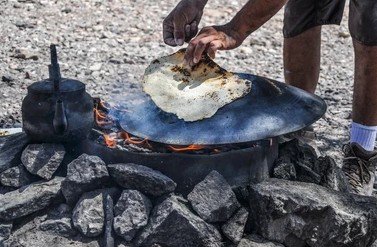
The Bedouin flatbread known as liba plays a starring role. Ashkenasi thinks it might be the most delicious bread on earth. Breaking its crust with your hands and dipping into warm goat butter feels shockingly comforting, even compared to high-end pastries made over multiple layers.
Short paragraph: It’s simple, primal, and deeply satisfying.
For Ashkenasi, adopting local knowledge is a sign of respect. He wants his plates to honor traditions without turning them into caricatures. There is no attempt to reinvent Bedouin food in a trendy way. Instead, he refines textures and portions while keeping the flames, coal, and long cooking central to the menu.
A Restaurant That Feels Like a Desert Gathering
Dinners at Botz stretch over several hours. Guests often sit around communal tables or move toward the fire before dessert. The wind hums, dogs patrol the edges of the farm, and the smell of roasting meat adds texture to the evening. Many diners say they remember the atmosphere as vividly as the food.
One sentence alone: It feels less like a restaurant and more like belonging to a temporary tribe.
Botz reflects how the desert culture still relies on open-fire meals. Families build pits, burn wood down to glowing coal, and bury pots beneath embers until everything softens slowly. Ashkenasi has adopted this rhythm. He treats dinner like a conversation between the ingredients, the land, and the people.
A small table helps illustrate where the ingredients come from and how Botz differs from typical Tel Aviv restaurants:
| Ingredient Source | Primary Use at Botz | Style Compared to Tel Aviv |
|---|---|---|
| Local goat farms | Milk, meat, butter | More direct, less processed |
| Desert orchards | Fruit, relishes | Seasonal and humble |
| Wild herbs | Infusions, smoke | Less decorative, more fragrant |
| Rural olive oil | Finishing dishes | Raw and expressive |
This table shows how Ashkenasi ties his menu to geography rather than supply chains.
Meals also reflect agricultural cycles. When goat milk peaks in spring, dairy dishes dominate. When figs ripen in late summer, sweet and sour condiments appear everywhere. People rarely know what the tasting menu will be until they sit down. It changes based on the land, not the calendar.
Another one-sentence paragraph: It keeps everything alive and unpredictable.
Some nights, Ashkenasi serves herb-studded lamb beside flatbread made over scorching stones. Other nights, he offers smoked carrot soup poured from iron kettles and served under the stars. Guests do not complain about flexibility. They enjoy how each experience feels slightly improvised.
Why Rural Dining Matters for Israeli Food Culture
Botz represents more than a personal adventure. It hints at how Israeli cuisine could evolve through deeper engagement with regional history and rural identity rather than constant urban reinvention. Tel Aviv’s restaurants are celebrated globally, yet they sometimes operate in creative bubbles owned by trends, imported wines, and precision plating.
One sentence: The Negev brings everything back to origin.
Israel’s culinary story is not purely metropolitan. It stretches through farms, shepherd settlements, spice trails, and open fires. Many iconic ingredients were carried by migrant communities who cooked outdoors before cities even existed. Botz brings those threads together in a contemporary setting without stripping their dignity.
You can sense how Ashkenasi is fascinated by the culture surrounding desert life. Instead of using the Negev merely as scenery, he adopts its emotional logic: hospitality, improvisation, patience, and simplicity. He believes food should reflect where it is made, not only how it is plated.
The experience leaves diners thoughtful. They feel that fine dining can coexist with the primal warmth of a campfire. They sense that refined cooking does not require stainless-steel kitchens or imported truffles. It just needs honesty.
Short paragraph: The desert teaches humility.
Whether Botz becomes a permanent landmark or a temporary fine-dining chapter remains unknown. For now, Ashkenasi is enjoying the uncertainty and the quietness. The goats do not judge plating techniques. They simply eat, walk, sleep, and remind him that cooking can exist outside city rhythms.
Botz may be the clearest expression of Israeli terroir on a plate — smoky, emotional, unpredictable, and grounded in relationships between land and people.