Saudi Arabia’s Defense Ministry has launched a new service on the Tawakkalna app. Citizens and residents can now report suspicious aerial sightings such as drones or missiles directly through the platform. This move comes at a time of heightened regional tensions and aims to speed up responses to protect the Kingdom.
Public Now Plays Key Role In Spotting Threats
The Ministry of Defense introduced the service on March 15, 2026. It allows anyone across the country to share details of unusual activity in the skies. Officials say the goal is rapid information sharing to support quick action by defense teams.
This service turns every watchful citizen into an active partner in national security. Maj. Gen. Turki Al-Malki, the ministry spokesperson, called it a qualitative leap in public involvement. He stressed that Saudi Armed Forces already have advanced systems to handle aerial attacks, yet public input adds another strong layer of protection.
Defense Minister Prince Khalid bin Salman echoed this view in a post on X. He described citizens as true partners through their awareness and vigilance. The prince urged everyone to use the Tawakkalna app to report any missiles or drones they spot.
Simple Way To Report Via The National App
Tawakkalna started as a key tool during the COVID-19 pandemic. It has since grown into Saudi Arabia’s national super app with dozens of government services in one place. Users can access documents, permits, health info and more with just a few taps.
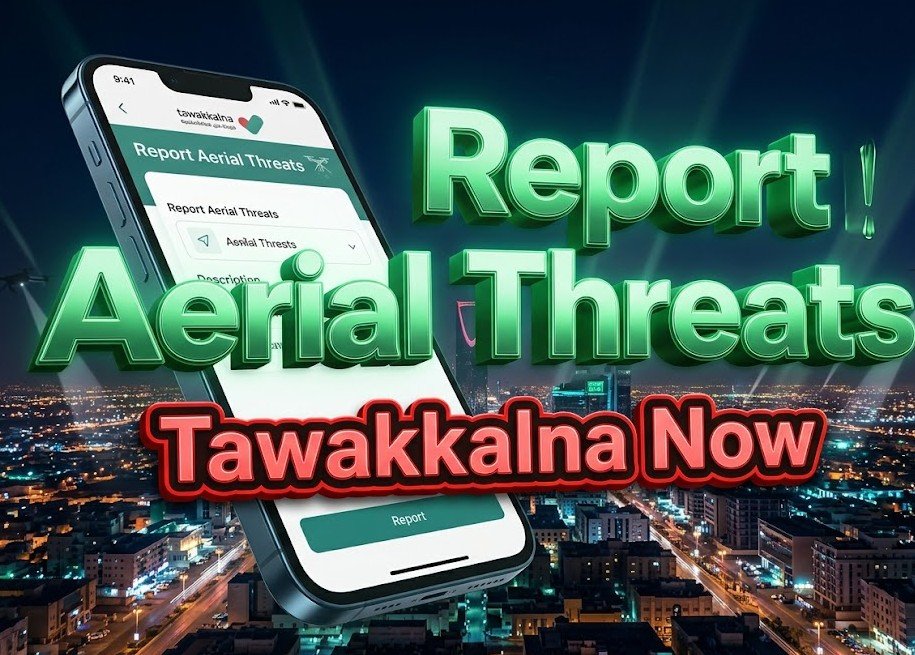
The new aerial reporting feature fits neatly into this ecosystem. Users open the app, locate the dedicated section and submit details about what they saw. Adding location data, descriptions or even photos helps authorities respond faster.
Reports go straight to the right teams. This direct channel cuts delays that could matter in fast-moving situations. The app’s wide reach means millions of eyes across cities, deserts and coastlines can contribute valuable information.
Recent Attacks Show Why Vigilance Is Critical
Saudi air defenses have stayed busy in recent weeks. Forces intercepted multiple waves of drones and ballistic missiles aimed at various parts of the Kingdom. These incidents are linked to broader tensions in the region that escalated in late February 2026.
In just one recent period, defenses brought down dozens of drones targeting the Riyadh region and Eastern Province. Other Gulf countries reported similar interceptions amid the same wave of activity. Saudi systems have proven effective, yet the volume of attempts highlights ongoing risks to vital areas and assets.
Public reporting adds speed to this defense network. A single sighting from a resident in a remote area could provide the first alert before radar confirms the threat. This human element complements high-tech systems in today’s complex security environment.
The timing of the launch feels deliberate. It builds on the Kingdom’s strong track record of protecting its airspace while inviting ordinary people to join the effort. Officials note that advanced capabilities exist, but citizen cooperation creates a more complete shield.
Leaders Highlight Partnership With Armed Forces
Al-Malki pointed out that the service strengthens genuine partnership between people and the defense system. He recognized the important role citizens and residents play in safeguarding the nation. This message of unity resonates deeply in a country that values collective responsibility.
Prince Khalid bin Salman reinforced the idea that awareness itself serves as a form of defense. His call to action encourages everyone to stay alert without causing panic. The focus remains on calm, accurate reporting that helps professionals do their jobs.
This approach reflects Saudi Arabia’s wider push toward digital transformation. Vision 2030 has already brought many services online. Adding national security features to a trusted app like Tawakkalna shows how technology can serve both daily life and strategic needs.
Many residents welcomed the news on social media. Posts shared the announcement widely, with users praising the easy access and sense of involvement. Some noted it makes security feel more personal and shared rather than distant.
What This Means For Saudi Arabia’s National Security Future
The new tool represents more than just an app update. It signals a modern way of thinking about defense in the drone and missile age. When threats can come from afar with little warning, having widespread public sensors becomes a smart advantage.
Early reports suggest the service is straightforward to use. This simplicity should encourage high participation rates across different age groups and regions. From busy Riyadh streets to quiet villages, more people can contribute.
Saudi Arabia has invested heavily in air defense technology over the years. Systems from multiple suppliers work together to create layered protection. The Tawakkalna feature adds the final human layer that no machine can fully replace.
Experts see this as part of a global trend where governments blend technology with community engagement. Countries facing hybrid threats increasingly rely on their populations as additional eyes and ears. Saudi Arabia is adapting this idea to its own context and strengths.
The launch also highlights the evolution of Tawakkalna itself. What began as an emergency health app has become a central hub for national life. Its reliability and security make it the perfect platform for sensitive reporting like this.
As more users try the feature, authorities will likely gather feedback to improve it further. Future updates could include better guidance, multilingual support or enhanced privacy measures. The foundation is already solid.
In the end, this service reminds everyone that defending the homeland goes beyond military forces alone. It includes the quiet vigilance of people going about their days who choose to speak up when something seems wrong. That shared commitment builds real strength.
Saudi Arabia continues to face challenges in a turbulent region, yet steps like this show confidence and forward thinking. By trusting its citizens with this role, the Kingdom strengthens both its security and its sense of unity.