
Saudi Arabia has issued a blunt warning to Yemen’s southern separatists, saying it will act against any military moves that derail efforts to calm a fast-unraveling situation in the country’s east. The message comes as Riyadh presses the Southern Transitional Council to pull back from territory it seized in recent weeks.
The stakes are high. What happens next could decide whether southern Yemen edges back toward dialogue or slips into another round of fighting.
Riyadh tells separatists to step back, peacefully
Saudi Defence Minister Khalid bin Salman took to X on Saturday with a direct appeal to the Southern Transitional Council, better known as the STC.
“It’s time,” he wrote, for STC forces to let reason prevail and withdraw from the eastern provinces of Hadramout and al-Mahra. His emphasis was clear. The withdrawal, he said, must be peaceful.
That single word carries weight in Yemen.
Hadramout and al-Mahra sit far from the usual front lines of the civil war. They are strategic, resource-rich, and have largely been spared the worst violence of the past decade. Their sudden seizure by separatist forces has rattled regional capitals and international diplomats alike.
Saudi officials say the STC’s move risks undoing months of quiet diplomacy aimed at lowering tensions across Yemen.
And they appear ready to respond if that happens.
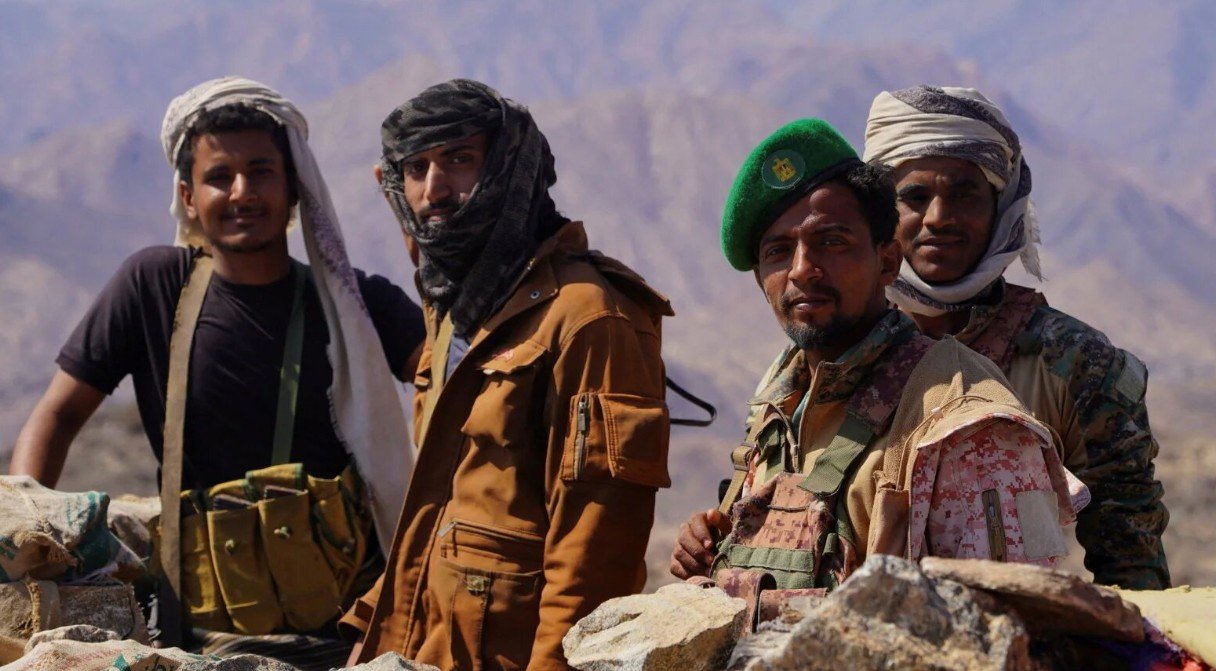
Coalition signals readiness to act
The warning did not stop with the defence minister.
Coalition spokesman Turki al-Maliki said any military activity that violates de-escalation efforts would be met “directly and immediately.” His stated aim: protecting civilians and preserving calm.
Those words landed hard.
Al-Maliki also accused STC forces of committing what he described as “serious and horrific human rights violations” against civilians in areas under their control. He did not provide details or evidence, but the allegation adds another layer of pressure on the separatist group.
The Saudi-led coalition, which intervened in Yemen in 2015, has in recent years shifted its tone from battlefield dominance to conflict management. That makes the firmness of this statement notable.
It suggests Riyadh sees the STC’s actions not as a local dispute, but as a direct challenge to a broader effort to stabilize the south.
Accusations, air strikes, and rising mistrust
The situation grew more tense a day earlier when the STC accused Saudi Arabia of carrying out air strikes on its positions in Hadramout. Riyadh has not publicly confirmed those claims.
Still, the accusation itself reflects how brittle relations have become.
The STC, which seeks autonomy or independence for southern Yemen, has long been both an ally and a rival of Yemen’s internationally recognized government. Saudi Arabia has supported that government while also working with southern forces at various stages of the war.
That balancing act now looks harder to sustain.
Washington has urged restraint, warning that further escalation in the south could complicate already delicate talks involving the Houthis in the north and international mediators.
One Western diplomat familiar with the talks said the mood has shifted quickly. “There was a sense things were cooling,” the diplomat said. “Now everyone’s watching Hadramout.”
Sometimes, it only takes one flashpoint.
Why Hadramout and al-Mahra matter
Hadramout is Yemen’s largest governorate, stretching from desert interiors to a long Arabian Sea coastline. It holds oil fields, ports, and trade routes that make it economically vital.
Al-Mahra, bordering Oman, has its own strategic value, sitting along smuggling corridors and regional transport routes. Both provinces have remained relatively insulated from Yemen’s worst violence, making their sudden militarization alarming.
Earlier this month, STC-aligned forces took control of key sites across parts of these areas, claiming to be responding to local grievances and security concerns.
Critics say the move was a calculated expansion.
For Saudi Arabia, that expansion cuts too close to sensitive borders and supply lines to ignore.
A Yemeni analyst based in the Gulf summed it up this way: “This isn’t about flags or slogans. It’s about control of space.”
De-escalation under strain
The warnings from Riyadh come at a delicate moment for Yemen as a whole.
In recent months, there have been small but meaningful steps aimed at reducing violence, including prisoner exchanges and tentative talks involving the Houthis and the Yemeni government. None of these efforts are solid, but they represent rare movement after years of stalemate.
Southern unrest threatens to pull attention and resources away from those tracks.
Saudi officials argue that allowing the STC to consolidate control in the east would set a dangerous precedent, encouraging other armed groups to test boundaries during a period meant for restraint.
That concern explains the sharp tone.
Yet, any direct confrontation between the coalition and the STC carries its own risks. The separatists command significant local support in parts of the south and are well-armed. A clash could fragment the region further.
For now, both sides are trading statements rather than fire.
That could change quickly.
A narrow path forward
Riyadh’s call for a peaceful withdrawal leaves the door open, at least publicly, to negotiation rather than force. Whether the STC chooses to walk through that door is another question.
The separatist leadership has framed its actions as defensive and rooted in local legitimacy. Backing down may come at a political cost internally.
At the same time, defying Saudi pressure outright would mark a serious rupture with a powerful regional player.
Observers say the next few days matter more than grand declarations.
Movements on the ground, not posts on social media, will reveal whether de-escalation still has a chance.
Yemen has seen enough missed chances.
For civilians in Hadramout and al-Mahra, the hope is simple: that warnings remain warnings, and that reason, as Riyadh put it, actually does prevail.
