The global energy landscape is undergoing a massive geopolitical shift that many Western leaders have failed to anticipate. A quiet revolution is taking place in the construction of nuclear power plants across emerging economies.
New data reveals that Russia and China have effectively cornered the market on nuclear energy exports. Moscow and Beijing are now responsible for the vast majority of new nuclear reactors breaking ground worldwide. This dominance is not just about electricity. It represents a deepening of diplomatic ties and long-term dependency that could reshape alliances for the next century.
Beijing and Moscow Dominate Construction Landscape
The numbers painting this new reality are stark and undeniable. A recent analysis by Nikkei Asia indicates that Russia and China accounted for over 90 percent of nuclear power projects undertaken in the last year. This statistic serves as a wake-up call to the United States and its European allies.
Western nations have largely retreated from the nuclear export game. Of the 63 nuclear power plants that have commenced construction globally since 2016, Chinese and Russian state-backed firms are building almost all of them.
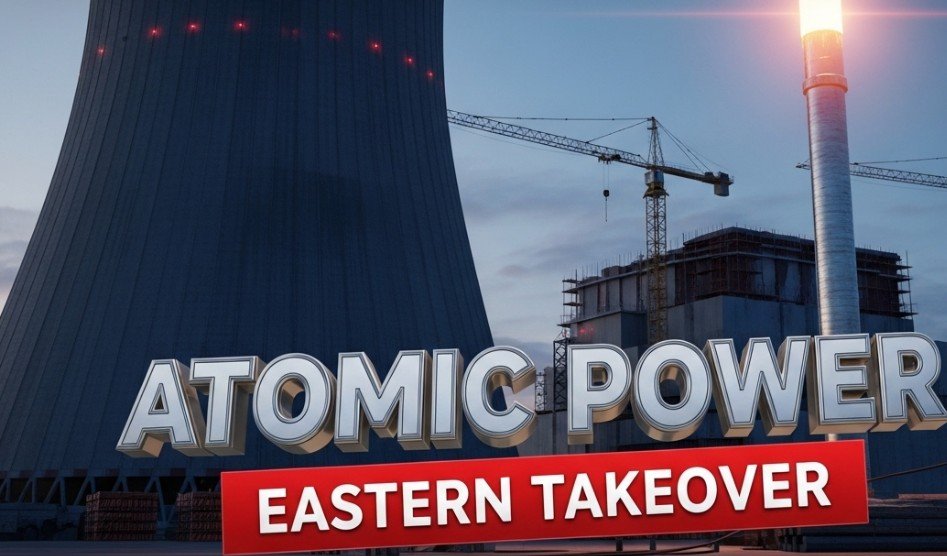
The only exceptions to this Eastern monopoly are five plants found in South Korea and the United Kingdom. This leaves the rest of the world, particularly the Global South, looking East for their energy needs.
Russia has been particularly aggressive in this sector. Over the past decade alone, Moscow has involved itself in the construction of 19 nuclear power plants overseas. This is a level of state-sponsored industrial export that Western private companies struggle to match.
Global Nuclear Construction Share (Since 2016)
- Total Plants Started: 63
- Russian/Chinese Built: ~57
- Western/Other Built: 5 (UK & South Korea)
- Market Trend: Heavily skewed toward state-led Eastern models
Energy Diplomacy Creates Long Term Political Bonds
The strategy employed by President Vladimir Putin and President Xi Jinping goes far beyond simple economics. When a country exports a nuclear power plant, they are not just selling a machine. They are entering into a relationship that lasts up to 100 years.
Nuclear plants require specialized construction, decades of fuel supply, ongoing maintenance and waste management solutions. By securing these contracts, Russia and China effectively lock emerging nations into their geopolitical orbit.
This creates a high barrier to exit for client nations. Countries in Africa, the Middle East and South Asia are increasingly tying their critical infrastructure to Moscow and Beijing. This allows these superpowers to expand their sphere of influence without firing a single shot.
State leadership is the secret weapon here. Unlike Western companies that must answer to shareholders and navigate complex profit margins, Russian and Chinese entities operate with full government backing. This allows them to offer financing deals and construction timelines that Western competitors cannot beat.
Key Projects in Egypt and Turkey Face Challenges
The practical application of this strategy is visible on the ground in the Middle East and North Africa. Russia is currently focusing its efforts on high-profile projects in Turkey, Bangladesh and Egypt.
Progress is moving forward despite global tensions. In November, Russian engineers successfully installed a massive pressure vessel for the El Dabaa power plant in Egypt. This marks a critical milestone in Cairo’s ambition to join the nuclear club.
However, the path to dominance is not without obstacles. The economic sanctions imposed on Moscow following the invasion of Ukraine have created significant headwinds. These financial restrictions are complicating logistics and funding for several major projects.
Current Major Project Status:
- Egypt (El Dabaa): Proceeding with major equipment installation.
- Turkey (Akkuyu): Facing financial friction due to banking sanctions.
- Bangladesh (Rooppur): Construction ongoing under Russian supervision.
The Akkuyu nuclear power plant in Turkey serves as a prime example of these difficulties. The project is currently facing financial hurdles that have delayed its operation past the original 2023 start date. While the concrete is being poured, the flow of money has become a complex game of cat and mouse with Western regulators.
Small Reactors Mark the Next Frontier of Competition
Russia is not resting on the success of its traditional large-scale reactors. The Kremlin is already looking toward the next evolution of nuclear technology to maintain its lead.
President Putin recently announced a pivot toward small modular reactors (SMRs). At an international conference in November, he explicitly stated that these small reactors would “move into mass production.” This signals a shift in strategy to capture markets that may not need or cannot afford a massive, traditional nuclear facility.
Small modular reactors represent a flexible, cheaper alternative that could be deployed to remote regions or island nations. By prioritizing this technology, Russia aims to outpace Western development cycles which are still largely in the design and regulatory testing phases for similar tech.
If Russia succeeds in mass-producing these units, they could flood the market before Western competitors even break ground. This would further cement Moscow’s role as the primary energy guarantor for the developing world.
The West faces a difficult choice ahead. Without a coordinated effort to offer viable, funded alternatives, the energy architecture of the 21st century will be built by, and dependent on, Russia and China.
The era of Western nuclear dominance appears to be over. The question now is how deep the new Eastern roots will grow in the soil of emerging nations.