Riyadh is getting ready to run, walk, jog, and celebrate. Saudi Arabia has announced the fifth edition of the Riyadh International Marathon, scheduled for January 28–31, 2026, opening a four-day festival that blends competition, wellness, and community life on a scale the city has not seen before.
The event signals how sport is steadily becoming part of daily culture, not just a weekend spectacle.
From a single race to a citywide sporting moment
What started a few years ago as a major road race has now grown into something broader.
The fifth edition of the Riyadh International Marathon introduces the “Riyadh Marathon Festival” for the first time, stretching activities across four days instead of one. Organizers say the idea is to create an atmosphere that feels open, social, and welcoming, even for people who never plan to pin on a bib.
The event is being organized by the Saudi Sports for All Federation, working alongside the Ministry of Sport and the Saudi Arabian Athletics Federation.
Festival activities will be hosted at Princess Nourah University, turning the campus into a temporary hub for sports, wellness programs, family activities, and cultural engagement before the races conclude the event.
One organizer described it simply: the marathon is no longer just about race day.
A marathon that mirrors Riyadh’s social shift
The Riyadh Marathon has gradually become a reflection of the city itself.
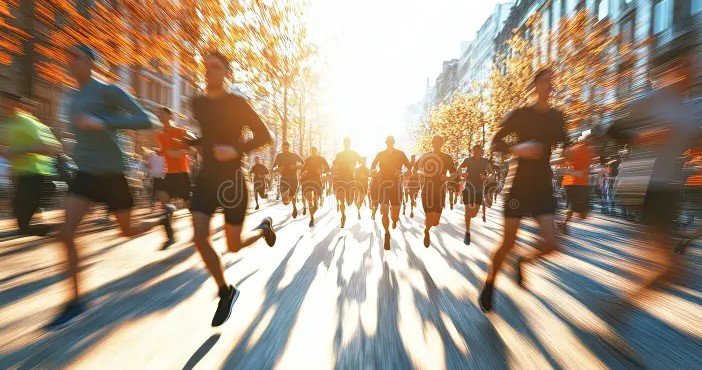
Participants now come from all age groups, fitness levels, and backgrounds, including elite athletes, amateur runners, families, and first-timers who just want to be part of the scene. That diversity is exactly what organizers say they want to protect as the event grows.
Prince Khaled bin Alwaleed bin Talal Al Saud summed it up in a statement tied to the announcement, describing the marathon as “a national event that celebrates physical activity and brings together all segments of society in a vibrant sporting and recreational atmosphere.”
That tone matters.
Rather than pushing competition alone, the event leans into participation. The message is clear: showing up counts, even if finishing fast does not.
And honestly, that approach seems to be working.
Participation numbers tell a clear story
The marathon’s growth is hard to ignore.
In 2024, participation hovered around 20,000 runners. By the 2025 edition, that number had crossed 40,000, a jump that surprised even seasoned organizers. Officials say the surge reflects growing public interest in active lifestyles, supported by easier access to events and better awareness.
The event has also retained its international standing. For the fifth consecutive year, it is accredited by World Athletics under the Elite Road Race category, placing it firmly on the global running calendar.
Here is how participation has evolved recently:
| Year | Approximate Participants | Notable Milestone |
|---|---|---|
| 2024 | ~20,000 | Expansion beyond elite runners |
| 2025 | 40,000+ | Record turnout |
| 2026 | Expected to exceed 2025 | Introduction of marathon festival |
That steady rise suggests the event has moved beyond novelty. It has found its audience.
Races built for everyone, not just elites
This year’s edition features four main race categories, offering choices that fit different comfort levels and goals. The range is deliberate, aimed at keeping the event inclusive without diluting its competitive edge.
The race lineup includes:
-
The full marathon at 42 kilometers
-
A half marathon covering 21 kilometers
-
A 10-kilometer race for recreational runners
-
A 5-kilometer race designed for families and beginners
The shorter races, especially the 5K, have become crowd favorites. Parents run alongside children. Friends jog and chat. Some participants stop mid-race to take photos. Purists might cringe, but organizers see it as a win.
One sentence came up repeatedly during briefings: participation builds habit.
The festival layer adds a different energy
What really separates the 2026 edition is the festival concept.
Across four days, visitors will find wellness workshops, fitness demonstrations, interactive activities, and social spaces that make the event feel less like a competition zone and more like a community gathering. You do not need running shoes to take part.
The location at Princess Nourah University offers room to breathe, space to move, and an environment that feels accessible rather than intimidating. That choice was intentional, according to planners familiar with the setup.
They wanted a place where people could wander in, stay a while, and maybe sign up to run next year.
Basically, the festival is meant to lower the barrier to entry.
A broader push for active living
The marathon fits into a wider effort across Saudi Arabia to normalize physical activity as part of daily life. Public walking tracks, community races, and large-scale events are increasingly common, especially in Riyadh.
Officials involved in sports development say mass-participation events play a key role because they turn fitness into something visible and social. When tens of thousands of people take over city streets to run, it sends a message that exercise is normal, even fun.
The Riyadh Marathon has become one of the most visible expressions of that idea.
It also serves as a soft introduction to organized sport for people who may never have joined a gym or club. One run leads to another. Then maybe a routine forms.
That is the long-term bet.
Looking ahead to January
As January approaches, expectations are high.
Organizers are preparing for international participation, large crowds, and the logistical challenge of hosting four days of activity at scale. Security, transport, and volunteer coordination are all being fine-tuned behind the scenes.
Still, the tone around the announcement feels confident rather than cautious.
After five editions, the Riyadh International Marathon is no longer testing the waters. It knows what it is, and more importantly, who it is for.