The first American pope’s maiden trip to the Middle East took a powerful turn in Beirut, where he called for what he described as a “divine gift of peace” while praising Lebanon’s fragile but persistent model of coexistence.
Thousands stood for hours in the rain to welcome him, a sign of how deeply the country craves reassurance in a region still shaking from political and armed tensions.
A Landmark Papal Stop in a Region on Edge
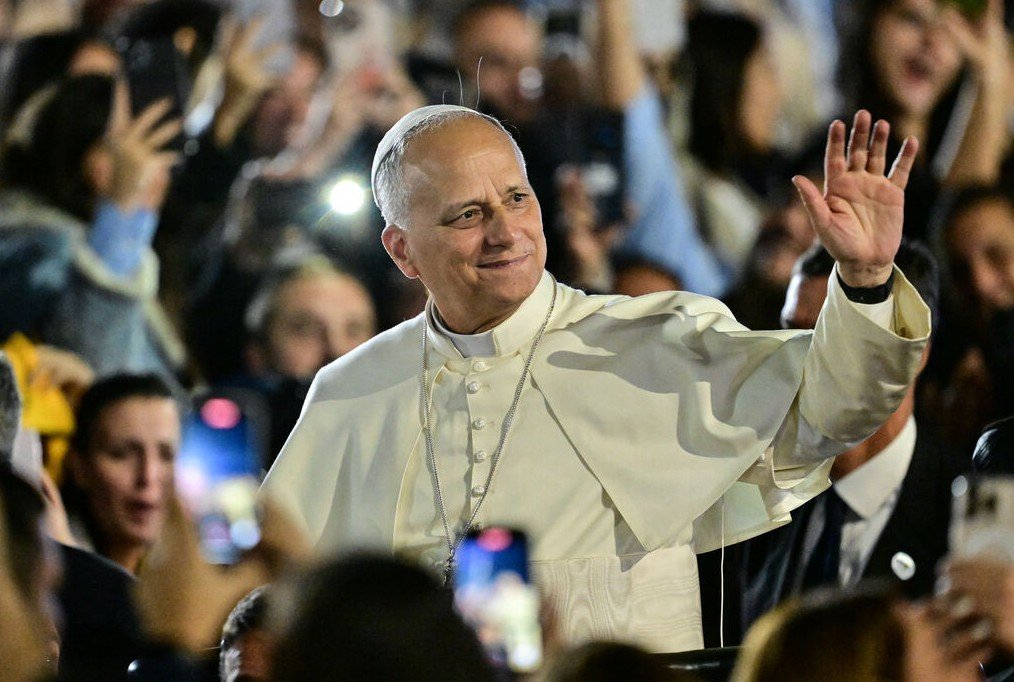
The pope’s appearance in Lebanon unfolded with a seriousness that matched the moment. Rain fell steadily, but people kept gathering, waving flags and tossing flower petals as his motorcade passed.
It felt almost surreal to many witnesses.
His image was plastered across Beirut, from billboards to storefront banners, giving the city a temporary sense of unity that has been in short supply.
The visit comes after his stop in Turkey, where he marked a foundational Christian declaration. Heading straight into Lebanon afterward signaled how urgently the Vatican views the country’s role in the area.
This trip was planned months ago, yet it accidentally coincided with renewed anxiety across the Levant. In that sense, timing couldn’t have been more symbolic.
The Meeting That Became the Emotional Centerpiece
The most anticipated moment arrived in Martyr’s Square, where Christian and Muslim leaders gathered beneath a long white canopy for what felt like an unusually intimate ceremony. Hymns floated across the crowd, followed by Quranic verses.
The pope listened quietly, hands folded.
He then spoke, praising Lebanon as a “reminder that unity, reconciliation and peace are possible,” a line that drew long applause, even from figures known for avoiding displays of enthusiasm. One cleric later told reporters it felt like “a breath that the region forgot it needed.”
A single-sentence pause followed.
Then he urged a renewed commitment to coexistence, adding that fear and prejudice “do not have the final word,” which many attendees interpreted as a reference to rising sectarian rhetoric in neighboring states.
By the end, leaders representing Christian patriarchates, Sunni authorities, Shiite councils and Druze communities planted an olive sapling in the middle of the square. The symbolism was obvious but still touching — one journalist muttered, “Let’s hope it survives the year.”
Lebanon’s Long Struggle With Its Own Fractures
Lebanon is often described as a model of coexistence, yet that story is incomplete. Many residents remember how the 1975–1990 civil war tore the country apart, and how its scars are still visible in the political system.
Some observers feel the pope’s remarks subtly acknowledged this delicate balance.
Others think he was sending a nudge at foreign powers that continue to pull Lebanon into their disputes.
The country’s Christian population, once dominant, has shrunk, yet it remains politically significant. Meanwhile, economic collapse has pushed communities into survival mode.
A short paragraph to reset the rhythm.
Given all that, Leo XIV’s words resonated more than usual. They weren’t abstract. They hit close to home.
A small table summarizing Lebanon’s current demographic and religious makeup was considered useful here:
| Religious Group | Approx. Share of Population | Political Influence |
|---|---|---|
| Christians | ~33% | President must be Christian |
| Sunni Muslims | ~30% | Prime Minister must be Sunni |
| Shia Muslims | ~30% | Parliament Speaker must be Shia |
| Druze + Others | ~7% | Reserved minority roles |
These figures vary by source due to the absence of an official census, but they illustrate the country’s sensitive balancing act.
How the Vatican Views Lebanon’s Symbolic Weight
For the Vatican, Lebanon isn’t just another Middle Eastern stop. It’s the home of some of the world’s oldest Christian communities, many of which feel increasingly isolated.
One adviser close to the pontiff described the trip as “emotionally charged.”
Another said the pope wanted to show Lebanese Christians that they haven’t been forgotten, especially as many families consider emigrating.
A shorter paragraph to break the flow.
On a broader level, Vatican officials see Lebanon as proof that religious communities can live side by side without constant clashes. That idea is something the church has promoted for decades.
In the middle of this section, a quick bullet point was appropriate to explain the Vatican’s core motivations clearly:
-
Reinforce the message that Lebanon’s pluralism remains essential for Christian–Muslim relations across the region.
After the Martyr’s Square gathering, a Vatican spokesperson told reporters the pope was “deeply moved” by the turnout. The spokesperson added that the olive planting had been his personal request.
That small detail humanized the event more than any speech could.
The Atmosphere on the Ground: Rain, Music and Unusual Unity
Crowds began forming early in the morning. Many held umbrellas. Others didn’t care and simply got soaked. People described the scene as both chaotic and strangely calm — a mix Lebanon specializes in.
Security was visible everywhere. That was expected.
But what really stood out was the number of young people who showed up, something Lebanese clergy said they didn’t anticipate.
This single-sentence paragraph adds rhythm.
While political tensions simmer in Beirut, Monday felt like a break from daily grievances. Music filled the streets. Priests and imams stood side by side. Even street vendors selling snacks said business felt “lighter somehow.”
The pope’s brief comments during his motorcade, waving repeatedly and smiling at families, gave people something small but uplifting. One woman, a grandmother from Jounieh, said, “Honestly, it felt like hope for a few minutes.”
There is no denying that symbolism dominated the day. And yet, symbolism is sometimes all people have to work with.
Regional Ripples and What Comes Next
Diplomats in Beirut believe the trip sends a message across the Middle East. Not a political one strictly, but a cultural reminder that dialogue is still possible even when armed groups and governments are trading accusations elsewhere.
The Vatican refused to comment on whether the pope plans to meet with regional political leaders privately.
Some insiders think the trip might encourage quiet conversations behind the scenes. Others believe the purpose was entirely pastoral.
Another one-sentence paragraph here.
No matter the intention, the appearance of Christian and Muslim leaders united under one tent was rare. Rare enough that foreign correspondents described it as “something you want to freeze-frame.”
For Lebanon, which is still wrestling with economic collapse, dysfunctional institutions and a population losing patience, Monday offered a brief flash of collective energy.