Prime Minister Narendra Modi praised Jordan’s strong stand against terrorism during his visit to Amman on December 15, 2025, calling it a strategic message to humanity. In delegation level talks with King Abdullah II, Modi highlighted shared views on countering extremism and radicalization, marking a key moment in India’s three nation tour.
Warm Reception Marks Historic Visit
Modi arrived in Jordan’s capital to a warm welcome from local leaders, kicking off a trip that also includes stops in Ethiopia and Oman. This visit celebrates 75 years of diplomatic ties between India and Jordan, with Modi received at the airport by Prime Minister Jafar Hassan.
The prime minister shared photos of special gestures, like Crown Prince Al Hussein bin Abdullah II driving him to the Jordan Museum. Such moments underscore the growing friendship between the two nations. Modi expressed thanks for the hospitality and noted how it boosts bilateral linkages.
Officials say the visit aims to strengthen partnerships in various fields. It comes at a time when global security concerns are rising, making these talks timely.
Focus on Countering Terrorism and Extremism
During the meetings, Modi and King Abdullah II discussed ways to fight terrorism together. Modi recalled their first interaction at a 2015 UN event on violent extremism, where the king spoke with clarity.
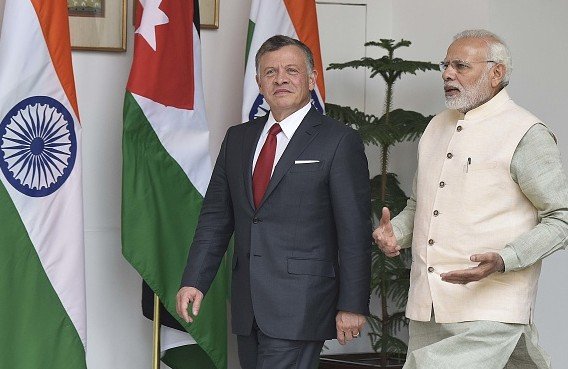
India and Jordan agree on a zero tolerance policy toward terror acts. Modi stated that both countries share a common position against such threats. He praised Jordan for its efforts in promoting moderation and de radicalization.
The talks also touched on regional issues like the Gaza situation. Both leaders called for peace and stability in the Middle East. This aligns with India’s push for global anti terror cooperation, seen in recent international forums.
- Modi emphasized Jordan’s role in sending a powerful message against radicalization.
- Leaders agreed to enhance intelligence sharing to prevent extremist activities.
- Discussions included preventing youth radicalization through education and community programs.
Strengthening Bilateral Trade and Agreements
Economic ties took center stage, with Modi proposing to boost trade to five billion dollars in the next five years. Current trade stands at around two billion dollars, focusing on sectors like phosphates, fertilizers, and IT.
Several agreements and memorandums of understanding were signed during the visit. These cover areas such as customs cooperation, cultural exchanges, and renewable energy.
| Sector | Current Cooperation | Future Goals |
|---|---|---|
| Trade | Phosphates and fertilizers | Reach $5 billion by 2030 |
| Energy | Solar projects | Joint ventures in renewables |
| Technology | IT services | Skill development programs |
| Culture | Heritage preservation | Increased tourism exchanges |
This table shows key areas where India and Jordan plan to expand partnerships. Leaders believe these steps will create jobs and foster innovation.
Modi met with business leaders to explore investment opportunities. He highlighted India’s role as a growth engine and trusted supply chain partner amid global demands.
Addressing Regional Peace and Global Issues
The leaders exchanged views on broader regional challenges, including the need for stability in West Asia. Modi appreciated Jordan’s efforts in hosting refugees and promoting interfaith dialogue.
They discussed civil nuclear cooperation as a way to meet energy needs sustainably. This fits into India’s strategy for clean energy transitions worldwide.
Both sides stressed the importance of humanitarian aid in conflict zones. Modi reiterated India’s commitment to peace processes that respect all parties involved.
Engaging with Indian Diaspora and Cultural Ties
Modi addressed the Indian community in Jordan, praising their contributions to local society. About 20,000 Indians live there, working in fields like construction, healthcare, and education.
He encouraged stronger people to people connections through cultural events and student exchanges. The visit included outreach programs to build lasting bonds.
This engagement reflects India’s focus on its global diaspora as bridges for international relations.
Looking Ahead to Deeper Cooperation
The Amman talks set the stage for closer India Jordan ties in security, economy, and culture. As global threats evolve, such partnerships become vital for mutual progress.
Readers, what do you think about this growing alliance? Share your thoughts in the comments and spread the word on social media to keep the conversation going.