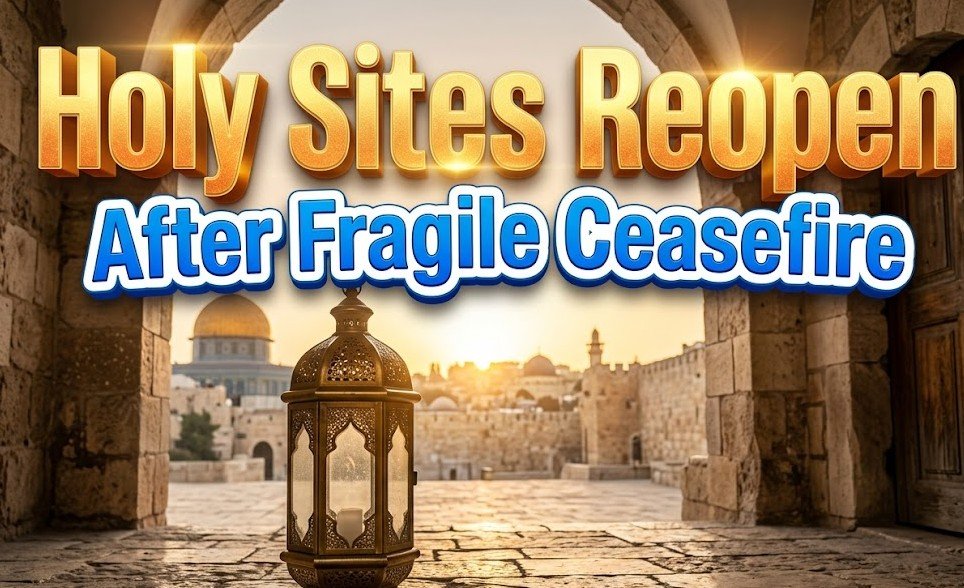
Worshippers streamed into Jerusalem’s holiest places Thursday after Israel lifted strict wartime limits. The move came days after a fragile ceasefire paused nearly six weeks of conflict with Iran. For the first time in 40 days, Christians, Muslims and Jews could gather freely at sites central to their faiths.
The reopening brought visible relief across the Old City. Dawn prayers echoed at the Al-Aqsa Mosque compound. Dozens bowed in prayer at the Western Wall. At the Church of the Holy Sepulchre, Greek Orthodox Patriarch Theophilos III led the traditional Washing of the Feet ceremony. The timing feels especially meaningful as Orthodox Christians prepare for Easter this Sunday.
Worshippers Flood Sacred Spaces in Emotional Return
Crowds moved through Jerusalem’s ancient streets with a mix of joy and quiet reflection. Many had waited weeks for this moment. One Muslim worshipper, Mohammed Al-Qassas, described the feeling as being reborn. He said going without prayer at Al-Aqsa felt like constant hunger. A Serbian tourist named Biljana Vaslic called it one of the happiest moments of her life.
Israeli police deployed hundreds of officers and volunteers to manage the crowds safely. Jerusalem’s authorities announced the change on Wednesday after the Home Front Command updated its guidelines. Missile threats from the Iran conflict had forced tight controls or outright closures at Christian, Jewish and Muslim sites since late February.
The shift happened quickly once the ceasefire took hold. People who once entered in small groups of a few dozen now walked in freely. The atmosphere mixed celebration with awareness that the truce remains delicate.
40 Days of Subdued Faith During the Conflict
Restrictions hit hard during major religious seasons. Ramadan prayers at Al-Aqsa were severely limited for much of the holy month. Passover observances for Jews felt quieter than usual. Christians marked Lent with smaller gatherings amid the threat of attacks that sent residents rushing to shelters.
The war, which involved missile exchanges between Israel and Iran, created real safety fears in Jerusalem. Officials cited the need to prevent large crowds from becoming targets. Even before the full conflict, access to Al-Aqsa had faced limits for security reasons.
Omar al-Kiswani, director of Al-Aqsa, called the reopening a grace from God. He noted the war had been used as a pretext for closures. The Islamic Waqf, the Jordanian authority managing the site, confirmed full access returned at dawn Thursday.
These months tested the resilience of faith communities in the holy city. Families missed shared rituals. Pilgrims faced disappointment. Yet many maintained private prayers and hoped for better days.
Christians Gear Up for Orthodox Easter and Holy Fire
The lifting of restrictions arrives at a crucial time for Orthodox Christians. Their Easter falls on Sunday, April 12, a week after Western celebrations. On Saturday, thousands will pack the Church of the Holy Sepulchre for the ancient Holy Fire ceremony.
Patriarch Theophilos III will enter the tomb area where tradition holds Jesus was buried. He will light candles from the holy flame, which worshippers then pass from person to person. The cavernous 12th-century basilica built over the site of crucifixion and resurrection will fill with light and hope.
Earlier in Holy Week, the patriarch performed the Washing of the Feet on Maundy Thursday, a powerful symbol of service and humility. The full reopening allows more faithful to participate in these sacred moments after weeks of limited access.
Some Christian leaders had expressed concerns about capacity for the Holy Fire event. With restrictions now eased, expectations point to strong attendance despite the fragile regional situation.
Muslims and Jews Reclaim Prayer at Key Sites
At Al-Aqsa, one of Islam’s holiest places, hundreds gathered for morning prayers. The compound had been closed for much of Ramadan and the Eid al-Fitr period. Worshippers moved through the open spaces with visible emotion after the long wait.
Nearby at the Western Wall, the holiest site where Jews can pray, men and women stood in prayer. They bowed their heads toward the ancient stones that form the last remnant of the Second Temple. The return of larger gatherings marked a return to normal rhythms disrupted by the conflict.
The three Abrahamic faiths share this small corner of Jerusalem. Their holy sites sit close together in the Old City. Thursday’s reopenings highlighted both the tensions and the deep connections in this shared space.
Fragile Peace Offers Glimmer of Normalcy
The ceasefire between the United States, Iran and Israel is described as temporary, spanning two weeks. Brokered amid intense diplomacy, it halted major attacks but left underlying issues unresolved. Reports of continued activity in Lebanon show the truce faces immediate tests.
Still, for residents and pilgrims in Jerusalem, the change on the ground feels significant. After weeks of shelters and limited movement, daily life shows signs of easing. The ability to pray openly carries both spiritual and emotional weight in a city long defined by faith.
Observers note that religious freedom at these sites often serves as a barometer for broader stability. When access flows freely, it signals a measure of calm. When it tightens, it reflects deeper regional strains.
This moment offers a chance to reflect on what unites people across differences. In Jerusalem, prayer has continued through centuries of conflict and peace. The reopening reminds everyone that the yearning for connection to the divine persists even in hard times.
As the Holy Fire ceremony approaches and prayers rise from multiple traditions, many hope the fragile truce can lead to something more lasting. The images of worshippers filling these ancient spaces once again carry a powerful message of resilience and renewal.
In a city revered by billions around the world, Thursday marked more than the end of restrictions. It showed how quickly faith communities can reclaim their traditions when given the chance. The coming days will test whether this calm holds. For now, Jerusalem’s holy sites stand open, inviting all to find peace within their walls.
What are your thoughts on this moment of relief in Jerusalem? Share in the comments below how you see faith playing a role in times of conflict.