Israeli forces have killed at least two Palestinians in Gaza City, Palestinian officials said, adding to mounting claims that a fragile ceasefire is steadily unraveling. The deadly incident comes as Gaza authorities accuse Israel of hundreds of violations since the truce began in October, deepening fears that the agreement is losing whatever force it once held.
The shooting unfolded amid rain, rubble, and a civilian population already pushed to the edge.
Deadly Shooting Reported in Shujayea Neighborhood
According to the Palestinian news agency Wafa, Israeli troops opened fire in the Shujayea neighborhood of eastern Gaza City on Monday, killing two people.
Shujayea has been repeatedly hit during earlier phases of the war and remains heavily damaged. Large parts of the area are still uninhabitable, with residents sheltering in makeshift camps or partially destroyed homes.
The circumstances surrounding the shooting remain under investigation, but local officials described the victims as civilians. No immediate Israeli military comment was issued on the incident.
One short line from local witnesses summed up the scene. Gunfire, then silence.
Death Toll Climbs as Bodies Recovered From Rubble
The two killings in Gaza City pushed the reported Palestinian death toll over the past 24 hours to at least 12, according to health and media sources in the enclave.
Eight of those deaths were not new attacks but bodies recovered from rubble left behind by earlier bombardments. Search efforts continue daily across Gaza, often carried out by families themselves using basic tools.
The slow recovery of bodies has become a grim routine since the war began.
Many areas remain inaccessible due to unexploded ordnance or collapsed structures. In some cases, weeks pass before victims are found.
Each recovery, officials say, reopens wounds that never really closed.
Ceasefire Under Pressure Since October
The Gaza City shooting is the latest incident cited as a violation of a ceasefire agreement brokered by the United States between Israel and Hamas, which came into effect on October 10.
The truce was intended to halt major fighting, allow limited humanitarian access, and create space for diplomatic efforts. On paper, it offered relief. On the ground, Palestinians say, it has often failed to deliver.
Gaza’s Government Media Office said on Monday that Israel has violated the ceasefire 875 times since it began.
That number, officials argue, reflects a pattern rather than isolated events.
Gaza Officials Cite Hundreds of Alleged Violations
In a statement, Gaza’s Government Media Office accused Israel of what it called “serious and systematic violations” of the truce.
According to the office, the alleged breaches include:
-
Continued air and artillery attacks across the Gaza Strip
-
Demolition of Palestinian homes and civilian infrastructure
-
At least 265 incidents of Israeli troops opening fire on civilians
The office said that since the ceasefire came into force, at least 411 Palestinians have been killed and 1,112 wounded in Israeli attacks.
Those figures could not be independently verified, but they align with reports from local hospitals and international aid groups operating in Gaza.
For residents, the numbers are less abstract. They are names, families, empty shelters.
Humanitarian Aid Still Severely Restricted
Alongside the security concerns, Gaza officials and aid organizations continue to warn about restrictions on humanitarian aid.
Nearly 1.9 million people in Gaza, close to 90 percent of the population, remain displaced, according to the United Nations. Many live in overcrowded camps exposed to winter weather, shortages of clean water, and limited medical care.
Aid deliveries have increased slightly since October, but agencies say the volume falls far short of what is needed.
Medical supplies, fuel, and building materials remain especially scarce. Hospitals operate under constant strain, and preventable deaths continue to rise.
One aid worker described the situation bluntly. A ceasefire without access is only half a ceasefire.
Israel-Hamas War’s Long Shadow
The ceasefire violations are unfolding against the backdrop of a war that began in October 2023 and has reshaped Gaza entirely.
Entire neighborhoods have been flattened. Basic services have collapsed. Families have been uprooted again and again.
While large-scale bombardment has slowed compared with earlier months, sporadic attacks and shootings keep the population on edge.
Israeli officials have repeatedly said they reserve the right to act against perceived threats, even during a truce. Palestinian officials argue that this approach empties the ceasefire of meaning.
Between those positions, civilians remain exposed.
International Silence and Limited Leverage
International reaction to the latest Gaza City deaths has been muted so far.
The United States, which brokered the ceasefire, has called for restraint in general terms but has not publicly addressed the reported Shujayea shooting as of Monday evening.
Human rights groups say accountability mechanisms remain weak, and investigations into alleged violations rarely produce public results.
Diplomacy continues behind closed doors, but pressure on the ground keeps building.
One sentence circulating among Gaza residents captures the mood. Agreements are signed far away, but bullets land here.
A Child’s Reality in a Broken City
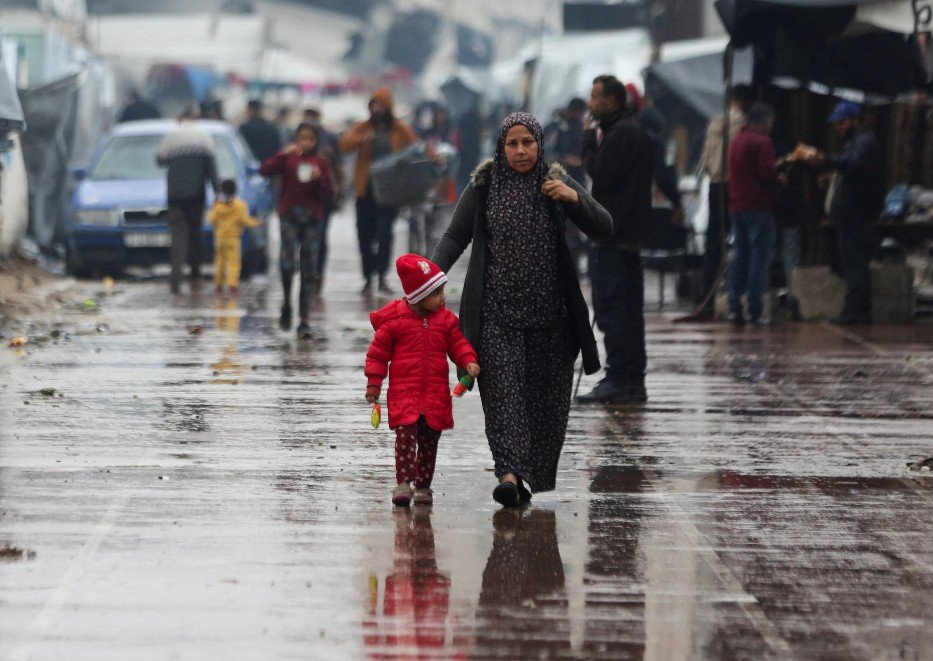
Images from Gaza this week show displaced children standing outside makeshift shelters under heavy rain, surrounded by mud and debris.
For them, the language of ceasefires and violations feels distant.
They measure time in meals skipped, nights cold, and explosions heard too close for comfort.
As shootings continue and accusations mount, the promise of calm that accompanied the October truce feels increasingly fragile.
Whether the ceasefire can be salvaged, tightened, or replaced remains unclear. What is clear is that for Gaza’s civilians, every reported violation carries immediate and irreversible cost.