
Hezbollah launched a barrage of rockets toward central Israel Tuesday, marking its first long-range attack since the escalation of the Iran war, as the Israel Defense Forces (IDF) responded with airstrikes across Lebanon and issued a stark warning to Iranian officials within the country.
Hezbollah Escalates Attacks, Targeting Major Israeli Cities
Tehran-backed Hezbollah unleashed three rockets toward Tel Aviv and the Haifa area, triggering sirens throughout central and northern Israel. The IDF reported intercepting two of the rockets, with the third landing in an open area, thankfully causing no injuries. This attack represents a significant escalation in hostilities, breaking a period of relative calm since the conflict’s intensification.
Beyond the Tel Aviv and Haifa attacks, Hezbollah fired dozens of rockets and several drones at northern Israel throughout the day. One rocket directly struck a home in a border community, injuring a resident. Hezbollah claimed responsibility, stating the attacks were in response to the recent killing of Iranian supreme leader Ayatollah Ali Khamenei in joint US-Israeli strikes, and further asserted they downed an Israeli drone and targeted Israeli Merkava tanks near the Lebanese villages of Kfar Shouba and Kfarkela. A senior Hezbollah official declared the group’s patience exhausted, stating, “The Zionist enemy wanted an open war… So let it be an open war.”
Israel’s Response: Strikes and Direct Threat to Iranian Officials
In a highly unusual move, the IDF issued a direct threat against Iranian regime officials residing in Lebanon, warning they had 24 hours to leave the country or risk being targeted. Army spokesman Col. Avichay Adraee stated, “The IDF warns representatives of the Iranian terror regime who are still in Lebanon to leave immediately before being targeted.” This warning underscores Israel’s determination to hold Iran accountable for the escalating conflict.
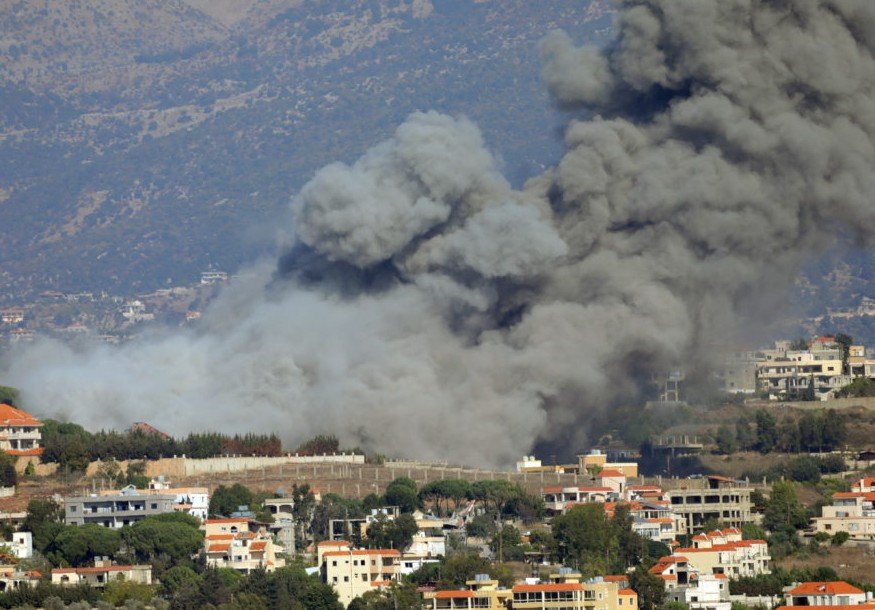
Simultaneously, Israel launched a wave of airstrikes targeting approximately 60 Hezbollah sites across southern Lebanon. The IDF reported striking weapon depots, missile launchers, command centers, and other infrastructure belonging to the Lebanese terror group. Strikes also targeted sites linked to Hamas in Sidon and Tyre, described as infrastructure used to facilitate terror attacks against Israeli troops and civilians. Evacuation warnings were issued to Lebanese civilians in the areas before the strikes commenced, with over 80 villages now under evacuation orders.
Lebanon’s Internal Concerns and Regional Fallout
Lebanese President Joseph Aoun has reportedly informed ambassadors from Saudi Arabia, Qatar, the United States, France, and Egypt that Hezbollah is launching rockets from areas north of the Litani River, outside the zone where Lebanese troops claim full control. This raises concerns about the Lebanese government’s ability to restrain Hezbollah’s actions and maintain stability within the country.
The conflict is also impacting neighboring nations. Syria has reportedly reinforced its border with Lebanon, deploying thousands of troops and rocket units to prevent arms and drug smuggling and to deter infiltration by Hezbollah or other militant groups. Thousands of Syrians living in Lebanon have crossed back into Syria, seeking refuge from the escalating violence. The UN High Commissioner for Refugees reported a significant increase in crossings on Monday, reaching 10,629 – a substantial jump from the typical daily rate.
Further Escalation: Strikes in Iran and Beyond
The IDF confirmed a strike in Tehran targeting Daoud Alizadeh, the acting commander of the Lebanon Corps in Iran’s Islamic Revolutionary Guard Corps’ Quds Force. Alizadeh had recently assumed responsibility for the Lebanon Corps following the death of Mohammad Reza Zahedi, making him a key figure in Iran’s regional operations.
Prime Minister Benjamin Netanyahu vowed further forceful responses, stating, “Hezbollah is dragging Lebanon into a war… They need to look out for themselves, and they would do well to do so quickly.” He accused Hezbollah of acting solely due to the death of Khamenei, a claim that underscores the interconnectedness of the regional conflict. Reports indicate at least 50 people have been killed and 335 wounded in Lebanon due to the airstrikes, with tens of thousands displaced.
The situation remains highly volatile, with the potential for further escalation. The IDF’s direct threat to Iranian officials in Lebanon and the continued exchange of fire raise serious concerns about a wider regional conflict. The international community is closely monitoring the situation, urging de-escalation and a return to diplomatic solutions.
