
Israel is facing rising antisemitism, diplomatic strain with Western partners, and growing pressure from adversaries in the Middle East. Policymakers and analysts say this moment offers a rare strategic opening: plug into Asia’s defense and technology networks and rebalance away from heavy dependence on Washington.
Israel has already deepened ties with India, Japan, Taiwan, and Southeast Asia in recent years. But current geopolitical shifts suggest a far broader opportunity emerging across supply chains, cyber security, and regional manufacturing.
A Strategic Shift Driven by Necessity
Israel has spent decades relying on the United States for diplomatic, military, and logistical support. That dependence has become riskier as U.S. domestic politics grow more polarized and Western public opinion hardens during the Gaza conflict.
Two quick sentences. Israel now sees the Asia theater as more than just a side arena.
With antisemitic rhetoric growing on global campuses and online, Israeli officials worry their trade and diplomatic positioning will weaken if they remain anchored solely to Western economic networks. Asia, by contrast, is expanding militarily and technologically, with a stronger appetite for bilateral partnerships and tactical innovation.
One sentence alone: The incentive to diversify has never felt stronger.
India represents Israel’s most natural partner. Their intelligence services already cooperate, and both face threats connected to Iran and Pakistan. Analysts say deep collaboration could extend far beyond arms trading into shared cyber-defense tools, semiconductor ecosystems, and dual-use manufacturing.
-
Israel and India could jointly monitor cyber operations tied to Pakistan and Chinese state-backed hacker groups that target both countries.
The bullet point clarifies a concrete area of cooperation.
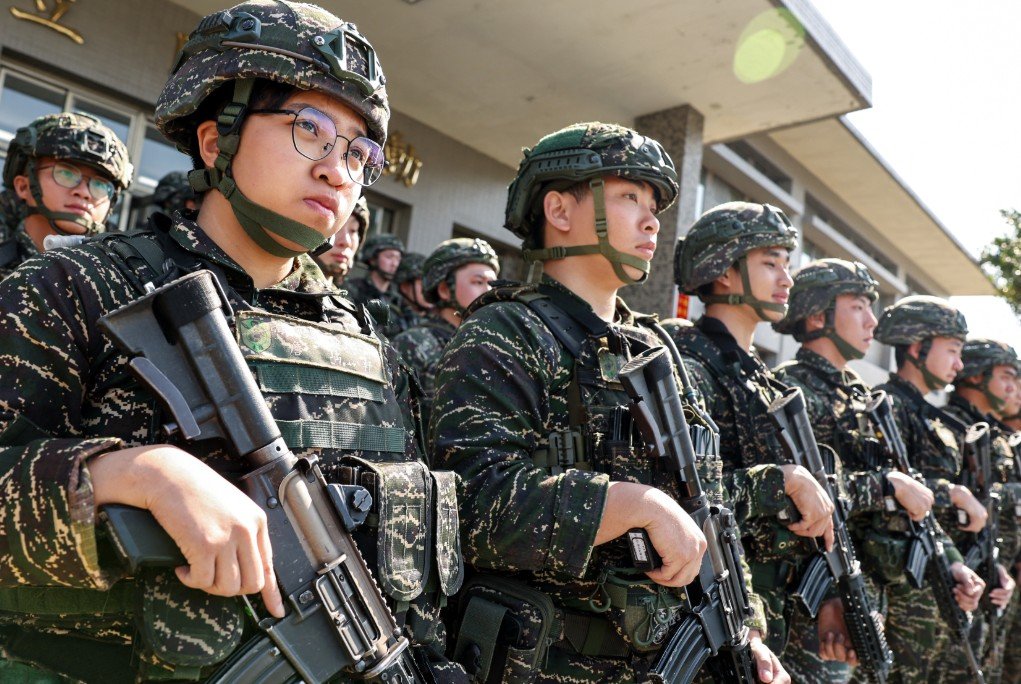
Taiwan and Japan are moving in parallel directions. Both study Israeli military operations closely, especially after Operation Rising Lion, during which Israel destroyed Iranian air defenses. Taiwan has taken lessons from the conflict as Chinese pressure escalates, and Taipei is eager to exchange operational insights with Israel’s defense industry.
Cyber Warfare, Intelligence, and Asian Partners
Cyber security is the fastest-growing arena for Israeli–Asian cooperation. China has helped Iran rebuild air defense networks destroyed by Israel, raising alarms inside Tel Aviv’s security establishment. Israeli agencies believe data sharing with Asian partners could help map these new defensive architectures long before any potential confrontation.
One short sentence: India is crucial here.
Indian analysts have followed Iranian, Pakistani, and Chinese cyber operations for years. Sharing tools and forensic data would raise defensive capacity dramatically across all three countries. It would also help Israel understand non-Western supply chains used for state-backed espionage, ransomware, and infrastructure reconnaissance.
Some intelligence officials say Asian cyber coalitions could surpass NATO-style coordination in speed and specialization. Unlike traditional Western frameworks, these partnerships would not be weighed down by domestic politics or campus-level protests. Collaboration could center on real-time alerts, vulnerability scans, shared malware repositories, and sensor-based industrial protection.
Short paragraph: The cyber threat landscape is too complicated to face alone.
Reports disclosed that Chinese nation-state groups such as Vault Typhoon and Sault Typhoon have infiltrated critical American infrastructure and have also probed Israeli and Indian systems. Joint monitoring between Tel Aviv and New Delhi could help expose Chinese digital supply networks and their embedded industrial backdoors.
A small table adds clarity on potential intelligence focus areas:
| Focus Area | India–Israel Shared Interest | Strategic Benefit |
|---|---|---|
| Iranian air-defense data | Early mapping and vulnerabilities | Preparation before escalation |
| Pakistan cyber networks | Attribution and tracking | Better countermeasures |
| Chinese industrial espionage | Semiconductor and telecom | Supply-chain protection |
| Critical infrastructure scanning | Joint threat intelligence | Faster crisis response |
This table highlights the scale of overlap and why cooperation makes sense.
Another one-sentence paragraph: Cyber is the backbone of future conflict planning.
Asian Supply Chains and Semiconductor Advantage
Israel’s semiconductor ecosystem remains smaller than Taiwan, but its R&D capacity is widely respected. Asian supply chains could give Israel something it currently lacks: scale.
Most of Israel’s innovation stays domestic and is primarily built for Western markets. Many Israeli founders still produce prototypes locally and then license them to U.S. partners. That model limits geographic resilience. Asian partnerships would change the equation by linking Israeli chip research to manufacturing networks in India, Taiwan, and Japan.
One sentence: This is where Israel could unlock entirely new commercial leverage.
India is investing billions into semiconductor plants and wants military-grade microprocessors for drones, secure communications, and surveillance systems. Israel’s defense firms produce some of the world’s most advanced sensor chips and AI-assisted targeting modules. A shared industrial platform could reduce dependence on American licensing and shift manufacturing closer to Asia’s civilian and military markets.
Israelian analysts believe Japan will support such ecosystems if they come with formal export frameworks, cybersecurity safeguards, and mutual procurement guarantees. Japan does not want Chinese-owned fabs shaping regional defense infrastructure, and Israel offers decades of battlefield-tested microelectronics.
Small paragraph: Asia’s supply resilience is becoming as valuable as weapons.
Israel also has strategic interest in Taiwanese chip design, especially around secure communications and machine-vision technologies. Joint production could help Israel diversify away from Western export bottlenecks while giving Taiwan access to algorithms optimized for combat environments.
Some observers say Asian governments are less ideological than Western states and more pragmatic in choosing partners if the technology is effective. The Middle East has grown more competitive, and Asian economies want cutting-edge defense upgrades without geopolitical moral lectures.
Iran, China, and the Value of Asian Counterbalance
Iran is rebuilding its air defenses using Chinese support after major damage inflicted by Israel in Operation Rising Lion. That reconstruction now serves as an intelligence puzzle. Understanding Chinese engineering inside Iranian air systems requires monitoring Asian industrial footprints, not just Iranian supply lines.
One short sentence: This is why Israel needs Asia, not just the U.S.
India watches both China and Pakistan closely. Their intelligence assets can observe Chinese cyber operations, Pakistani clandestine units, and Iranian logistics simultaneously. Such a network is too wide for Israel to monitor alone, especially while fighting multiple fronts.
Asian intelligence would also help Israel understand Chinese cyber-manipulation tactics targeting Israeli ports, electric grids, and naval logistics. Some Israeli utility experts believe Chinese industrial suppliers embedded subtle firmware vulnerabilities during earlier infrastructure deals.
Future cyber crises could see Asian and Israeli analysts working side-by-side to neutralize malware inside oil ports, desalination facilities, semiconductor fabs, or military depots. That scale of cooperation could become a strategic deterrent.
Another one-sentence paragraph: Iran’s cyber allies cannot be countered without a multidirectional international network.
A Rare Opening in a Polarized World
Western public pressure, online harassment, and diplomatic fatigue have limited Israel’s space to maneuver. Asian partners do not face the same domestic backlash when engaging Israel. They are interested in results—security, innovation, digital threat prevention, industrial resilience.
One sentence alone: Asia wants capability, not speeches.
Israel now has a pragmatic window. Instead of relying on shrinking Western goodwill, it can embed itself inside Indo-Pacific supply chains and defense networks. Success would help Israel balance China’s influence, counter Iran’s reconstruction, and strengthen regional cyber posture.
The next several months could determine whether Israel views Asia as a supplemental relationship or a foundational one. The stakes will only grow as industrial warfare, cyber manipulation, and semiconductor control become defining themes of 21st-century geopolitics.
