The Middle East conflict has taken a dramatic turn as Israeli forces launched a “broad-scale” offensive on Tehran’s key military and infrastructure sites while Iran retaliated with waves of missiles targeting central Israel including Tel Aviv. The intensifying hostilities mark one of the sharpest escalations in the weeks‑long war involving the United States, Israel and Iran, raising grave concerns across the region and globally about further spread of violence.
Massive Strikes Rock Tehran and Lebanese Strongholds
Late Friday night, powerful explosion flashes were seen across Tehran amid heavy airstrikes carried out by the Israeli military. According to military statements, Israel executed a broad‑scale wave of operations against Iranian infrastructure, including airports and logistical hubs believed to be used by Iran’s elite Quds Force, a branch of the Islamic Revolutionary Guard Corps.
Israel also intensified its assaults in Hezbollah‑controlled southern Beirut, completing at least 26 waves of precision airstrikes targeting command centers and weapons depots. These attacks follow a joint U.S.‑Israeli campaign that has already spanned several days.
Iran’s Missile Barrages Shake Israel
In retaliation, Iran unleashed repeated barrages of ballistic missiles and drones toward Israeli territory, including the heart of Tel Aviv. Iranian state‑linked media and military sources reported that the Revolutionary Guard launched multiple “Kheibar” missiles as part of its ongoing “Operation True Promise 4,” asserting that the attacks were aimed at downtown Tel Aviv targets. Iranian forces claimed some strikes successfully hit their objectives.
Israeli air defense systems were activated repeatedly across central Israel with sirens blaring in major cities including Tel Aviv and Jerusalem as the waves of Iranian missiles approached. Some projectiles were intercepted while others reportedly caused fires and explosions in open areas outside urban centers.
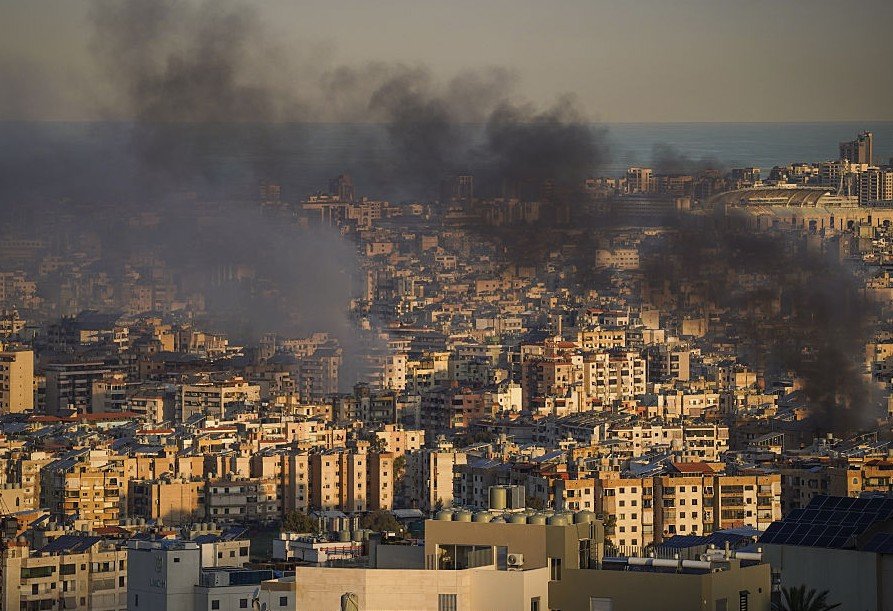
Despite Iran’s claims, independent verification of impact in Tel Aviv has been limited, though Israel’s health ministry says 1,681 people have been taken to hospitals since the conflict began, with dozens sustaining injuries due to missile strikes.
Diplomatic Backdrop and International Responses
The dramatic attacks occur amid wider regional and diplomatic tensions. U.S. President Donald Trump has taken a hard line, calling for Iran’s “unconditional surrender” while rejecting ceasefire or negotiation proposals from Tehran, which has repeatedly refused direct talks with the United States.
Iran’s U.N. ambassador has accused Israel and the U.S. of targeting Iranian civilians deliberately, claiming 1,332 Iranian civilians have been killed and thousands wounded in the conflict. Western and Israeli officials deny these claims, asserting that Iran’s strikes are the principal aggression.
The United Nations and human rights groups have raised alarms over mass evacuations in Southern Lebanon and potential violations of international law, as Israel orders civilians to move out of high‑risk zones and Hezbollah continues armed resistance from Lebanese territory.
Regional Impact and Escalation Risks
The conflict has not remained confined to Iran and Israel. Iranian missile and drone strikes have been reported in several Gulf states, and regional air defense systems in countries like Saudi Arabia, the United Arab Emirates and Kuwait have intercepted incoming projectiles, underscoring fears that the war could spread across the Middle East.
Oil markets have reacted sharply, with global energy prices rising due to fears of supply disruptions in the Strait of Hormuz. Qatar’s energy minister warned that prolonged fighting could halt energy exports within weeks.
Western nations are scrambling to evacuate citizens, with thousands of Americans already flown out of the region. European countries have expressed concern while attempting to avoid direct involvement.
Human Toll and Widening Conflict
The human cost of the war is mounting rapidly. Reports out of Iran describe significant casualties and injuries among civilians. On the Israeli side, hospitals are strained as the toll from missile strikes and air raids continues to grow. Both countries’ media highlight harrowing scenes of families displaced by bombardments and tragedies unfolding in residential communities.
Military analysts warn that neither side shows signs of stepping back, raising fears of a protracted and more destructive phase of conflict that could engulf neighboring countries. The presence of armed groups like Hezbollah and other militias complicates efforts to contain the war.
This intensification represents not just a military confrontation but a geopolitical inflection point, with global powers watching closely and energy markets holding their breath.
The recent escalation underscores how fragile regional stability has become and how quickly local conflicts can transform into broad international crises. Readers are invited to share their views on this evolving war and use hashtag #MiddleEastConflict on social channels to join the discussion.