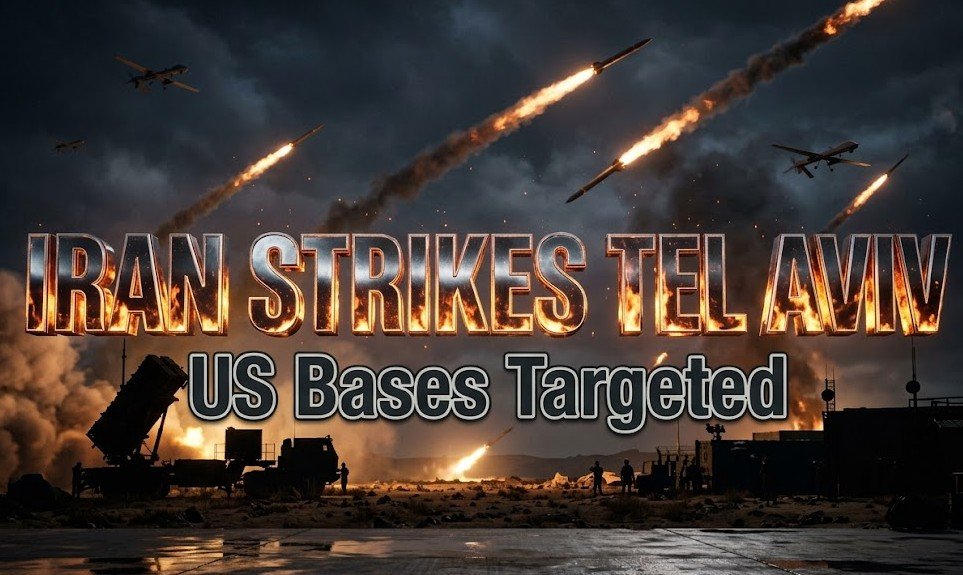
A stark escalation in the Middle East conflict has unfolded as Iran’s Islamic Revolutionary Guard Corps publicly released footage showing ballistic missiles and drones launched toward Tel Aviv in Israel and United States military bases in the region under a campaign it calls “True Promise 4.” The video release on March 12, 2026 signals a new and highly symbolic phase in Iran’s long‑running confrontation with Israel and the US, stirring global alarm and intensifying diplomatic pressure on world powers to prevent broader war.
The footage, broadcast by Iranian state authorities, captured multiple launches of ballistic missiles and unmanned aerial vehicles as part of what Iran labels a defensive response to perceived aggression by Israel and its allies. Analysts view the release as both a statement of military capability and a calculated attempt to shape international narratives amid the volatile regional crisis.
New Wave of Attacks Under Operation True Promise 4
Iran’s Guards say the march of strikes falls under a multi‑stage campaign dubbed “Operation True Promise 4.” State media reported that four advanced ballistic missiles — including Emad, Qadr, Khaybar Shekan, and Fattah types — were fired toward strategic targets near Tel Aviv and US military installations in West Asia. Alongside these missiles, Iran deployed what it described as “destructive drones” in strikes meant to reach deep into adversary territory.
This operation follows previous phases of True Promise 4, which have included attacks on naval assets and bases in the Indian Ocean and Kuwait, according to Iranian military statements. Officials have framed the broader campaign as retaliation and deterrence, especially following a string of direct confrontations with Israel and its Western allies in recent weeks.
The Iranian release was accompanied by the slogan “Labbaik Ya Khamenei,” which translates to “At your service, oh Khamenei,” underscoring the ideological and political messaging tied to the military operation and Iran’s support for its Supreme Leader.
Impact on Civilians and Regional Stability
The escalation has had tangible human consequences on the ground. In northern Israel, continued missile and rocket attacks, including those associated with Iranian strikes and allied groups like Hezbollah, have injured dozens and damaged hundreds of homes. Emergency responders and hospitals report rising numbers of treated individuals as tensions persist without clear signs of de‑escalation.
Israeli air raid sirens have sounded frequently in cities like Tel Aviv, indicating multiple incoming threats. Although Israel’s Iron Dome and other defense systems have intercepted many projectiles, some launches have penetrated defenses, heightening fear among civilians and emergency planners. Independent analysts stress that missile and drone attacks create psychological damage far beyond physical impact points, as populations face repeated shelter alerts and disruptions to daily life.
Global Reactions and Diplomatic Pressure
International responses have been swift and varied. Western governments have condemned attacks on US forces and key allies, calling for restraint and intensified diplomatic talks. Meanwhile, Iran’s statements portray the strikes as justified defense, echoing longstanding grievances over military actions taken by Israel and the United States in the region. Recent efforts by third‑party states to mediate hints at a growing concern over a spiraling conflict, though major powers remain deeply divided on strategy.
Despite global alarm, diplomacy has yet to produce a breakthrough. Some countries are pushing for ceasefire talks, while others emphasize military deterrence as a means to prevent further aggression. The situation underscores a broader dilemma for international actors balancing calls for peace with backing security guarantees for Israel and protecting US personnel abroad.
Military Messaging and Strategic Implications
Iran’s public release of missile footage is not just warfare documentation — it is strategic communication meant to signal strength and resolve. By showcasing various missile types and drone swarms in operation, Tehran emphasizes its expanding missile capability and willingness to use it far beyond its borders. This messaging resonates internally with Iranian audiences and externally with both adversaries and allied groups in the region.
Experts note that such releases often serve dual purposes: they may deter opponents by showcasing capability while also rallying domestic and allied support through nationalist narratives. Whether the footage reflects operational accuracy or is shaped for political effect, it undeniably shapes international perceptions of the conflict’s trajectory. Analysts caution that excessive reliance on symbolic warfare footage can obscure the deeper risks of unchecked escalation.
At the same time, US and allied defense officials continue to track and counter Iranian‑linked missile and drone waves, deploying advanced interception systems throughout the Gulf and Eastern Mediterranean. These actions have helped blunt some missile threats, though persistent firing patterns indicate that Iran and its partners remain committed to sustained operations.
What Comes Next
With both sides showing little sign of pulling back, experts warn that further escalation could occur without effective diplomacy. Civilian populations in Israel, Gulf countries, and even broader Middle East states face heightened insecurity as air defense systems and emergency services wrestle with repeated alerts and intermittent impacts.
For diplomats, the challenge remains blending pressure with engagement to prevent wider war. Efforts by third‑party mediators and calls from global leaders for restraint reflect widespread concern that this conflict — now in its fourteenth day — could spark broader regional conflagration. Civilians caught in the crossfire, meanwhile, continue to bear the immediate costs of uncertainty and fear.