Egypt’s Industry Minister Khaled Hashem has called on the United States to review temporary tariffs on Egyptian rebar exports. The appeal highlights growing efforts to expand economic cooperation between the two countries at a time when both seek stronger business links.
The request came during talks focused on removing barriers and opening new doors for investment. With the 29.51 percent countervailing duty in place since January, Egyptian steel makers face real pressure in the American market.
Background on US Tariffs Hitting Egyptian Steel
The US Department of Commerce imposed the preliminary countervailing duty in January after finding that Egyptian rebar producers received government subsidies. This duty targets concrete reinforcing bar, the steel product widely used in construction projects worldwide.
Egypt had become the top supplier of rebar to the US market in recent years. The material plays a vital role in building infrastructure, high rise structures, and major developments.
The tariff makes Egyptian rebar significantly more expensive for American buyers. It adds to other existing steel import measures and could sharply reduce shipments that once reached hundreds of millions in value.
Egyptian steel companies, including major players in the Ezz Group, now navigate a tougher landscape. The duty stems from investigations covering 2024 data. Separate anti dumping reviews are also underway, adding uncertainty for exporters.
Rebar forms the backbone of construction. Without competitive access to the US market, Egyptian producers may need to redirect volumes to other regions or focus more on domestic demand. This shift carries implications for jobs and industrial output in Egypt.
Minister’s Appeal During Key Meeting with US Business Leaders
Hashem made the direct request while meeting Omar Mohanna, chairman of the American Chamber of Commerce in Egypt. The discussion went beyond the tariff issue to explore broader ways to grow bilateral trade.
The minister stressed Egypt’s strong interest in deepening cooperation. He pointed to the long history of positive relations between the two nations and the desire to build on that foundation.
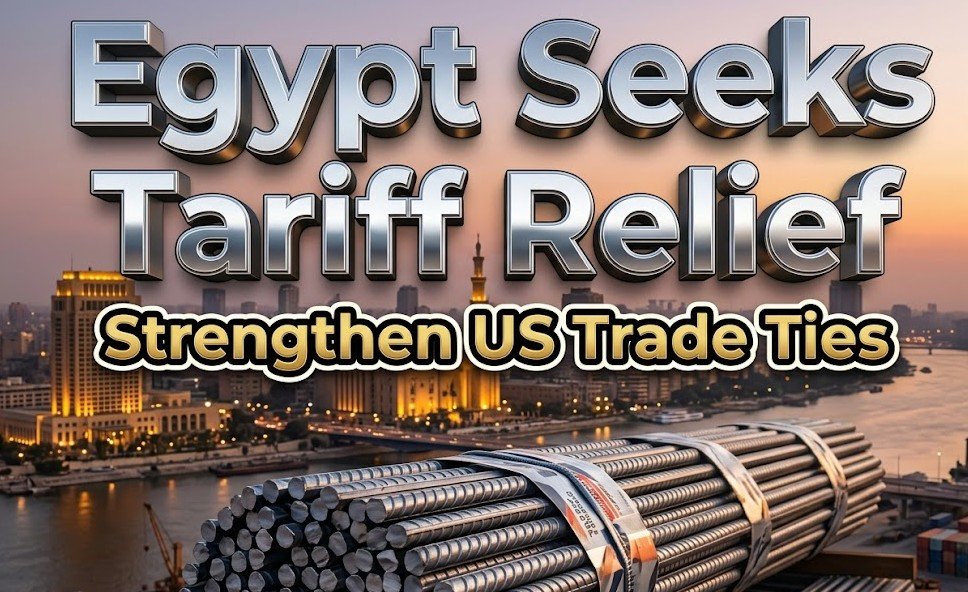
Both sides see clear value in removing hurdles that limit trade flow. Easing the rebar tariffs would help restore competitiveness for Egyptian exports while keeping supply chains stable for US construction firms.
The meeting occurred as AmCham Egypt prepares a delegation visit to Washington. These talks signal Egypt’s proactive stance on trade matters. Officials want to ensure American partners understand the full picture of Egyptian industry and its contributions.
Major Investment Openings for American Companies in Egypt
Beyond the tariff question, Hashem outlined attractive opportunities for US firms. Data centers stand out as a priority area. These facilities could serve both local needs and global demand while supporting the growth of artificial intelligence industries.
Renewable energy offers another promising field. American companies could help build power plants and install energy systems inside Egyptian industrial zones. Such projects align with Egypt’s push for sustainable development.
The country continues to streamline processes for allocating industrial land. This move aims to make it easier for foreign investors to launch operations quickly.
Key sectors now in focus include advanced manufacturing and technology integration. Egypt wants to position itself as a regional hub by modernizing its industrial base and linking research institutions more closely with factories.
Egypt Advances Economic Reforms to Draw Global Partners
The government is rolling out new tools to finance industrial growth. Plans call for launching investment funds that let ordinary citizens participate. The first of these funds should start operating in the fourth quarter of 2026.
These reforms reflect a wider strategy to restore Egypt’s place on the global industrial map. Officials are working to attract strategic investments while supporting local companies and small enterprises.
Productive villages and technical training programs aim to integrate smaller businesses into larger supply chains. A new technology park is also in development to turn research ideas into practical products for the market.
These steps show Egypt’s commitment to creating a more open and competitive business environment. By addressing investor concerns and offering clear incentives, the country hopes to draw more American capital and expertise.
The steel sector itself remains important. Recent visits to major plants, such as those in Suez, demonstrate ongoing efforts to boost local production and explore partnerships with international players, including groups from China.
Trade between Egypt and the US has long included significant steel flows. Resolving current differences could open the door to even stronger ties across multiple industries.
For American businesses, Egypt offers a strategic location with growing infrastructure needs and a young workforce. For Egypt, access to US technology and markets can accelerate development goals.
The coming months will prove critical as final determinations on the duties take shape. Both governments have channels to discuss these issues constructively.
Fair trade practices benefit everyone involved. They support jobs on both sides of the Atlantic and help build reliable supply chains in an uncertain world.