Egypt and Saudi Arabia moved to publicly close ranks on some of the Middle East and Horn of Africa’s most volatile conflicts, with Cairo declaring its stance fully aligned with Riyadh on Yemen, Sudan and Somaliland. The statement comes at a moment of growing strain across the region and visible tension with the United Arab Emirates.
The message from Cairo was blunt and deliberate. Unity first, fragmentation later.
Cairo Meeting Signals Tight Political Coordination
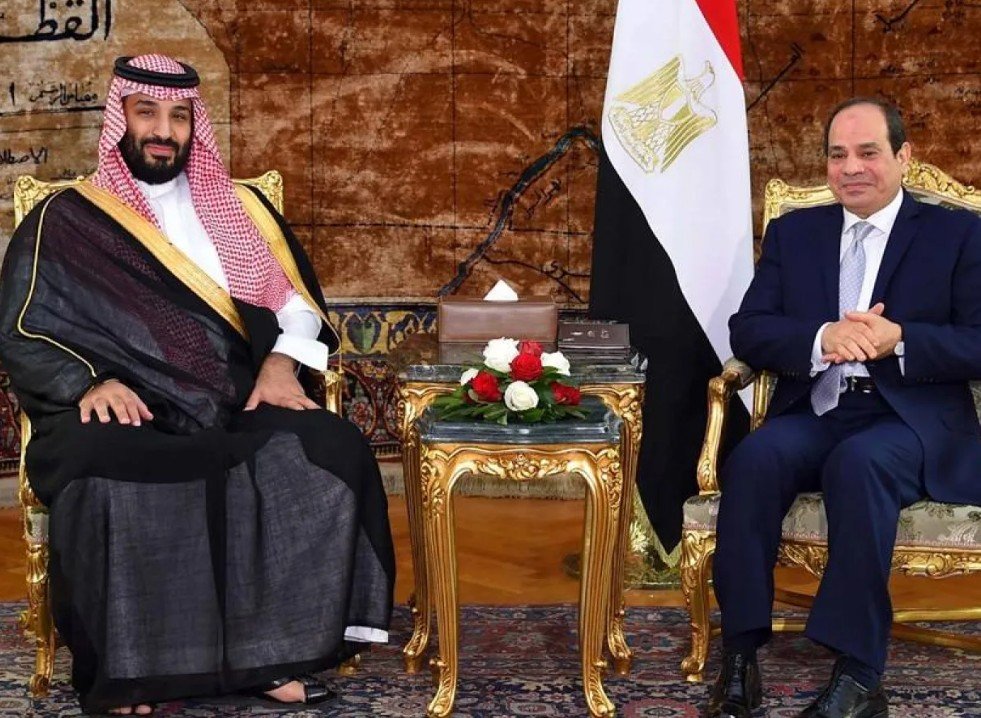
Egyptian President Abdel Fattah al-Sisi hosted Saudi Foreign Minister Faisal bin Farhan in Cairo on Monday, in talks that focused squarely on regional flashpoints rather than ceremony.
According to a statement from the Egyptian presidency, both sides stressed that their views were “identical” on resolving crises across the region. The language was unusually strong, leaving little room for interpretation.
Officials said any political settlements must protect state unity, sovereignty, and territorial integrity. Sudan, Yemen, Somalia and the Gaza Strip were mentioned explicitly.
That list alone tells a story. These are conflicts where borders, authority and legitimacy remain deeply contested, and where outside influence often tilts outcomes.
The meeting also underscored that Cairo and Riyadh are eager to show alignment at a time when regional alliances feel less predictable than they once did.
Yemen Remains a Sensitive Test Case
Yemen featured prominently in the discussions, and for good reason.
Saudi Arabia has spent years trying to contain the conflict on its southern border, while pushing for a settlement that limits the influence of the Iran-backed Houthis. Egypt, while not directly involved militarily in recent phases, has consistently backed efforts that preserve Yemen’s territorial unity.
Behind the scenes, however, the picture is complicated.
Saudi Arabia and the United Arab Emirates have long supported different factions inside Yemen’s internationally recognised government. That uneasy arrangement has held at times, and fractured badly at others.
Tensions rose sharply in December after the UAE-backed Southern Transitional Council seized control of two strategic provinces. The move angered Riyadh and raised fresh questions about whether Yemen is drifting toward permanent fragmentation.
Cairo’s public alignment with Saudi Arabia sends a clear signal. Egypt is backing a unified Yemeni state, and by extension, Riyadh’s preferred outcome.
That stance also fits Egypt’s broader worldview. Fragmented states, from Cairo’s perspective, tend to export instability.
Sudan, Somalia and the Red Line on Borders
Sudan was another focal point, and Egypt’s interest there runs deep.
Instability in Sudan affects Nile water security, border control, and regional migration flows. Cairo has consistently opposed any political arrangement that risks splitting the country or weakening central authority further.
By stressing shared views with Saudi Arabia, Egypt is reinforcing a common red line: no endorsement of breakaway regions or parallel governments.
Somalia, including the issue of Somaliland, was folded into that same framework. Cairo and Riyadh both oppose recognition of Somaliland as an independent state, arguing it would undermine Somalia’s territorial integrity and set a dangerous precedent.
This position has gained urgency after reports that Israel was weighing steps that could amount to recognition, triggering celebrations in Somaliland and condemnation elsewhere.
For Egypt and Saudi Arabia, the fear is dominoes. Once one border shifts, others may follow.
The Unspoken Backdrop: Friction With Abu Dhabi
While the Egyptian statement avoided naming the UAE directly, the subtext was hard to miss.
Saudi Arabia and the UAE were once near-lockstep partners across the region, particularly after 2015. That relationship has cooled, replaced by rivalry in economic policy, energy strategy, and regional influence.
Yemen has become a visible pressure point in that divergence. So has Sudan, where different external actors are accused of backing rival power centers.
Egypt finds itself in a careful position. The UAE is a major economic partner and investor, yet Cairo is also deeply invested in maintaining strategic harmony with Saudi Arabia.
By publicly aligning with Riyadh, Egypt appears to be prioritising political coherence on security issues, even as it tries to avoid open confrontation with Abu Dhabi.
Basically, this is diplomacy with the volume turned up, but not all the way.
Gaza and the Wider Regional Picture
Gaza’s inclusion in the talks added another layer.
Egypt has played a central mediation role in efforts to end the war there, hosting summits and brokering ceasefire talks. Saudi Arabia, meanwhile, has positioned itself as a key diplomatic voice in shaping post-war political arrangements.
Both countries agree on one thing. Any outcome that erodes Palestinian territorial claims or permanently destabilises neighbouring states is unacceptable.
That shared stance reinforces why Cairo wanted the word “identical” on record. In a region full of mixed signals, clarity becomes a tool.
And timing matters. With multiple conflicts intersecting, leaders are wary of misalignment that adversaries could exploit.
Why This Statement Matters Now
Diplomatic language often sounds repetitive. This time, it wasn’t.
Egypt could have said “shared concerns” or “close coordination.” Instead, it chose “identical positions.” That choice was intentional.
It signals reassurance to Riyadh. It sends a message to rivals. And it tells domestic audiences that Egypt sees regional stability as inseparable from Saudi cooperation.
There is also a defensive element. As geopolitical competition intensifies, states are keen to show they are not isolated or drifting.
For Cairo, aligning publicly with Saudi Arabia reinforces its role as a central Arab power broker, even as economic pressures at home remain heavy.
For Riyadh, Egypt’s backing adds diplomatic weight to its positions at a moment when regional consensus feels harder to maintain.
A Region Still Searching for Balance
None of the conflicts discussed in Cairo are close to resolution.
Yemen remains fractured. Sudan is locked in violence. Somalia’s future borders are contested. Gaza’s fate is uncertain.
What Egypt and Saudi Arabia are doing, for now, is drawing lines. Unity over division. State borders over armed movements. Negotiated outcomes over imposed realities.
Whether those principles hold in practice is another matter entirely.