
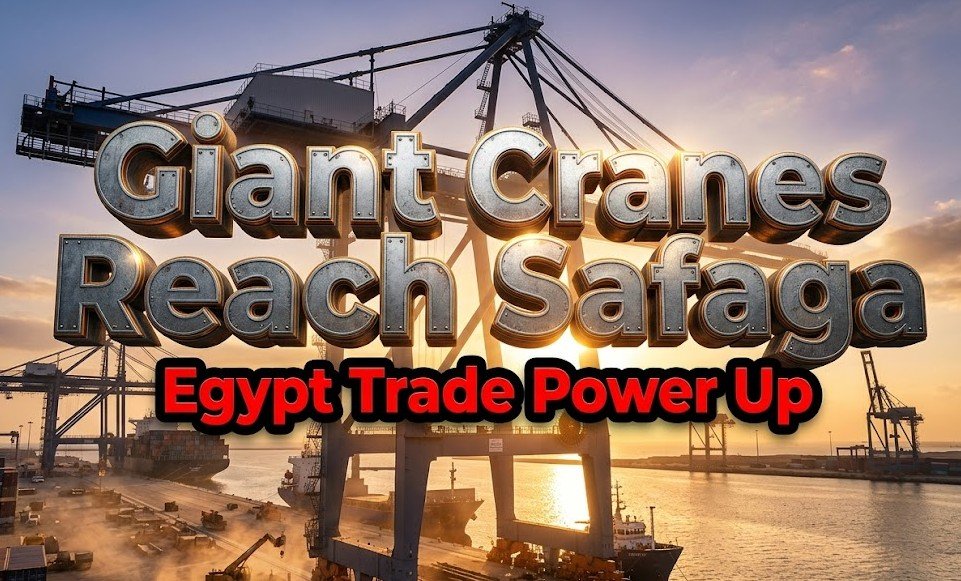
Egypt took a major step in strengthening its Red Sea ports. Transport Minister Kamel al-Wazir announced the delivery of advanced cranes to the Safaga 2 terminal on April 7, 2026. This arrival brings the new multipurpose facility closer to full operations and highlights Egypt’s push to become a leading logistics hub.
Powerful New Equipment Arrives From China
Three ship-to-shore quay cranes and six rubber-tyred gantry yard cranes reached the Safaga 2 terminal. Chinese manufacturer Shanghai Zhenhua Heavy Industries Co., Ltd. built the Super Post-Panamax equipment. They traveled by sea from China to the Red Sea coast.
These cranes will handle large container vessels efficiently. The STS units speed up loading and unloading. The intelligent RTG cranes use smart systems to position containers accurately and cut down on errors. Noatum Ports confirmed the delivery as a shift from construction to phased operations.
The equipment forms part of the superstructure phase. Egyptian companies finished all infrastructure work earlier. This includes the quay wall and supporting facilities ready for the new cranes.
Safaga Opens Door for Upper Egypt Development
The terminal sits on Egypt’s Red Sea coast about 60 kilometers south of Hurghada. It serves as the main gateway for Upper Egypt and the Golden Triangle economic zone. Rich in minerals like phosphate, gold and other resources, the Golden Triangle needs reliable port access to move goods to world markets.
The project cuts transport distances by up to 500 kilometers for many shipments from southern regions. It supports mining activities, agricultural exports and industrial growth. Better rail links will move cargo from inland areas straight to the port.
This marks the first time an international operator runs a terminal in Upper Egypt. Noatum Ports brings global expertise to local needs. The facility will connect Egypt more strongly with markets in the Middle East, Africa and beyond.
Big Scale Meets Strong Capacity Plans
The terminal covers roughly 810,000 square meters with a 1,000-meter quay wall. Water depth reaches 17 meters to welcome larger ships. Planners designed it as a multipurpose site ready for different cargo types.
Here is what the terminal aims to handle each year:
- 450,000 TEUs of containers
- 5 million tonnes of dry bulk and general cargo
- 1 million tonnes of liquid bulk
- 50,000 CEUs of Ro-Ro vehicles
This mix gives flexibility for different trade flows. Container traffic will grow steadily while bulk operations serve mining and industrial clients. The setup also includes space for safe storage and fast turnaround times.
The new cranes will make these targets realistic from day one. Operators can now test equipment and train teams ahead of the full launch in the second half of 2026.
Global Investment Backs Egypt’s Logistics Vision
AD Ports Group committed $200 million to develop and operate the terminal under a 30-year concession with the Red Sea Ports Authority. The group invested about AED 193 million specifically in the cranes. In February 2026 the company secured $115 million in project financing led by the International Finance Corporation with support from National Bank of Kuwait Egypt and other partners.
Mohammed Al Tamimi, CEO of Noatum Ports, described the crane arrival as a key operational milestone. He said it moves the project closer to launch and supports broader regional growth. The investment reflects confidence in Egypt’s strategic location along major shipping routes.
The project fits Egypt’s larger plan to modernize ports and boost trade. It creates direct and indirect jobs in construction, operations and related services. Local businesses should see lower logistics costs while exporters gain faster access to global customers.
Captain Mohamed Juma Al Shamisi, Group CEO of AD Ports Group, has spoken about building resilient infrastructure in key markets. This terminal strengthens Egypt’s role in international supply chains while creating long-term value.
The development comes at an important time for Red Sea trade. Enhanced capacity helps Egypt capture more opportunities even as global shipping patterns shift.
Egypt’s investment in modern port equipment at Safaga shows real commitment to future growth. The new cranes stand ready to move cargo faster and more efficiently than ever before. As the terminal opens later this year, it promises to unlock economic potential across Upper Egypt and create opportunities for thousands of families. What do you think about this development for Egypt’s trade future? Share your thoughts in the comments below.
