
A critical medical lifeline opened up on Sunday as Egyptian authorities successfully received a new group of Palestinians from the Gaza Strip requiring urgent medical intervention.
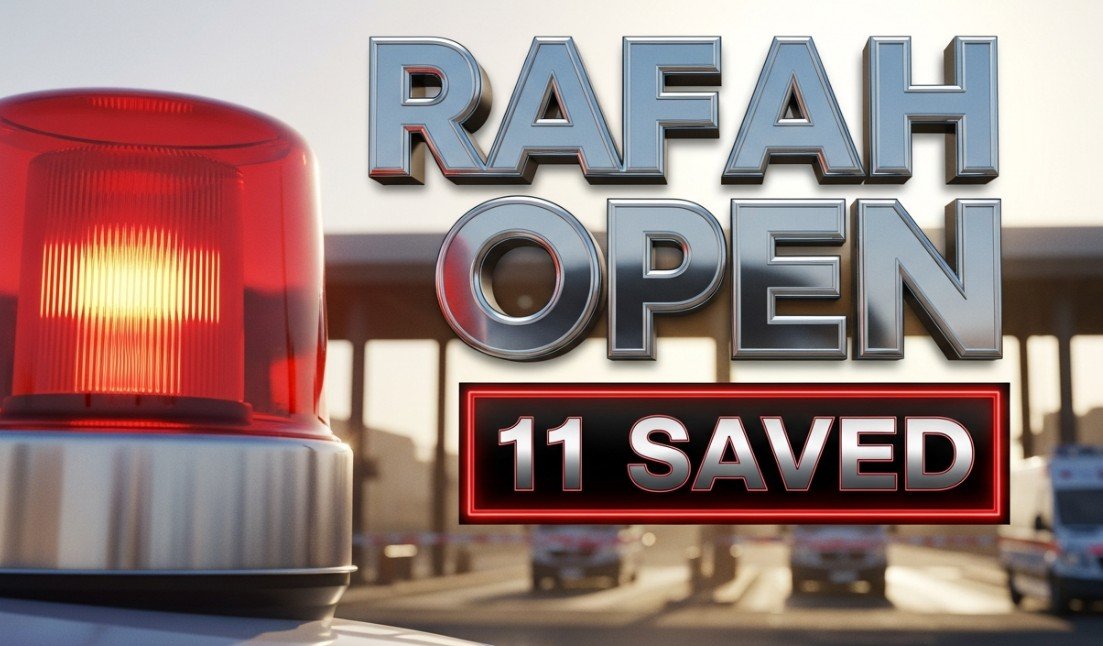
Ambulances lined the Egyptian side of the border to transport 11 wounded and ill patients along with 33 of their family members. This latest evacuation highlights the continued pressure on the enclave’s collapsed health sector and Cairo’s ongoing role in facilitating complex humanitarian transfers.
Emergency Triage and Medical Assessment in North Sinai
Medical teams in North Sinai mobilized early Sunday to prepare for the arrival of the patients. The specialized crews stationed at the crossing point conducted immediate preliminary examinations the moment the patients crossed into Egyptian territory. These initial checks are vital to stabilize anyone who might have deteriorated during the transport process.
Health officials confirmed that triage teams assessed each case individually to determine the urgency of their condition.
The group includes patients suffering from severe trauma injuries and chronic illnesses that can no longer be treated inside Gaza. Hospitals within the strip face catastrophic shortages of fuel, medicine, and electricity. This lack of resources makes complex surgeries or long-term care nearly impossible for local doctors to manage.
Authorities have established a streamlined protocol at the border to ensure speed.
- Vital Sign Checks: Immediate monitoring of heart rate and blood pressure.
- Stabilization: Administering urgent fluids or pain management if needed.
- Referral: assigning patients to specific ambulances based on injury type.
This organized approach ensures that critical time is not lost between the border crossing and hospital admission.
Specialized Treatment Plans Across Egyptian Hospitals
The Egyptian Ministry of Health has raised the readiness levels at designated hospitals in the North Sinai governorate and beyond. Most patients are initially transferred to facilities like Al-Arish General Hospital or Sheikh Zuweid Central Hospital. These facilities have been upgraded recently to handle war trauma cases.
Doctors determine the destination for each patient based on the complexity of their medical needs.
Cases requiring advanced neurosurgery or specialized cancer treatment are often moved to major medical centers in Cairo.
Accompanying the 11 patients are 33 family members. These companions play a crucial role in the recovery process. They provide psychological support and handle decision-making for patients who may be incapacitated or minors. Egyptian authorities process these companions to ensure they have legal clearance to stay with their relatives during treatment.
The logistics of moving patients with their families require significant coordination.
“Every medical evacuation is a complex operation involving security clearance, ambulance coordination, and hospital bed management,” a source familiar with the operations noted.
The goal remains to provide prompt care that is simply unavailable in the conflict zone.
Collapsed Health Infrastructure Drives Urgent Evacuations
The arrival of these 11 patients underscores the desperate situation facing the medical system in Gaza. International health organizations report that the majority of hospitals in the enclave are non-functional. The few that remain open are operating at three or four times their capacity.
Surgeons in Gaza often work without anesthesia or basic sterilization tools.
This total collapse of local infrastructure forces families to seek evacuation as their only hope for survival.
The World Health Organization has repeatedly called for sustained medical evacuation corridors. While the transfer of 11 patients is a positive step, it represents a fraction of the thousands waiting for help. The waiting lists for medical evacuation continue to grow daily as the conflict grinds on.
Current estimates on the health crisis reveal grim statistics:
| Indicator | Status | Impact on Patients |
|---|---|---|
| Hospital Capacity | Severe Overcrowding | Patients treated on floors |
| Medical Supplies | Critical Shortage | Re-use of single-use items |
| Specialized Care | Unavailable | Cancer/Dialysis interruptions |
| Infection Rate | High | Post-surgery complications |
This table illustrates why even a small number of evacuations is a logistical victory. Every patient transferred out frees up a bed inside the enclave and saves a life that might otherwise be lost to infection or lack of care.
Cairo Continues Critical Humanitarian Support Efforts
Egypt continues to position itself as the primary humanitarian hub for the Gaza crisis. The transfer on Sunday is part of a broader strategy by Cairo to support Palestinians affected by the violence. This involves not just medical treatment but also the logistics of aid trucks and diplomatic mediation.
The Rafah crossing remains a focal point of these efforts.
Egyptian officials have reiterated their commitment to keeping the crossing functional for humanitarian purposes despite security challenges.
Coordinating these transfers requires dialogue between multiple parties to ensure safe passage. The presence of specialized medical convoys at the border shows that the health ministry treats these operations as high-priority emergencies. They have deployed extra staff to North Sinai to ensure the system does not get overwhelmed.
The focus now shifts to the recovery of these 11 individuals.
Doctors in Egypt will provide comprehensive care plans ranging from orthopedic surgery to long-term rehabilitation. For the 33 companions, it marks a moment of relief after months of uncertainty. The international community continues to watch these transfers closely as a barometer for humanitarian access in the region.
The successful entry of this group offers a template for future small-scale evacuations. It proves that despite the geopolitical friction, humanitarian corridors can function when coordination holds.
