Discovery at Abusir reveals a vast solar complex linked to King Nyuserre, reviving a cult that once shaped royal power and belief
Archaeologists working south of Cairo have uncovered the remains of a rare ancient Egyptian sun temple, a find officials say adds an important chapter to the story of how early pharaohs linked political authority with divine worship.
Egypt’s Ministry of Tourism and Antiquities confirmed that the newly revealed structure belonged to King Nyuserre of the Fifth Dynasty and was found in the Abusir necropolis, an area already known for its understated pyramids and long-buried history.
A temple lost to the Nile, found after a century
The discovery is the result of work by an Italian archaeological mission operating under Egypt’s supervision. While the site itself was first identified more than a century ago, nature had the final say for decades.
In 1901, German archaeologist Ludwig Borchardt flagged the location as potentially significant. Excavation, however, proved impossible. The water table in the area was too high, and River Nile sediment had effectively sealed the structure underground.
That obstacle has now been overcome.
According to the ministry, more than half of the temple has been uncovered for the first time, revealing a complex that had remained hidden beneath layers of silt deposited over thousands of years.
One sentence captures the scale of the moment: this is only the third confirmed solar temple ever found in Egypt.
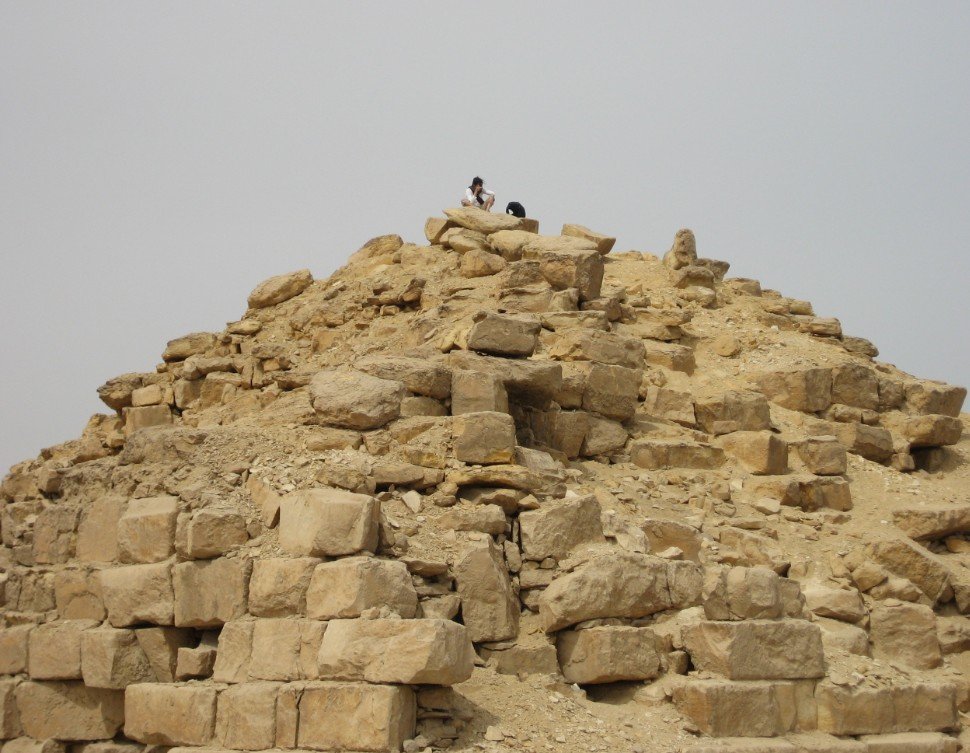
Why sun temples matter in ancient Egypt
Sun temples are among the rarest religious structures from ancient Egypt. Unlike pyramids, which dominate popular imagination, solar temples were built specifically to honour Ra, the sun god, during a narrow window of Egyptian history.
Most date to the Fifth Dynasty, a period when kings increasingly emphasized their divine connection to Ra as a source of legitimacy.
Scholars believe six such temples were constructed during that era. Until now, only two had been conclusively identified, including Nyuserre’s.
The Abusir find strengthens the idea that solar worship was not symbolic window dressing. It was central to state ideology.
And that makes this discovery more than bricks and stone.
A massive structure with unusual design
What archaeologists have uncovered so far suggests a complex of striking scale and design.
The ministry described the temple as covering more than 1,000 square metres, placing it among the largest and most distinctive valley temples in the broader Memphis necropolis. That zone once served as a sprawling funerary and ritual landscape for ancient Egypt’s elite.
Several architectural elements have already been documented.
Column bases and wall coverings hint at monumental spaces rather than modest shrines. Granite thresholds suggest carefully controlled movement through the structure, likely tied to ritual processions.
Perhaps most intriguing is a sloping ramp discovered at the site. Researchers believe it may have linked the temple directly to the Nile, or to one of its ancient branches, allowing ceremonial access by boat.
That single feature opens many questions.
Was the river itself part of the ritual? Did priests arrive by water, mirroring the sun’s daily journey? For now, the answers remain buried just a little deeper.
Abusir steps out of Giza’s shadow
Abusir sits roughly 20 kilometres south of Cairo and is often overlooked by tourists in favour of Giza’s towering pyramids. Yet for archaeologists, the site has long been a quiet heavyweight.
It contains the pyramids of several Fifth Dynasty pharaohs, including Sahure, Neferirkare, and Nyuserre himself. These pyramids are smaller and less visually dramatic than those at Giza, reflecting a shift in royal priorities and resources.
The newly uncovered sun temple reinforces Abusir’s importance as more than a burial ground.
It was also a centre of active worship, political messaging, and theological experimentation.
In simple terms, Abusir was busy.
A slow excavation with high stakes
Officials caution that the work is far from finished. Excavation is proceeding carefully due to the site’s condition and its long exposure to groundwater.
Sediment from the Nile preserved parts of the structure while damaging others. Archaeologists now face the delicate task of stabilising walls, documenting features, and interpreting a layout unlike anything previously excavated in full.
One short paragraph says a lot: patience will define the next phase.
The ministry has not announced a timeline for public access or display, and none is expected soon. For now, the focus remains on research rather than tourism.
Rewriting what we know about the Fifth Dynasty
The discovery adds weight to a growing reassessment of the Fifth Dynasty, often overshadowed by the pyramid builders who came before.
Rather than chasing sheer size, these kings invested in symbolism, ritual, and administrative reach. Sun temples were physical proof of a changing relationship between gods and kings.
Nyuserre, in particular, emerges as a ruler deeply invested in religious architecture. His reign already stood out for temple construction and administrative reforms.
This latest find strengthens that reputation.
It also gives scholars fresh material to test long-held assumptions about how religion, geography, and politics intersected along the Nile.
International collaboration, local control
The Italian mission worked in close coordination with Egyptian authorities, reflecting a broader push by Cairo to balance international expertise with national oversight.
Egypt has, in recent years, emphasized controlled excavation, digital documentation, and site preservation, aiming to avoid the mistakes of earlier eras when artefacts were removed with little context.
This project fits that approach.
Officials say all findings will remain in Egypt, with detailed studies expected to be published in academic journals over time.
For the global research community, the Abusir sun temple will likely become a reference point for decades.
A rare window into ancient belief
Solar temples were not built for the afterlife in the same way pyramids were. They were spaces for the living, for rituals conducted under open skies, aligned with the sun’s path.
That distinction matters.
It suggests that Fifth Dynasty religion was as much about daily affirmation of power as it was about eternity.
Finding one of these temples, largely intact and massive in scale, offers a rare window into how ancient Egyptians saw their rulers, their gods, and their place between earth and sky.