Senior officials from Egypt, Qatar, and Turkey have quietly urged the United States to step in and prevent new Israeli military strikes in Gaza, according to a source familiar with the discussions. The outreach reflects growing regional concern that the fragile calm could fracture again, with consequences far beyond the Strip.
The message to Washington was direct. Use influence. Slow things down. Don’t let another round of fighting erupt.
A Coordinated Appeal to Washington Behind Closed Doors
According to the source, diplomats from Cairo, Doha, and Ankara approached senior US officials in recent days with a shared request: prevent Israel from carrying out strikes in Gaza.
This wasn’t framed as a symbolic appeal. It was specific, and it carried urgency.
The request reportedly included calls to block Israeli military action both inside the Green Line and in other, unnamed locations tied to Gaza-related operations. That phrasing alone hints at anxiety over escalation pathways that might not be limited to one geographic zone.
The talks were not publicized at the time. They happened quietly, in the margins of ongoing diplomatic engagement.
One sentence from the source captures the tone. There was a sense that time mattered.
The Weekend Meeting That Set the Stage
The latest approach followed an earlier meeting over the weekend involving senior regional figures and Washington’s Middle East envoy.
That gathering included Steve Witkoff, Egypt’s foreign minister Badr Abdelatty, Turkey’s foreign minister Hakan Fidan, and Qatar’s prime minister and foreign minister Sheikh Mohammed bin Abdulrahman Al Thani.
During that meeting, a similar plea was raised.
Regional officials pressed the point that renewed Israeli strikes could unravel months of mediation efforts. Qatar and Egypt, in particular, have been central brokers in ceasefire talks and humanitarian access discussions related to Gaza.
Turkey, while less directly involved in mediation mechanics, has taken a louder political stance, frequently warning that military pressure will deepen instability.
This wasn’t a one-off conversation. It was a continuation.
Why Egypt, Qatar and Turkey Are Aligned on This
The unusual aspect here is not just the request, but the alignment.
Egypt, Qatar, and Turkey don’t always move in lockstep. Their interests overlap, but they’re far from identical. On Gaza, though, their concerns converge.
Each country has its own reasons.
Egypt worries about spillover. Gaza sits on its border, and renewed fighting raises fears of displacement, security strain in Sinai, and regional blowback.
Qatar has invested political capital in mediation. Escalation weakens its role as a trusted intermediary and complicates humanitarian channels it helps fund.
Turkey sees Gaza as a moral and political flashpoint. President Recep Tayyip Erdogan has consistently framed Israeli military action as destabilizing, using sharp language that resonates with his domestic base.
Put together, the message to Washington becomes harder to ignore.
This is not one capital complaining. It’s three.
The US Role as Pressure Valve
At the center of the appeal is the United States.
Washington remains Israel’s most influential ally. When regional players want restraint from Jerusalem, the White House is usually the address they write to, directly or indirectly.
US officials have not publicly confirmed the request described by the source. There has been no formal readout. No press briefing spelling it out.
Still, the timing is telling.
President Donald Trump has returned to office promising stability through strength, while also signaling he wants fewer prolonged crises abroad. Gaza tests that balance every time tensions rise.
For the US, pressing Israel to hold fire can strain domestic politics. Doing nothing, though, risks a broader regional flare-up that could pull Washington in anyway.
It’s a narrow path.
Gaza as a Regional Trigger Point Again
Gaza doesn’t stay local for long.
History shows that Israeli operations there often ripple outward, drawing in diplomatic, economic, and security reactions across the Middle East. That’s why these conversations are happening now, before bombs fall, not after.
The source familiar with the talks said the appeal emphasized prevention, not response.
That distinction matters.
Stopping strikes before they begin preserves space for diplomacy. Once violence starts, positions harden fast, and outside actors lose leverage.
One sentence from a regional official sums it up: once the door swings open, it’s hard to shut.
A Recent Summit That Lingers in Memory
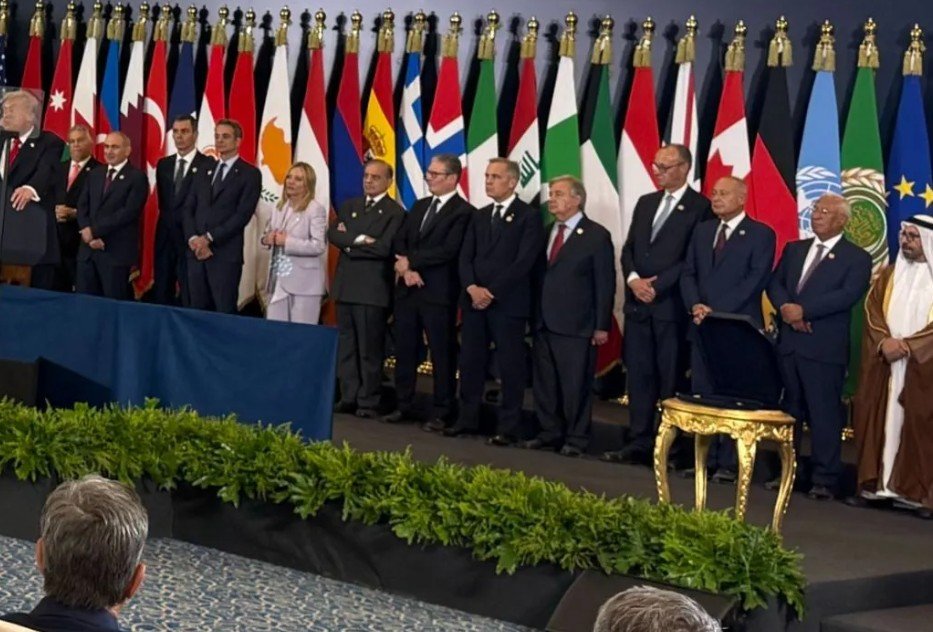
The image accompanying this moment is still fresh in diplomatic circles.
At an October summit in Sharm el-Sheikh, leaders including Abdel Fattah al-Sisi, Erdogan, Trump, and Sheikh Mohammed bin Abdulrahman Al Thani were photographed together during ceasefire discussions on Gaza.
That meeting was meant to project unity, or at least coordination.
The current outreach suggests that unity is being tested again.
While no details have emerged about Israel’s immediate plans, the fact that three regional powers felt compelled to act preemptively says a lot about the mood. Anxiety is high. Trust is thin.
What Happens Next Remains Unclear
For now, the outcome of the appeal is unknown.
US officials may relay the concerns privately to Israeli counterparts. They may push for delay, restraint, or alternative responses. Or they may decide that deterrence arguments outweigh regional warnings.
None of that has been made public.
What is clear is that diplomacy is moving fast behind the scenes. Calls are being made. Messages passed. Lines tested.