
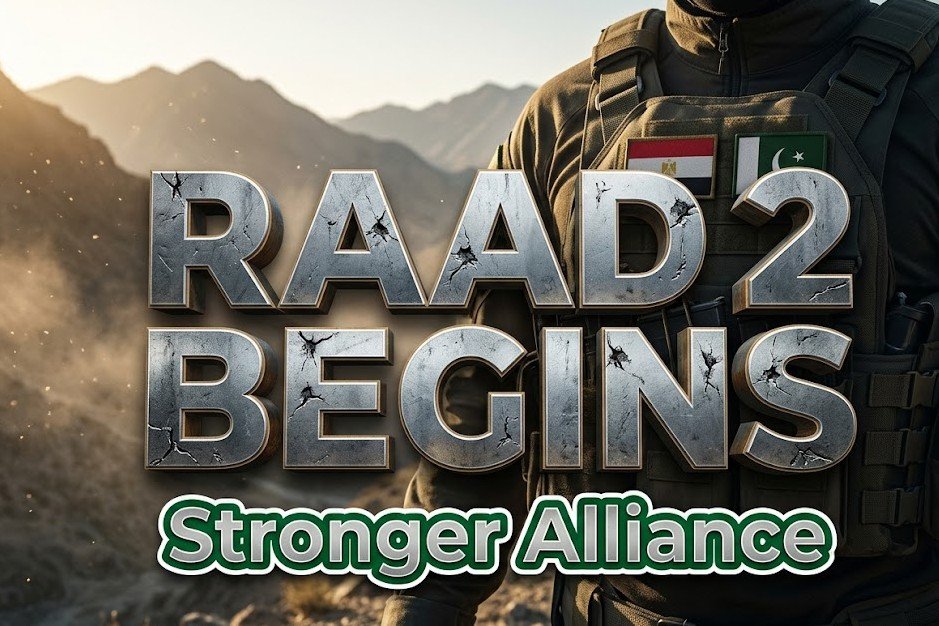
Egypt and Pakistan have begun a major joint military exercise called Raad 2. This drill highlights the growing partnership between the two countries as they work together on defense and security matters.
The exercise started on April 6 at a special forces training center in Cherat, Pakistan. It brings Egyptian paratroopers and Pakistani elite troops together for two weeks of intense training focused on counterterrorism and special operations.
Inside The Raad 2 Joint Exercise
Egyptian and Pakistani forces are training side by side in realistic scenarios. They practice special operations tactics and counterterrorism techniques that both nations face in their regions.
The drill includes joint missions, tactical exercises, and skills sharing. Egyptian military officials said it helps align the way both armies operate and builds better coordination between units. Pakistani sources called it Thunder II and stressed its role in sharpening professional skills.
This is not the first time the two armies have trained together. A similar exercise named Raad 1 took place in Egypt in early 2024. The current drill builds directly on that foundation with more advanced scenarios.
Troops from Pakistan’s Special Services Group and Egypt’s special forces and paratroopers take part. The location in the rugged terrain of Khyber Pakhtunkhwa offers a tough environment that tests endurance and teamwork.
- Exchange tactical expertise between both sides
- Practice real world counterterrorism operations
- Improve decision making under pressure
- Strengthen overall combat readiness
These activities go beyond basic training. They create trust and understanding that could prove valuable in future joint efforts.
Long History Of Military Cooperation
Egypt and Pakistan share deep roots that go back decades. Relations began shortly after Pakistan gained independence in 1947. Over the years the two countries supported each other during tough times.
Pakistani pilots and personnel helped Egypt during the 1967 and 1973 conflicts. This history of solidarity created a strong foundation for today’s partnership. High level military visits happen regularly and both sides see each other as reliable friends.
In recent years cooperation has expanded. Defense production talks and intelligence sharing form important parts of the relationship. Last year Pakistan’s army chief visited Cairo to discuss even closer security ties.
Raad 2 shows how this partnership keeps evolving. Both nations face similar challenges from extremism and regional instability. Training together helps them learn from each other’s experiences and develop better responses.
The exercise also reflects broader strategic interests. Egypt brings its expertise in desert and urban operations while Pakistan contributes its proven counterterrorism knowledge from difficult border areas.
Role In Recent Regional Diplomacy
The timing of Raad 2 is significant. It comes right after Egypt and Pakistan played important parts in diplomatic efforts during the Iran conflict that began in late February.
Along with Turkey and Saudi Arabia the two countries helped push for de escalation and talks. Egyptian President Abdel Fattah al Sisi welcomed the recent ceasefire between the US and Iran. He called for serious negotiations to build lasting peace in the region.
This military drill sends a clear message. While both nations work for peace through diplomacy they also prepare their forces for any security challenges that might arise.
The Iran situation showed how Egypt and Pakistan can coordinate on big regional issues. Their mediation efforts gained attention from world powers and highlighted their growing influence.
Now the focus returns to practical military cooperation. Raad 2 allows troops to train in an environment free from immediate crisis pressure. This preparation could help maintain stability if new threats appear.
What Raad 2 Means For Future Security
Strong military ties between Egypt and Pakistan contribute to wider regional stability. Both countries sit in important strategic locations and deal with complex security environments.
By training together they improve their ability to handle shared threats like terrorism. Better coordination also means they can support each other more effectively if needed in the future.
Experts see this as part of a larger pattern. Countries in the region are building partnerships that go beyond traditional alliances. Egypt and Pakistan offer a model of practical cooperation based on mutual respect and common goals.
The drill also has economic angles. Stronger defense links can lead to more collaboration in military equipment and technology. This creates opportunities for both nations to develop their industries while enhancing security.
For ordinary people in both countries these exercises matter. They show leaders taking concrete steps to protect national interests and promote stability. In a world facing many uncertainties such partnerships provide reassurance.
A Step Forward In Challenging Times
Raad 2 represents more than just another training event. It shows the continuing commitment between Egypt and Pakistan to stand together on defense matters while working for peace in a turbulent region.
As the two week exercise continues troops will face demanding scenarios that test their limits and build new capabilities. The lessons learned will strengthen both armies and deepen the bonds between them.
In the end military cooperation like this helps create a more secure environment for everyone. It proves that even amid global tensions nations can choose partnership over division.
