For three years, Egypt watched the war in Sudan burn from the sidelines, championing diplomacy and unity. That cautious era appears over. A reported Egyptian airstrike on a militia convoy signals a stark new phase: Cairo is now willing to use direct military force to prevent the fragmentation of its southern neighbor, a scenario it views as an existential threat.
The shift is monumental. Since conflict erupted between Sudan’s national army, the Sudanese Armed Forces (SAF), and the paramilitary Rapid Support Forces (RSF) in April 2023, Egypt has walked a diplomatic tightrope. It publicly supports the SAF-led government while trying to manage relations with the RSF’s powerful backers, like the United Arab Emirates. But as peace talks repeatedly collapsed and the RSF gained ground, Egypt’s red lines were crossed. The fear of a permanently broken Sudan, sharing a 1,200-kilometer border with Egypt, has pushed Cairo from the negotiating table toward the battlefield.
The Strike That Changed the Calculus
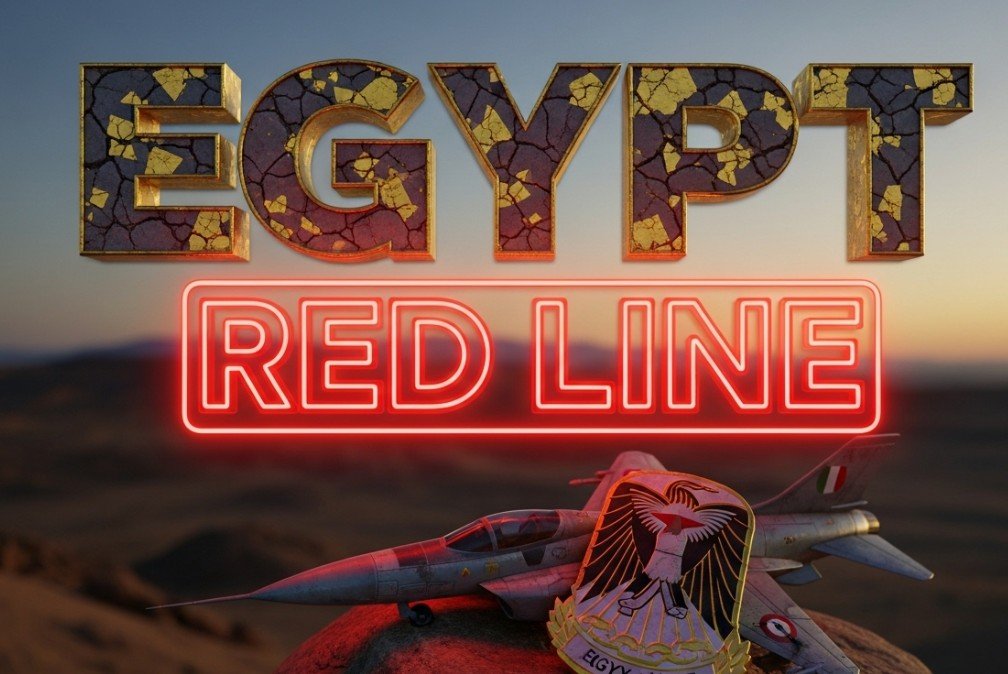
According to multiple regional security analysts and reports, the turning point came on January 9, 2026. Egyptian fighter jets allegedly struck a military convoy in the remote border triangle where Egypt, Sudan, and Libya meet. The target was not random.
- The convoy was reportedly transporting armored vehicles and weapons from Libya to resupply the RSF.
- This route, through Libya’s lawless south, has become a critical supply line for the paramilitary force.
- For Egypt, the strike was a direct message: it will act to cut off external support fueling the conflict and threatening Sudan’s territorial integrity.
While Cairo has not officially claimed responsibility, the strategic message was received in capitals across the region. “This was a calibrated demonstration of resolve,” says a Cairo-based geopolitical risk consultant who requested anonymity. “Egypt is saying it will no longer tolerate the unchecked flow of weapons that could permanently splinter the Sudanese state.”
Why Sudan’s Unity is Egypt’s Red Line
Egypt’s intervention is not merely about regional influence. It is about national survival. The stability of Sudan is inextricably linked to Egypt’s core security interests, with water and historical ties at the forefront.
The Nile River is Egypt’s lifeline, providing over 90% of its freshwater. A significant portion of that water flows from the Blue Nile through Sudan. A fragmented Sudan, with weak or hostile mini-states controlling the river’s path, could jeopardize decades of water-sharing agreements and pose an unprecedented threat to 110 million Egyptians.
Beyond water, the human and economic costs are already staggering. The war has created the world’s largest displacement crisis.
- Over 1.2 million Sudanese refugees have fled to Egypt, overwhelming public services in already strained border regions.
- Bilateral trade, once worth $1.4 billion annually, has ground to a halt.
- The threat of militant groups exploiting the chaos along the border is a constant nightmare for Egyptian military planners.
“Egypt sees a failed state in Sudan and another in Libya, creating an arc of instability on its flanks,” explains Dr. H.A. Hellyer, a senior associate fellow at the Royal United Services Institute. “The potential for this to become a regional security vacuum is a scenario Cairo is determined to avoid at all costs.”
The Delicate Balance with Powerful Allies
Egypt’s newfound assertiveness creates a complex diplomatic dance, particularly with the United Arab Emirates. The UAE is a crucial economic partner and investor in Egypt, yet it is also the primary international backer of the RSF, providing the militia with weapons, funding, and political support.
This puts Cairo in a difficult position. It must confront a group that is indirectly supported by one of its most important allies. Analysts suggest Egypt’s measured strike was also a signal to Abu Dhabi, urging a reassessment of its support for the RSF in light of broader regional stability.
“Egypt is prioritizing its core national security over diplomatic niceties. The message is clear: the integrity of the Sudanese state is non-negotiable.”
The table below outlines the stark contrast in the positions of key external actors in Sudan’s conflict:
| Actor | Primary Ally | Stated Goal | Key Concern |
|---|---|---|---|
| Egypt | Sudanese Armed Forces (SAF) | Preserve Sudan’s unity & state institutions | Nile water security, border stability, refugee influx |
| UAE | Rapid Support Forces (RSF) | Counter Islamist influence, gain economic foothold | Political influence, investment security in post-war Sudan |
| Saudi Arabia | Neutral / Mediator | Ceasefire, political settlement | Regional instability, impact on Red Sea security |
What Comes Next: A Long Road Ahead
The January strike is unlikely to be a one-off event. It establishes a new precedent for Egyptian involvement. Security experts anticipate Egypt may now enforce a de facto no-fly zone or no-go area for militia supply convoys along its southern border, using its superior air power to degrade RSF logistics.
However, turning the tide of a ground war requires more than airstrikes. The SAF, while holding the capital, has suffered significant losses. Egypt could increase its support through:
- Enhanced intelligence sharing and satellite imagery.
- Direct military advising and technical support.
- Facilitating arms shipments to the Sudanese army.
The ultimate goal remains a negotiated settlement, but from a position of strength that ensures a unified Sudan. Egypt has calculated that diplomacy alone has failed, and only demonstrated resolve can reshape the battlefield and bring the warring parties back to a table where the state’s survival is guaranteed.
Egypt’s move from cautious neighbor to active player marks a dangerous escalation, but also a reflection of its perceived lack of options. The war in Sudan is no longer just Sudan’s tragedy. Its flames are licking at the gates of the most populous Arab nation, and Cairo has decided it will not wait for them to cross the threshold. The stability of Northeast Africa now hinges on this high-stakes gamble.
The world is watching to see if this show of force can alter a devastating war’s course. What do you think Egypt’s next move should be? Share your thoughts in the comments below.