
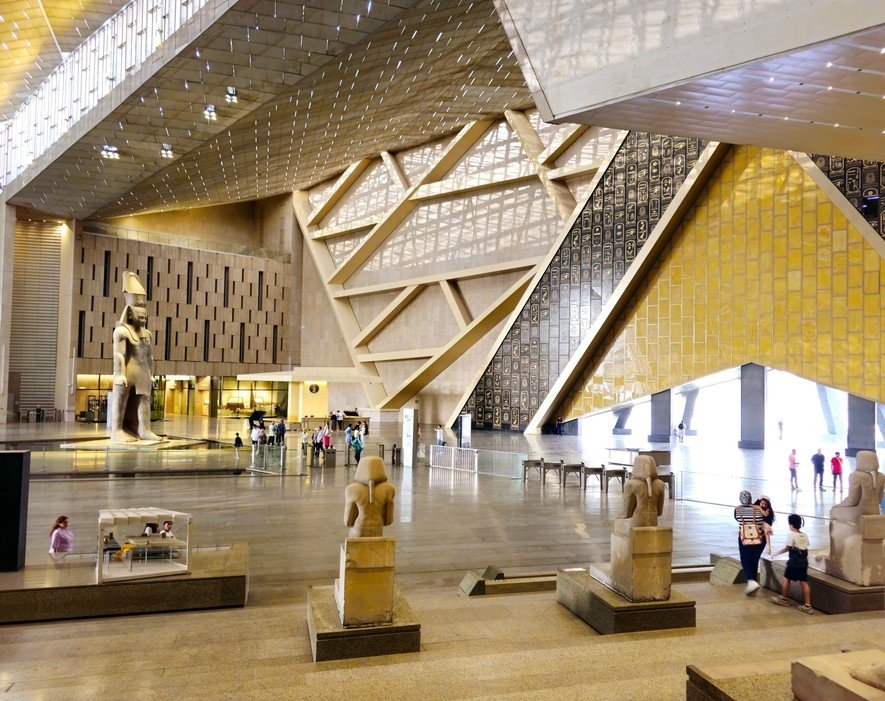
The Great Pyramids have stood for millennia as a testament to engineering, but Egypt is now building a new legacy made of code and capital. At the RiseUp Summit inside the Grand Egyptian Museum, the government unveiled a massive $1 billion Startup Charter. This bold move aims to supercharge the economy by backing 5,000 new companies and creating half a million jobs across the nation.
It is a historic moment for the North African nation. The announcement signals a major shift in how the state views technology and private enterprise. The government is no longer just watching from the sidelines. They are stepping in to provide the fuel needed to turn local ideas into global powerhouses.
A Massive Plan for Digital Growth
The scale of this initiative is hard to overstate. Prime Minister Dr. Mostafa Madbouly officially launched the charter to a packed audience of investors and founders. The atmosphere at the Grand Egyptian Museum was electric as the details emerged. This is not merely a promise of future funds. It is a structured national strategy designed to accelerate innovation.
The goal is very clear. Egypt wants to secure its place as the primary hub for technology in the Middle East and North Africa. By targeting 5,000 startups, the government is betting on volume and quality simultaneously. They believe that with the right support, these companies can solve local problems and export solutions to the world.
Key targets of the Startup Charter:
- Funding: $1 billion allocated for ecosystem growth.
- Volume: Direct support for 5,000 distinct startups.
- Employment: Creation of 500,000 direct and indirect jobs.
- Focus: Accelerated venture capital activity and digital expansion.
The timing is crucial for the local market. Many founders have struggled with access to capital and complex regulations in recent years. This charter aims to smooth out those bumps in the road. It provides a clear signal that the state is ready to do business.
Uniting Investors and Innovators
This plan did not happen overnight. It is the result of over a year of intense work and difficult conversations. The government consulted with 15 different national entities to ensure everyone was on the same page. They also listened to more than 250 stakeholders from the ecosystem to understand what was really broken.
Dr. Rania A. Al-Mashat played a pivotal role in this process. As the Minister of Planning, Economic Development, and International Cooperation, she has pushed for structural alignment. For the first time, founders, investors, and government officials are working from the same playbook.
This alignment is vital for multinational technology companies looking at the region. Investors hate uncertainty. They need to know that the rules will remain consistent. By involving so many stakeholders in the drafting process, the government has created a stable foundation. This encourages foreign direct investment to flow into Cairo and beyond.
Focus on Fintech and Artificial Intelligence
The charter is not throwing money at just anything. There is a sharp focus on high-growth sectors that can define the future. Artificial intelligence, financial technology, and digital platforms are positioned as the central drivers of this transformation. These sectors have the highest potential for rapid scaling.
Fintech has already been a success story in Egypt. The country has a large unbanked population that is hungry for digital financial solutions. Startups in this space have seen massive adoption. The charter will likely provide the regulatory ease needed to launch new financial products faster.
Artificial intelligence is another beast entirely. It requires massive computing power and specialized talent. Egypt produces thousands of engineering graduates every year. The charter aims to harness this brain power. It wants to keep that talent at home rather than seeing it leave for Europe or the Gulf.
Why these sectors matter:
- Scalability: Software solutions can serve millions of users with low marginal costs.
- Export Potential: An AI tool built in Cairo can be sold to companies in New York or Tokyo.
- Efficiency: Digital platforms modernize traditional industries like logistics and agriculture.
This strategic focus shows that Egypt is looking ahead. They are not just trying to catch up to the current tech trends. They are preparing for the next decade of digital evolution.
Impact on the MENA Region
Egypt has always been a cultural heavyweight in the Arab world. Now it is reasserting its dominance in the business world. This $1 billion commitment puts Cairo in direct competition with other major hubs like Dubai and Riyadh. However, Egypt has a unique advantage that money cannot always buy.
That advantage is its people. With a population exceeding 100 million, the domestic market is massive. A startup can become a unicorn solely by serving the Egyptian market. This allows companies to test and refine their products locally before expanding abroad. The charter leverages this demographic strength.
For investors across the Middle East and North Africa, the message is loud and clear. Egypt is open for business. The structural changes promised in the charter remove many historical barriers. It simplifies the life of a founder.
We are likely to see a ripple effect across the region. As Egypt strengthens its ecosystem, neighboring countries may ramp up their own efforts. This healthy competition benefits everyone. It leads to better regulations, more funding options, and stronger companies across the board.
The launch at the RiseUp Summit was just the beginning. The real work starts now as the funds begin to deploy. But for now, the mood in Cairo is one of optimism and fierce determination.
Egypt has taken a monumental step forward with the launch of a $1 billion Startup Charter. Announced at the RiseUp Summit by Prime Minister Dr. Mostafa Madbouly, the initiative aims to support 5,000 startups and create 500,000 jobs. The plan focuses heavily on AI, fintech, and digital platforms to modernize the economy. It is the result of a year-long collaboration between government bodies and private stakeholders. This move positions Egypt as a serious contender for the tech capital of the MENA region, offering stability and growth for investors and founders alike.
