Egypt has sharply criticised Israel’s recognition of Somaliland, linking the move to what it described as illegal plans aimed at forcing Palestinians from their land and widening fractures in Gaza, as regional tensions spill across multiple fronts.
The remarks came during an emergency diplomatic gathering, underscoring Cairo’s view that the issue goes well beyond bilateral politics and into the heart of regional stability.
Egypt raises alarm at emergency OIC meeting
Speaking at an extraordinary session of the Council of Foreign Ministers of the Organisation of Islamic Cooperation in Jeddah, Egyptian Foreign Minister Badr Abdelatty delivered a blunt message.
Cairo, he said, rejects any attempt to use Israel’s unilateral recognition of Somaliland to push what he called “illegal schemes” tied to the forced displacement of Palestinians. The move, according to Abdelatty, cannot be separated from wider regional dynamics, especially the ongoing war in Gaza and its political fallout.
His language was firm. This was not, he stressed, a technical diplomatic disagreement.
It was a red line.
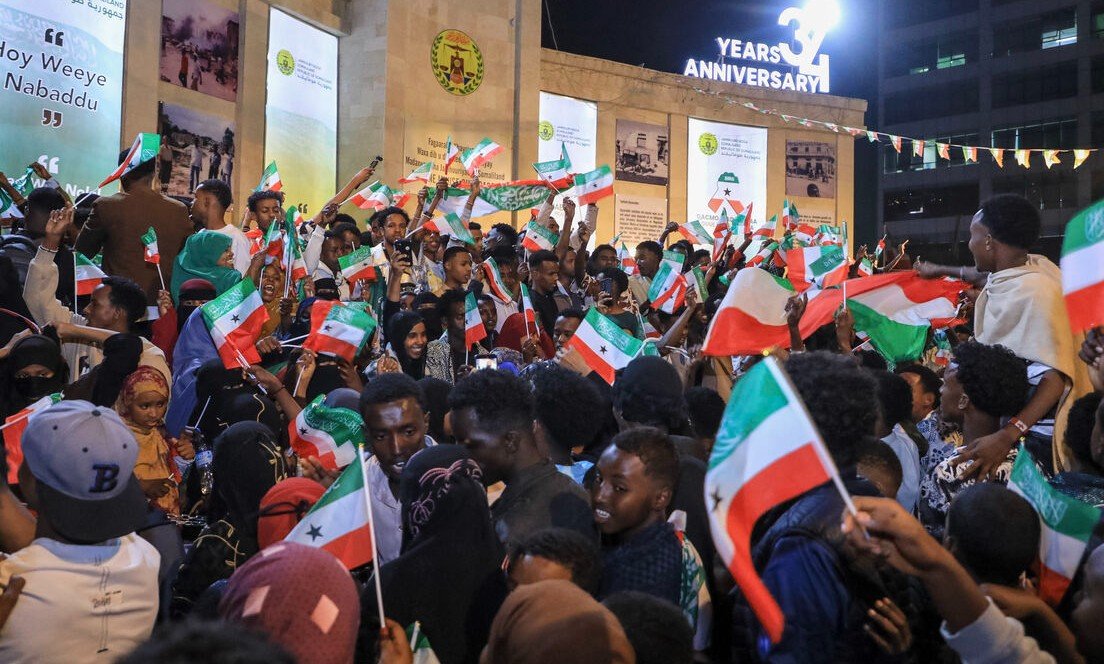
Linking Somaliland to Gaza and displacement fears
Egypt’s argument rests on context.
Abdelatty told OIC members that recognising the breakaway region of Somaliland risks becoming part of broader plans that aim to redraw realities on the ground, both in the Horn of Africa and in Palestine. In Cairo’s view, such actions create precedents that weaken international norms just as Gaza faces intense pressure and displacement fears.
He accused Israel of exploiting geopolitical fault lines to advance agendas that undermine Palestinian rights, particularly the right to remain on their land.
That linkage, while contested by others, reflects Egypt’s deep concern that regional crises are starting to overlap in dangerous ways.
“Blatant violation” of international law, Cairo says
The Egyptian foreign minister went further, describing Israel’s recognition of Somaliland as a “blatant violation” of international law.
He cited the charters of the United Nations, the OIC, and the African Union, arguing that unilateral recognition undermines agreed principles governing sovereignty and borders.
According to Abdelatty, the decision poses a direct threat to security in the Horn of Africa and the Red Sea, two regions already strained by conflict, shipping risks, and political uncertainty.
In diplomatic terms, this was a warning shot.
Somalia’s fragile moment takes center stage
A major pillar of Egypt’s objection focuses on Somalia itself.
Abdelatty told the gathering that the move undermines the international border system at a particularly sensitive time for Somalia, which is navigating a complex transitional phase. Rather than encouraging fragmentation, he argued, the global community should concentrate on helping Mogadishu strengthen its institutions and reassert authority across its territory.
Somaliland declared independence from Somalia in 1991 but has not been internationally recognised as a sovereign state. Most countries continue to treat it as part of Somalia, citing respect for territorial integrity.
From Cairo’s standpoint, altering that position now risks inflaming existing divisions.
Rejection of unilateral faits accomplis
Egypt’s stance is consistent with a broader principle it often repeats.
Abdelatty reaffirmed Cairo’s categorical rejection of any unilateral actions intended to impose an illegitimate fait accompli. Such moves, he said, erode trust in international systems and make negotiated solutions harder, whether in Africa or the Middle East.
In a room filled with diplomats from across the Islamic world, the message landed clearly.
Unilateralism, Egypt argues, is destabilising by nature.
Behind-the-scenes diplomacy with Somalia
On the sidelines of the OIC session, Abdelatty also held a bilateral meeting with Somalia’s foreign minister, Abdulsalam Abdi Ali, according to officials familiar with the talks.
While details were not fully disclosed, the discussions reportedly focused on reaffirming support for Somalia’s unity and territorial integrity, as well as coordination within multilateral forums.
For Somalia, Egypt’s backing matters. Cairo has long positioned itself as a supporter of Somali sovereignty, especially in regional organisations and African forums.
That alignment appeared intact.
Why the Red Sea and Horn of Africa matter to Egypt
Egypt’s sharp response also reflects strategic geography.
The Horn of Africa and the Red Sea sit along critical trade and security corridors that directly affect Egyptian interests, including access to the Suez Canal and regional maritime routes. Any shift in political recognition or territorial disputes in that zone carries ripple effects.
Add Gaza to the mix, and Cairo sees a pattern it finds unsettling.
Separate crises, in Egypt’s assessment, are beginning to intersect.
A wider pattern of regional strain
The controversy comes at a time when the Middle East and nearby regions are already under heavy strain.
The Gaza war has reshaped diplomatic alignments. Tensions in the Red Sea have disrupted shipping. Political transitions in parts of Africa remain fragile.
Against that backdrop, Egypt argues that moves like recognising Somaliland without consensus risk opening new fault lines.
Whether others share that assessment is another matter.
What happens next remains unclear
Israel has not publicly responded to Egypt’s specific accusations linking Somaliland recognition to Palestinian displacement. International reactions have been mixed, with some governments urging restraint and others avoiding the issue altogether.
For now, Egypt appears determined to keep the matter alive in multilateral settings, especially within the OIC and African institutions.
The message from Cairo is consistent and emphatic.
Respect borders. Reject unilateral actions. And, above all, do not allow one regional crisis to be used as leverage in another.