Egypt’s foreign minister has issued a blunt assessment of the fragile Gaza ceasefire, saying progress toward lasting peace depends squarely on Israel’s willingness to cooperate. His remarks underline growing regional frustration as negotiations struggle to move beyond an initial phase.
Cairo points to stalled momentum after first phase
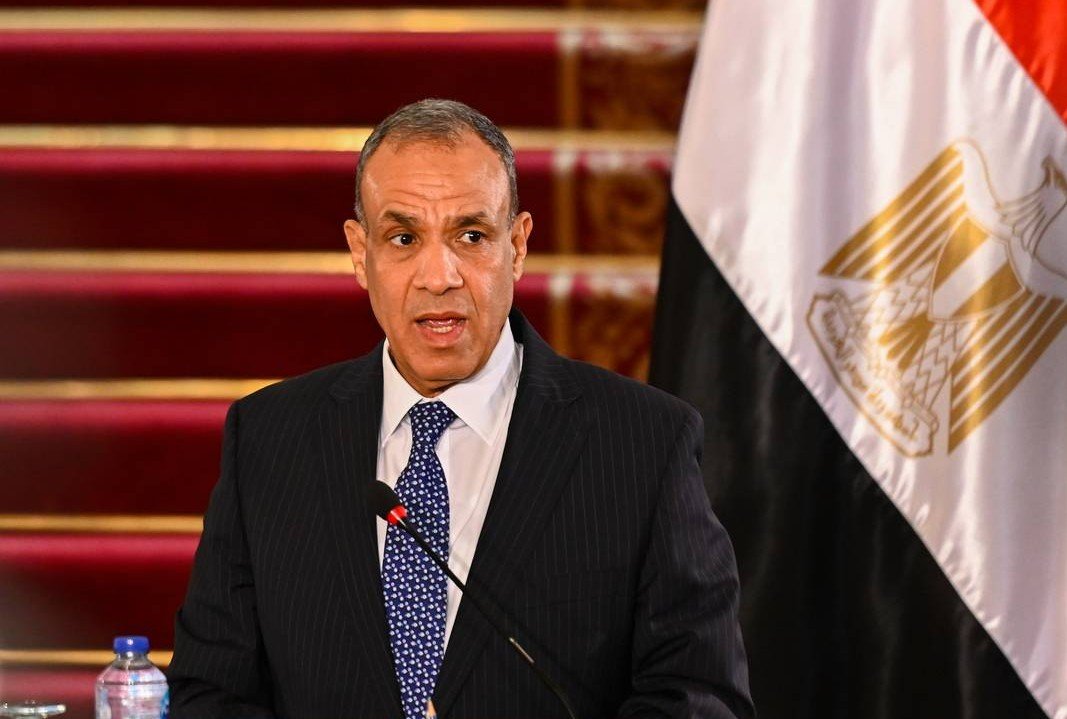
Speaking in an interview this week, Badr Ahmed Mohamed Abdelatty said the success of the Israel–Gaza peace process is “contingent” on Israeli cooperation, signaling that Egypt sees limited room to advance talks without a change in posture from Jerusalem.
Abdelatty said the first phase of the U.S.-brokered agreement had been fully implemented.
That claim comes despite the fact that not all hostages seized during Hamas’s October 7 attacks have been returned, an obligation that was meant to precede further steps.
The gap between what was agreed on paper and what has unfolded in reality continues to haunt the process.
It is that gap, Abdelatty suggested, that now defines the stalemate.
Cooperation, not mediation, now the sticking point
When pressed on why the deal has not advanced to a second phase, Abdelatty was direct.
He said progress depends on Israel’s “cooperation and commitment” to U.S. President Donald Trump’s plan.
In his telling, Egypt and other mediators are no longer the limiting factor.
Instead, he blamed Israeli military responses to Hamas ceasefire violations for blocking forward movement.
That framing shifts responsibility away from Hamas’s failures and places the burden squarely on Israeli decision-making.
The language was careful, but the message was unmistakable.
Without Israeli restraint, Cairo sees little chance of unlocking the next stage.
A delicate balance for Egypt’s diplomacy
Egypt has spent decades positioning itself as a central broker between Israel and Palestinian factions.
That role has only intensified since the Gaza war, with Cairo hosting talks, facilitating humanitarian access, and coordinating with Washington and regional capitals.
Abdelatty said Egypt remains “engaged in serious and positive dialogue” around mechanisms to stabilize Gaza after fighting subsides.
One proposal gaining attention is the deployment of an international stabilization force under a United Nations mandate.
The idea, still theoretical, would aim to provide security and administrative support without placing Gaza directly under Israeli control.
It is an ambitious concept.
And one fraught with political risk.
The question of an international force
According to Abdelatty, discussions are ongoing about implementing a UN-sanctioned International Stabilization Force in Gaza.
Such a force would likely involve multiple countries and operate with limited enforcement authority.
Supporters argue it could prevent a power vacuum and reduce the likelihood of renewed fighting.
Skeptics see it as unrealistic.
Israel has historically resisted international forces near its borders unless tightly constrained.
Hamas, meanwhile, has shown little appetite for external oversight that limits its influence.
Still, Egypt appears intent on keeping the idea alive.
Diplomats say Cairo views international involvement as a way to share responsibility and reduce regional blowback.
Weapons, disarmament, and semantics that matter
One of the most contentious elements of the peace discussion remains Hamas’s armed status.
Abdelatty pushed back against claims that the deal requires Hamas to disarm.
He argued that Trump’s plan refers to restricting and surrendering weapons, not full demilitarization.
That distinction, while subtle, carries weight.
Israel has repeatedly said that any long-term arrangement must include the destruction of Hamas’s military infrastructure.
Egypt’s position appears more incremental, favoring gradual reductions over outright dismantling.
Abdelatty said Hamas would be expected to surrender weapons over time, not abandon them immediately.
This phrasing allows Cairo to keep Hamas at the table while signaling flexibility to international partners.
Whether Israel accepts that framing remains an open question.
Regional politics in the background
Abdelatty’s remarks come against a backdrop of shifting regional alignments.
Egypt has maintained dialogue with a wide range of actors, including Iran, Turkey, and Gulf states, as it seeks to prevent the Gaza conflict from spilling over.
Earlier this year, Abdelatty met with Abbas Araghchi in Cairo, underscoring Egypt’s willingness to engage even with countries aligned against Israel.
That diplomacy reflects Cairo’s broader strategy.
Keep channels open. Avoid escalation. Preserve leverage.
But it also exposes Egypt to criticism from all sides, especially when progress stalls.
Israel’s silence and growing skepticism
Israeli officials have not publicly responded to Abdelatty’s latest comments.
Privately, Israeli analysts express skepticism toward claims that the first phase of the deal was fully implemented.
They point to unresolved hostage cases and continued security threats as evidence that conditions for phase two are not yet in place.
From Israel’s perspective, retaliation against Hamas violations is framed as enforcement, not obstruction.
That difference in interpretation lies at the heart of the impasse.
Each side believes the other has failed to uphold commitments.
And each insists it is reacting, not provoking.
The United States looms large
Washington’s role remains central.
Trump’s plan forms the backbone of the current framework, and U.S. pressure is widely seen as essential to any breakthrough.
Egypt has coordinated closely with American officials, hoping Washington can nudge Israel toward flexibility.
But U.S. leverage has limits, especially amid domestic political pressures and election-year dynamics.
For now, Cairo appears to be using public messaging as a tool, signaling dissatisfaction while stopping short of confrontation.
It is a familiar tactic.
A process stuck between phases
As December draws to a close, the Gaza peace process sits in an uncomfortable limbo.
Phase one, according to Egypt, is done.
Phase two remains out of reach.
Hostages remain unaccounted for. Weapons remain in place. Military actions continue.
Abdelatty’s comments reflect both urgency and frustration.
They also serve as a warning.
Without Israeli cooperation, Egypt suggests, the process cannot move forward, no matter how many meetings are held or statements issued.
For Gaza’s civilians, the delay is not theoretical.