
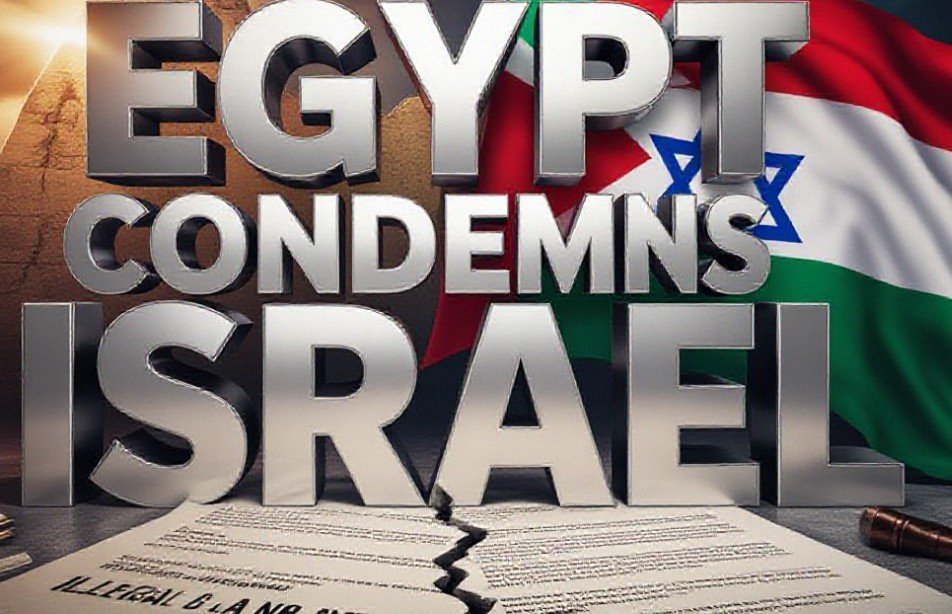
Cairo has sharply condemned Israel’s decision to resume land registration in the occupied West Bank, calling it a dangerous escalation that threatens peace and violates international law. The announcement has prompted a wave of regional and global criticism and renewed debate over the future of the Israeli‑Palestinian conflict.
The Egyptian Ministry of Foreign Affairs issued a strong rejection of the measure on Sunday, saying it undermines Palestinian rights and damages the prospects for a two‑state solution. The land registration decision by the Israeli government, approved for the first time since 1967, was described by critics as effectively advancing annexation and consolidating Israeli control over Palestinian territory.
What Egypt Says About the Land Registration Decision
Egypt’s official statement called Israel’s move a blatant violation of international law and global humanitarian standards. Cairo stressed that unilateral actions that alter the legal or administrative status of the occupied Palestinian territories are illegitimate and have no lawful effect.
The ministry said the resumption of land registration “constitutes a serious escalation” and directly undermines the rights of the Palestinian people to their land and to self‑determination. It reaffirmed Egypt’s longstanding position in support of international law, United Nations Security Council resolutions, and the principles of a negotiated peace.
Egypt also urged the international community to assume its responsibilities, calling for clear global action to halt what it called illegal practices in the occupied Palestinian territories. This includes protecting the legitimate rights of the Palestinian people and working toward a political settlement that guarantees justice and peace.
Background of the Land Registration Policy
On February 15, 2026, the Israeli government approved a plan to resume land registration in portions of the occupied West Bank, a process that has not taken place since Israel’s control of the territory after the 1967 war. This decision is rooted in a series of measures approved by Israel’s Security Cabinet that aim to formalize land ownership and allow lands without documented private ownership to be registered as state property.
Israeli officials argue that the policy will simplify land records and provide legal clarity for property transactions. But critics say the plan will make it easier for Israeli settlers to acquire land and make it more difficult for Palestinians to prove ownership, especially in Area C of the West Bank where Israel retains full security and administrative control under the Oslo Accords.
Palestinian authorities, human rights groups, and international observers have raised alarms that the land registration move is not neutral but instead serves to deepen Israeli control and weaken Palestinian claims, a step many describe as de facto annexation.
Regional and International Reaction
Egypt was not alone in its criticism. Many Arab, Muslim, and regional states condemned the Israeli decision, describing it as a violation of international norms and a threat to peace.
Arab League and Muslim‑majority nations—including Jordan, Saudi Arabia, the United Arab Emirates, Qatar, Türkiye, Indonesia, and Pakistan—issued joint statements. They said the Israeli measures seek to entrench settlements and impose a new legal reality on Palestinian land that violates international law and threatens the future of a viable Palestinian state.
Jordan also condemned the move, calling it a “flagrant violation” of legal norms and an attempt to undermine the Palestinian people’s rights. The Jordanian Foreign Ministry stressed that Israel has no sovereignty over the occupied West Bank and urged international intervention to stop the escalation.
International human rights organizations and legal experts have echoed these concerns, noting that the decision could strengthen settlement expansion, dispossess Palestinians of their land, and further erode the prospects for a negotiated peace based on a two‑state solution.
Why This Move Matters
The West Bank is one of the most contested areas in the Israeli‑Palestinian conflict. Its legal status has been at the heart of negotiations for decades. Palestinians seek the West Bank, along with East Jerusalem and Gaza, as part of a future independent state alongside Israel.
By restarting land registration, Israel is taking a step that may fundamentally change the legal landscape, analysts say. Land that cannot be proven to be privately owned could automatically become state property. Once land is registered as Israeli state land, it becomes more difficult for Palestinians to assert ownership or prevent settlement expansion. This, critics warn, undermines any meaningful path to a two‑state solution and could cement changes on the ground that are hard to reverse.
The issue also puts added pressure on international courts and bodies. The International Court of Justice, in advisory opinions earlier this year, described Israeli settlements in occupied territory as illegal and urged compliance with international law. Egypt’s statement referenced these rulings and previous UN resolutions that condemn attempts to alter the status of occupied territories.
Land Control and Legal Status
The West Bank is divided into different areas with varying degrees of Palestinian and Israeli authority under longstanding agreements. The latest policy affects Area C, which Israel controls entirely. Changes in land registration rules there have far‑reaching consequences for ownership, development, and future negotiations.
Analysts argue that without credible safeguards for Palestinian property rights, the move could accelerate domestic displacement, increase tensions, and deepen mistrust between the parties. These dynamics complicate efforts by regional and international stakeholders to restart meaningful peace talks.
What Happens Next
Diplomatic pressure is likely to build as Egypt and other states continue calling for international action. The United Nations, European Union, and other global bodies have previously criticized Israeli settlement expansion and may be mobilized to respond.
Meanwhile, Palestinians have vowed to resist the changes, calling for international support and legal challenges. The controversy adds to a series of tensions that have persisted in the West Bank alongside broader conflicts in Gaza and other flashpoints.
In a moment that may shape the region’s future, many voices now urge a return to diplomacy, respect for international law, and renewed efforts toward a just and lasting peace that honors the legitimate aspirations of both peoples.
Tell us what you think about this latest move by Israel and Egypt’s response. Do you believe it will help or hurt peace efforts? Comment your view and share with your community
