
Egypt’s Ministry of Labour has banned women from taking hospitality and domestic jobs abroad, especially in Gulf countries. The move, announced on April 1, aims to protect them from exploitation but has triggered widespread anger and questions about women’s choices and economic pressures at home.
Details Of The New Labour Restriction
The decision stops recruitment agencies in Egypt from sending women for specific roles overseas. These include cafe waitresses, baristas, counter staff, and food servers in hospitality settings.
Domestic positions in private homes face the same block. Housekeepers, home cooks, caregivers, personal assistants, home nurses, and household managers are all prohibited.
Agencies that break the rules risk suspension. Officials say the ban targets jobs that often lack proper contracts or safe conditions. Reports from the Egyptian Labour Representation Office in Riyadh highlighted cases where women ended up in roles that violated existing labour rules.
This restriction focuses heavily on Gulf destinations where many Egyptians already work. The government wants overseas opportunities to match professional standards and safeguard dignity.
Roots Of The Decision And Official Stance
Ministry statements point to real concerns about safety and exploitation. Some women reportedly faced unsuitable working environments without enough legal protections.
Videos and social media posts showing Egyptian women in cafes or nightclubs added to the push for action. Many Egyptians view these scenes as damaging to the country’s image and the women’s well-being.
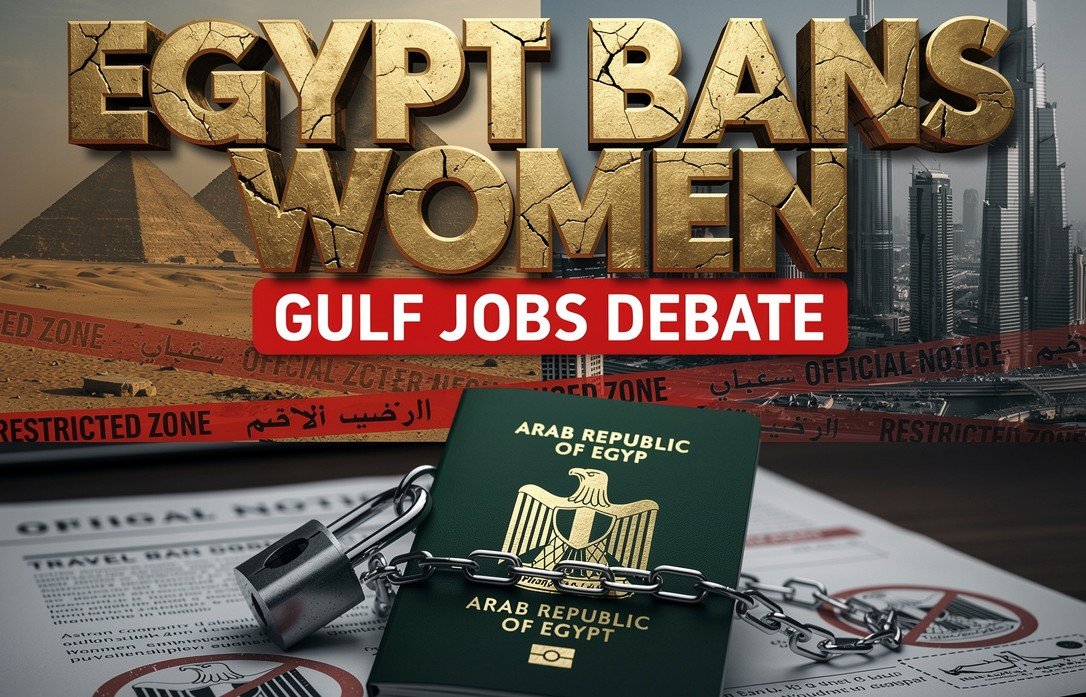
This is not the first time authorities have tried limits. Back in 2006, a similar ban on women working as housemaids abroad was introduced but gradually lost force as economic needs grew stronger.
The current step comes as Egypt works to regulate its overseas labour market more tightly. Officials insist the goal is protection, not control, though critics see deeper attitudes at play.
The Vital Role Of Overseas Workers In Egypt’s Economy
Remittances from Egyptians working abroad form a lifeline for the national economy. Last year, these transfers reached a record 41.5 billion dollars, marking a 40.5 percent jump from the year before.
In the first seven months of the current fiscal year, the figure hit 25.6 billion dollars, up 28.4 percent from the same period earlier. These funds rank as the second largest source of national income after exports.
Millions of Egyptians live and work outside the country, with the largest numbers in Saudi Arabia, Kuwait, and the United Arab Emirates. Estimates of total expatriates range from several million to as high as 14 million, though conservative counts put the Gulf portion around 3.3 million.
Families across Egypt depend on this income to cover daily needs, education, and housing. Independent economist Ali al-Idrissi calls the expatriate workforce a basic pillar of national income that sustains entire households. Any policy change draws close attention because it touches so many lives directly.
Public Backlash And Calls For Better Solutions
The ban has unleashed intense debates online and in everyday conversations. Many women question what alternatives exist when local jobs remain scarce.
Comments on social media captured the frustration. One woman asked what she should do if no other work appears, wondering if the only options left involve desperation. Others argued that honest work carries no shame, while idleness does.
Women’s rights groups have spoken out strongly. The Egyptian Centre for Women’s Rights says prohibition alone does not solve underlying problems like poverty and limited opportunities inside Egypt.
They warn that the move could push women toward illegal migration routes and exploitative brokers. Dalia al-Sanhouri from the National Council for Women suggests the government should create safer domestic jobs or provide better support and regulation for those who go abroad instead of simply blocking paths.
Unemployment stood at 6.2 percent in the fourth quarter of 2025, with the labour force around 34.8 million people. While the official rate has edged down slightly, many low-skilled workers, including women, still struggle to find stable income at home. Female unemployment remains notably higher than the overall figure.
Supporters of the ban praise it for protecting reputation and preventing abuse. They believe certain roles harm traditional values and expose women to risks far from family support.
Challenges Ahead For Enforcement And Women’s Opportunities
Enforcing the ban outside Egypt presents clear difficulties. Women already working abroad may continue, and monitoring private arrangements proves tricky.
The decision highlights bigger questions about economic conditions driving migration. Rising living costs and job shortages at home push many to seek opportunities elsewhere despite the hardships.
Economists note that while remittances bring vital dollars, the social costs of family separation run deep. A balanced approach would combine stronger protections with real job creation inside Egypt for both men and women.
As the debate continues, the ban forces a fresh look at how Egypt supports its citizens who want to work while keeping them safe. It raises whether restrictions truly empower women or simply limit their options in tough times.
In the end, this controversy touches on dreams of better lives for countless Egyptian families. Many rely on the chance to earn abroad to build brighter futures back home. Finding the right path between safety and freedom will shape opportunities for the next generation of women workers.
