
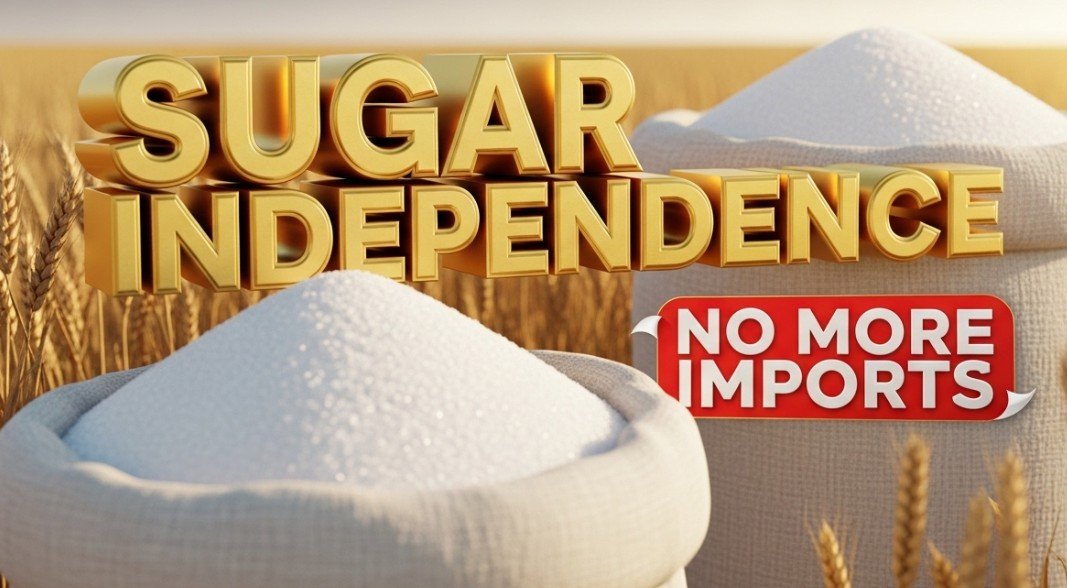
Egypt has officially produced enough sugar to meet the needs of its entire population for the first time in history. Minister of Supply Sherif Farouk announced this massive agricultural breakthrough on Sunday confirming the nation reached total self-sufficiency in 2025. This victory marks a major turning point for the economy and food security of the North African nation.
A Strategic Shift in Agriculture
The road to ending sugar imports was not easy.
Government officials implemented a strict and comprehensive plan over the last few years. The primary focus was expanding the land used for farming while boosting the crop yield per acre.
Minister Farouk detailed how the state moved beyond traditional methods. They balanced the cultivation of water-intensive sugarcane with the more efficient sugar beet crops.
“This achievement came through an integrated plan focused on expanding cultivated areas, improving productivity, and supporting local production,” Farouk stated.
The results are clear. Local factories are now processing enough raw material to cover domestic consumption fully.
Key Strategies Implemented:
- Land Reclamation: vast desert areas were converted into productive beet farms.
- Modernization: Farmers received better machinery and advanced seeds.
- Incentives: The government offered higher prices to farmers to encourage crop delivery.
This shift protects the local market from volatile global price swings. It also saves foreign currency that was previously spent on importing hundreds of thousands of tonnes of sugar annually.
Wheat Production Surges significantly
The success story does not stop at sugar.
The Ministry revealed promising data regarding wheat production for the 2025 season. Wheat is critical for Egypt as it is the primary ingredient for subsidized bread.
Local wheat supply rose by 17% compared to the previous year.
Total domestic procurement surpassed four million tonnes. This is a massive leap forward for a country known as one of the world’s largest wheat importers.
| Metric | Details |
|---|---|
| 2025 Growth | 17% increase year-on-year |
| Total Supplied | 4 million+ tonnes |
| Annual Need | 9 million tonnes (for subsidized bread) |
| Gap Status | Partially covered by imports |
This increase reduces the pressure on the state budget. It proves that local farmers can step up when given the right tools and support.
Closing the Gap on Bread Subsidies
The government has a clear target for the near future.
Egypt consumes around nine million tonnes of wheat annually just to produce subsidized bread for its citizens. The gap between the four million tonnes produced locally and the nine million tonnes needed is currently filled by imports.
Minister Farouk remains optimistic about closing this gap.
He stated that maintaining the current growth rates is essential. If domestic procurement continues to rise at this pace, Egypt aims to source all wheat for subsidized bread locally.
This would be an unprecedented level of food independence.
Reducing reliance on foreign wheat shields the country from geopolitical tensions that often disrupt supply chains. It ensures that the daily bread of millions remains available and affordable.
Future Roadmap for Food Security
The government is now looking beyond just sugar and wheat.
Plans are already in motion to replicate this success with other strategic crops. The Ministry aims to secure the nation’s food basket against any future global crises.
Experts believe this momentum will drive further investment into the agricultural sector.
Fast Fact: Egypt has historically been the world’s largest importer of wheat, making this shift toward self-sufficiency a global game-changer.
Prioritizing agricultural expansion is no longer an option but a necessity.
Rising global food costs have forced nations to look inward. Egypt is responding by strengthening its own capabilities rather than relying on international markets.
This strategy ensures stability for the years to come.
Citizens can expect a more stable market where essential goods are available regardless of what happens in the outside world. The government continues to push for higher productivity to secure a safe future for all Egyptians.
