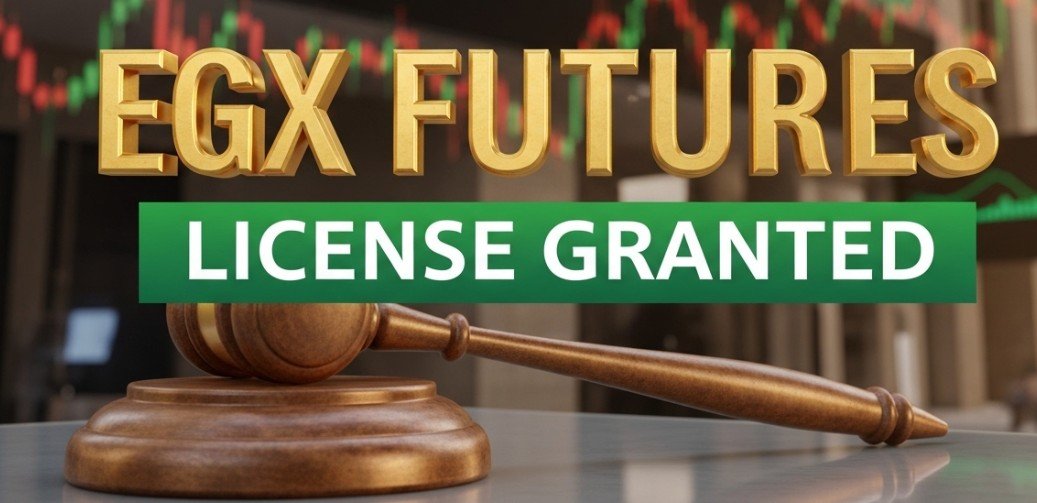
Egypt’s financial landscape witnessed a historic transformation this week as the Egyptian Exchange (EGX) officially secured its first license to operate a futures contracts market. This long-awaited development marks a pivotal moment for the nation’s economy and signals a massive leap toward modernizing its capital markets.
The Financial Regulatory Authority (FRA) delivered the approval to EGX officials on Sunday. This move opens the door for traders to hedge risks and speculate on future asset prices for the first time in the country’s history. It places Egypt firmly on the map alongside major global financial hubs that offer sophisticated derivative products.
A Major Milestone for Market Modernization
The atmosphere was electric during the press conference held by the FRA to review its 2026 achievements. Mohamed Farid, Chairman of the Financial Regulatory Authority, formally announced the granting of the license. He framed this decision as the official starting point for derivatives trading in Egypt.
This license allows investors to trade contracts based on the future value of assets rather than just their current price.
Farid emphasized that this is not just a regulatory update. It is a structural revolution. The introduction of futures contracts fills a significant gap in the Egyptian market. Investors previously had limited tools to protect their portfolios against market volatility. Now they have a mechanism to lock in prices and manage risk effectively.
The event featured key figures from the financial sector. Islam Azam, Chairman of the Egyptian Exchange, attended alongside senior officials. Their presence underscored the collaborative effort between the regulator and the exchange to bring this complex product to life.
The FRA also confirmed approval of the governing rules for futures trading. These rules cover everything from how contracts are priced to how settlements are handled. This regulatory clarity is essential for building trust among institutional investors who have been waiting for this green light.
Boosting Liquidity with Strategic Tools
One of the primary goals of this launch is to deepen liquidity in the Egyptian market. Liquidity refers to how easily assets can be bought or sold without causing major price swings. A market with high liquidity is generally safer and more attractive to big money managers.
The new license comes with critical amendments to the securities lending and borrowing mechanisms. This is often called short selling. These updates allow investors to borrow stocks they do not own to sell them. They hope to buy them back later at a lower price. This practice is vital for a functioning futures market.
The EGX has fully upgraded its regulatory framework to support these sophisticated trading strategies.
To make this work, the exchange revamped the automated stock lending system. This system is operated by Misr for Central Clearing, Depository and Registry (MCDR). A robust clearing system ensures that if one party in a trade defaults, the market does not collapse.
Why This Matters for Investors
- Risk Management: Investors can protect themselves against price drops.
- Price Discovery: Futures help the market figure out what an asset should be worth in the future.
- Global Appeal: Foreign investors prefer markets that offer hedging tools.
- Lower Costs: Efficient markets often lead to lower transaction costs over time.
Infrastructure Upgrades and Market Makers
The launch of futures trading requires powerful technology. The EGX is not just changing rules. It is upgrading its entire engine. The exchange is preparing to launch a market maker mechanism.
A market maker is a firm that stands ready to buy and sell shares at any time. They provide the liquidity that keeps the market moving. Without them, a futures market can become stagnant. The EGX aims to use these providers to increase trading volumes and values.
Market makers will ensure there is always a buyer or seller available for listed contracts.
This system helps bridge the gap between supply and demand. It makes the market more efficient and less prone to wild, unjustified price swings. For domestic investors, this means a more stable environment to grow their wealth. For foreign funds, it signals that Egypt is serious about meeting international standards.
| Feature | Spot Market (Traditional) | Futures Market (New) |
|---|---|---|
| Settlement | Immediate (T+2) | Future Date |
| Direction | Profit only when price goes up | Profit when price goes up or down |
| Leverage | Full cash payment required | Only a small deposit (margin) needed |
| Purpose | Investment and Ownership | Hedging and Speculation |
The Long Road to Derivatives
This achievement did not happen overnight. It is the result of years of legislative work and economic planning. The foundation was laid with amendments to the Capital Markets Law No. 143 of 2020. These laws legally recognized futures exchanges and clearing houses as distinct entities.
The journey involved multiple steps:
- Legal Framework: Parliament passed laws allowing derivatives.
- Company Formation: A dedicated futures exchange company was established.
- Clearing House: A separate central clearing company (Tasweya) was created to handle risk.
- Licensing: The FRA finally granted the operating license in 2026.
Experts believe this move will attract a new wave of capital. Local brokerage firms have already started upgrading their systems. They are training staff to handle these complex instruments. Education will be key. Futures trading carries higher risks than traditional stock trading because of leverage.
The FRA has stressed the importance of investor protection. Only qualified investors and those who understand the risks will likely be the first participants. The regulator aims to balance innovation with safety to prevent market shocks.
The Egyptian economy stands to benefit significantly. A mature capital market can help finance national projects and corporate expansion. By providing better tools for capital allocation, the EGX is positioning itself as a leader in the Middle East and North Africa region.
This launch proves that Egypt is committed to evolving its financial infrastructure to meet global demands.
The Egyptian Exchange has officially entered a new era. With the license in hand and infrastructure ready, the focus now shifts to the first trade. Investors around the world are watching closely. The successful rollout of futures contracts could be the catalyst that drives the EGX to new highs in the coming years. It represents a bold step forward in the nation’s economic reform program.
How do you feel about the introduction of futures trading in Egypt? Do you think it will stabilize the market or add more risk? Share your thoughts in the comments below using #EGXFutures and let’s get the conversation started!