The new long-haul route will link Delta’s largest global hub with Saudi Arabia’s capital, opening a direct air bridge aimed at business, tourism, and strategic ties.
Delta Air Lines has locked in a firm launch date for its long-awaited nonstop service between Atlanta and Riyadh, confirming that flights will begin on October 23, 2026. The route marks Delta’s first direct entry into the Saudi market and a notable expansion of its Middle East reach.
The service will connect Hartsfield-Jackson Atlanta International Airport with King Khalid International Airport in Riyadh, operating year-round on the Airbus A350-900.
From announcement to runway, the timeline comes into focus
When Delta first revealed plans for an Atlanta–Riyadh route two months ago, details were thin. October 2026 was mentioned, but no exact date, no aircraft confirmation, and no booking availability.
That uncertainty is now gone.
The airline has officially loaded the route into its scheduling and distribution systems, allowing customers to book seats directly through Delta’s website. One-way fares currently start at around $921, depending on cabin and availability.
For Delta Air Lines, this is more than just another route add. It’s a symbolic step into a market long dominated by Gulf and European carriers, and one the airline has circled for years.
The choice of Atlanta is no surprise. As Delta’s largest hub by far, it funnels traffic from across the US, Latin America, and parts of Canada, creating the kind of demand density ultra-long-haul routes need to survive.
Aircraft, cabins, and what passengers can expect
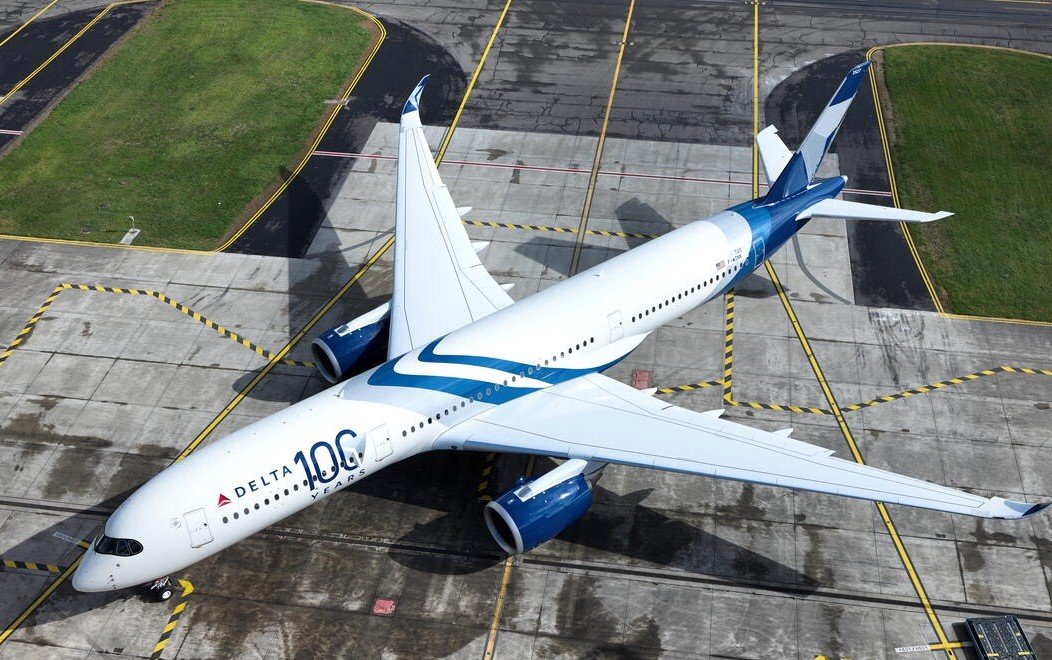
The Atlanta–Riyadh flight will be operated by the Airbus A350-900, Delta’s flagship long-haul workhorse.
This aircraft choice matters.
The A350-900 is built for missions like this one: long distance, high efficiency, and passenger comfort that helps soften a roughly 13-hour journey. Delta’s configuration is expected to mirror its other intercontinental services, offering multiple cabin options.
Passengers can expect:
-
Delta One suites with full privacy doors
-
Premium Select for extra space and upgraded service
-
Comfort+ with added legroom
-
Main Cabin seating for standard economy travel
One short sentence sums it up. Delta is bringing its full long-haul product, not a stripped-down experiment.
That signals confidence, and maybe a long-term view of demand between the two cities.
Why Riyadh, and why now
Saudi Arabia has been aggressively repositioning itself on the global stage, and air connectivity sits right at the center of that plan.
Riyadh, served by King Khalid International Airport, has seen steady growth in international routes as the kingdom pushes tourism, investment, and global events under its Vision 2030 framework.
Until now, Delta’s Middle East presence has leaned on select nonstop routes and partner connections via Europe. Adding Riyadh gives the airline a direct foothold in the Gulf region for the first time.
Atlanta’s role is equally strategic.
Through Hartsfield-Jackson Atlanta International Airport, Delta can feed passengers from dozens of US cities into a single nonstop, avoiding the need for European transfers that often add hours and hassle.
It’s a clean connection. US heartland to Middle East capital. No detours.
Competition, context, and a crowded long-haul market
This route doesn’t land in a vacuum.
The US–Saudi Arabia market has historically been served by a mix of Middle Eastern carriers, European airlines, and indirect connections. Nonstop options from the US remain limited, which gives Delta a chance to stand out, but also puts pressure on pricing and consistency.
Operating a year-round service suggests Delta believes demand will extend beyond seasonal peaks. Business travel, government traffic, visiting friends and relatives, and growing tourism flows all factor into that equation.
The airline will also be watching yields closely. Ultra-long-haul routes can look impressive on a map, but profitability depends on filling premium cabins consistently.
That’s where Atlanta helps. Corporate contracts. Alliance feed. Scale.
Still, one thing is clear. Delta isn’t testing the waters. It’s stepping in with intent.
Saudi tourism ambitions meet US network muscle
Saudi officials have been vocal about the importance of direct air links with the United States, especially as the kingdom works to diversify its economy away from oil.
Ahmed Al-Khateeb, Saudi Arabia’s Minister of Tourism, welcomed the announcement in comments shared with Delta News Hub, pointing to the role nonstop flights play in driving travel and exchange between the two countries.
The message aligns neatly with Vision 2030, which targets tens of millions of international visitors annually and positions Riyadh as a global business and events hub.
For Delta, the alignment is convenient. The airline gains access to a fast-growing market, while Saudi Arabia secures a direct link to one of the world’s busiest airports and a massive US network.
Sometimes strategy just clicks.
A milestone route with broader implications
For Delta loyalists, the Atlanta–Riyadh flight represents something they’ve been waiting for. For competitors, it’s a signal. And for the broader aviation industry, it’s another sign that long-haul demand continues to reshape global networks.
This will be Delta’s first nonstop flight to Saudi Arabia, but likely not its last move in the region if performance meets expectations.
Between the aircraft choice, year-round scheduling, and early ticket availability, the airline is laying down a marker.
October 23, 2026 may feel far off, but in airline planning terms, it’s practically tomorrow.