
Cairo’s shop windows are glowing with tinsel, ornaments, and artificial pine as the Christmas season quietly settles into the Egyptian capital. In neighborhoods across the city, customers browsed decorations this week, balancing festive cheer with careful spending in a year marked by economic pressure.
Just days before Christmas, the seasonal rush is visible but measured.
A familiar scene returns to Cairo’s streets
Inside small shops and crowded storefronts, customers leaned over shelves filled with baubles, string lights, and miniature trees.
The images, captured on December 19, show shoppers pausing to compare prices, holding ornaments up to the light, and debating colors with family members. Red, gold, and silver still dominate, though pastel tones and minimalist designs are making an appearance.
This annual ritual plays out quietly in Cairo, where Christmas is celebrated mainly by the country’s Christian minority but has long spilled into the wider retail calendar.
Shopkeepers say the season feels familiar, even if the mood is more restrained.
One vendor described it as “steady, not rushed.”
Decorations as both tradition and business
Christmas decorations occupy a unique space in Egypt’s retail landscape.
They are deeply tied to religious and cultural tradition for Christian families, particularly the Coptic community. At the same time, they have become a seasonal business opportunity for shop owners, importers, and local craftsmen.
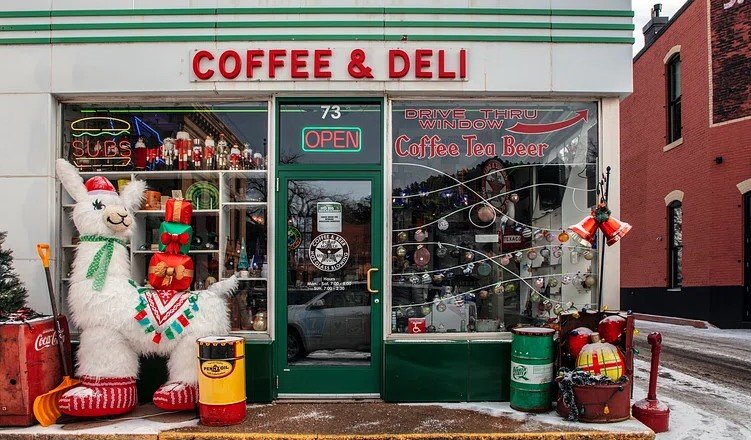
Many of the decorations on display are imported, while others are locally assembled or repurposed from previous years’ stock.
Artificial trees, plastic ornaments, and LED lights remain the most popular items, largely because they can be reused year after year.
That matters more now.
With household budgets under pressure, shoppers are increasingly selective.
Several buyers were seen picking individual ornaments rather than full sets, a small detail that reflects broader spending habits.
Prices under quiet scrutiny
While Christmas shopping continues, conversations about cost are never far away.
Egypt’s economy has faced inflation and currency volatility, shaping how consumers approach non-essential purchases.
Retailers say most customers are asking questions before buying. How long will this last? Is there a cheaper option? Can this be reused next year?
Those questions guide decisions.
One shop owner said sales volumes are slightly lower than pre-pandemic years but more consistent than feared. People still want a festive atmosphere at home, even if they scale it down.
Smaller trees are selling better than large ones.
So are strings of lights that can be used beyond Christmas.
A season marked by coexistence
Christmas decorations in Cairo also carry a symbolic weight.
They appear in a city where mosques, churches, and everyday commerce exist side by side.
For many residents, seeing Christmas items in shops is simply part of the city’s rhythm, no more unusual than Ramadan lanterns appearing months later.
That coexistence is visible in who shops.
Photographs from the stores show customers of different backgrounds browsing together, parents explaining decorations to children, and shopkeepers greeting familiar faces.
It is ordinary, and that ordinariness matters.
The season does not dominate public space, but it is present.
Retailers adapt to changing habits
Shop owners say customer behavior has shifted subtly over the past few years.
There is less impulse buying. More comparison. More negotiation.
Some retailers now offer flexible pricing on bundles or small discounts for repeat customers.
Others focus on durability, highlighting decorations that can survive multiple seasons.
This adaptability has become essential.
One vendor said bluntly, “People don’t want things that break in a year.”
That sentence sums up the mood.
Photography captures a quiet moment
The photographs documenting this week’s shopping were distributed by Xinhua, offering a visual snapshot of Cairo’s holiday retail scene.
They show shelves stacked high, narrow aisles, and customers moving slowly through displays.
There is no sense of frenzy.
Instead, the images feel calm, almost reflective.
In one frame, a shopper holds a single ornament while scanning a crowded shelf. In another, a small artificial tree stands half-decorated as customers look on.
These moments tell their own story.
They show a city observing a tradition in its own way.
Christmas without excess
Unlike in some global capitals, Christmas in Cairo is not defined by massive public displays or city-wide illumination.
The celebration remains largely private, centered in homes, churches, and community spaces.
That shapes how decorations are sold and used.
Rather than spectacle, the emphasis is on warmth and familiarity.
A few lights in a window. A modest tree in a living room. Decorations passed down or reused.
Retailers say this year’s buyers seem especially focused on that feeling rather than on scale.
Less about showing off.
More about marking the moment.
A brief seasonal pause
As December moves forward, shops expect a small uptick closer to Christmas Eve, when last-minute buyers appear.
But most sales, they say, happen earlier now.
People plan. They budget. They avoid rushing.
That pattern reflects broader shifts in consumer behavior across Egypt, where households are learning to live with uncertainty by spreading spending over time.
Christmas shopping becomes part of that adjustment.
A short pause in the year. A familiar routine.
One sentence captures it best.
People are still celebrating, just more quietly.
Cairo’s holiday rhythm continues
By the end of the week, decorations will begin disappearing from shelves, replaced by other seasonal goods.
What remains will be packed away, waiting for next year.
For now, though, Cairo’s shops continue to glow softly with holiday color.
