Imagine a world where London was just a muddy village and Baghdad was a dazzling metropolis of a million people. A fascinating new analysis of urban history reveals exactly how Arab cities dominated the globe long before European capitals rose to power. This report uncovers the sophisticated systems that made cities like Cairo the center of civilization.
The Stunning Gap in Global Urbanization
A research paper titled From Baghdad to London has sparked fresh conversations about the history of city building. Researchers compared the Arab world during its golden age to Europe between the years 800 and 1800. The findings are startling. They discovered that Arab cities were not just slightly better but were entirely superior to their European neighbors in almost every metric.
Comparing Medieval Metropolises (Approx. 1000 AD)
| Feature | Arab Cities (e.g., Baghdad, Cairo) | European Cities (e.g., London, Paris) |
|---|---|---|
| Population | 100,000 to 1,000,000+ | Often less than 20,000 |
| Literacy | Widespread with huge libraries | Limited mostly to clergy |
| Sanitation | Advanced water systems | Open drains and poor hygiene |
| Street Lighting | Present in major cities | Non-existent |
This data shows that urbanization rates in the Islamic world were three times higher than in Europe at the time. While Europe struggled with fragmentation, cities like Cordoba and Damascus thrived as economic giants. This was not an accident. It was the result of a highly organized society that valued science, trade, and public welfare.
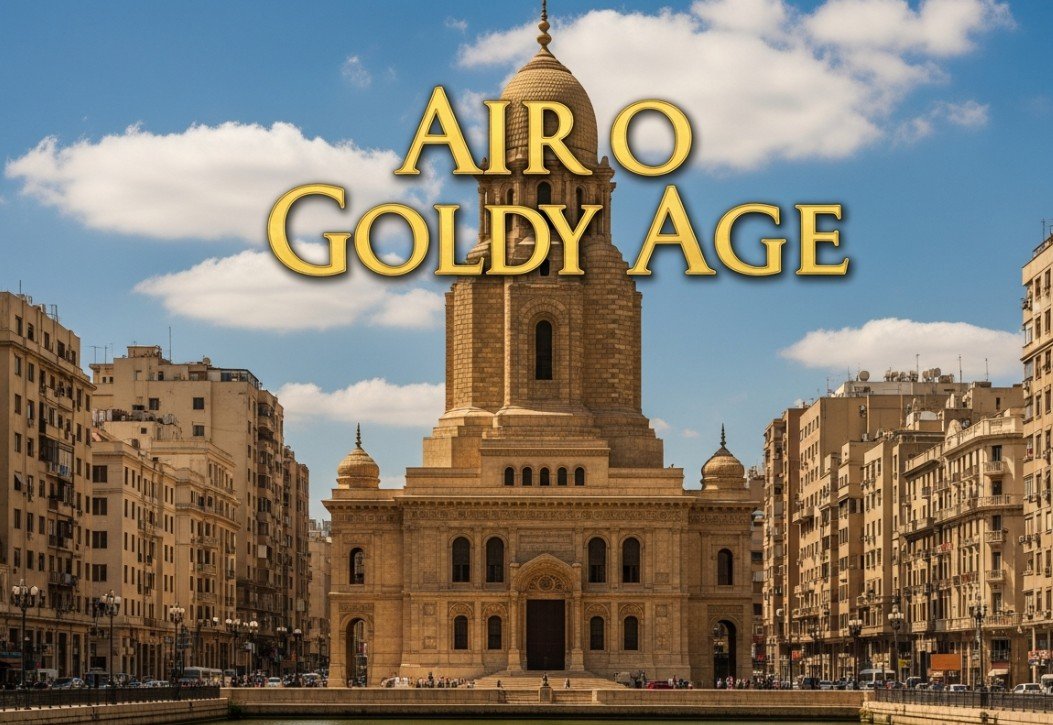
The Secret Behind Cairo’s Economic Power
Cairo serves as a perfect example of this historical dominance. The city did not just rely on its location near the Nile. It grew because it was a capital city that concentrated wealth and royal privileges. The researchers point out that efficient institutions played a massive role here.
Key Drivers of Arab Urban Growth:
- Centralized Authority: A single ruling power ensured stability across vast regions.
- Shared Language: Arabic served as a universal language for trade and science.
- Religious Unity: Shared values created trust among merchants from different lands.
- Free Trade Zone: A merchant could travel from Spain to India without major borders.
These elements created a massive “common market” centuries before the European Union was even a concept. Wealth flowed naturally into capitals like Cairo. This money funded mosques, universities, and hospitals. It attracted the best minds from around the world.
This concentration of public spending created a cycle of prosperity. Merchants knew that if they went to Cairo or Baghdad, they would find buyers, protection, and opportunity.
Architecture That defined a Civilization
The prosperity of these cities was not just about money. It was visible in the streets and skylines. The recent analysis by Nesma Moharam and Yasmin Abdallah highlights how this interconnected urban system endured until the 10th century. The architecture reflected a society that was open yet organized.
Builders in these cities mastered complex engineering feats. They created cooling systems for homes without electricity. They built minarets that doubled as landmarks for travelers. The urban fabric was tight and social.
Markets and mosques served as community hubs.
Unlike the castle-dominated towns of Europe, Arab cities focused on accessibility. The streets were designed for pedestrians and pack animals laden with goods. This unique layout fascinated historians like Will Durant. In his work The Story of Civilisation, he praised the beauty and function of Islamic capitals. He noted that while Europe was in the dark ages, the streets of Cordoba were paved and lit.
A Legacy of Endurance
The most remarkable part of this story is not just how high these cities rose. It is about how they endured. The research indicates that even when political power shifted or dynasties changed, the urban systems survived. Cairo remains a bustling mega-city today. Its medieval core still functions.
This endurance proves the strength of their original design. Modern urban planners are now looking back at these ancient systems. They want to learn how to build cities that can survive for a thousand years.
The shift of global power to Europe only happened much later. Factors like the discovery of the Americas and changes in trade routes eventually favored cities like London. But for centuries, the center of the world was firmly in the Middle East.
This history challenges our modern view of progress.
It reminds us that civilization is a cycle. The advanced systems we enjoy today have roots in the dusty, golden streets of ancient Cairo and Baghdad. Their legacy is built into the very concept of what a city should be.