
Mr. Amre Moussa landed in Cairo with a full agenda still echoing from Tangier, where global tensions, shifting alliances, and uneasy hopes for peace dominated the MEDays Forum discussions.
His return followed a series of intense meetings and interventions that struck a chord with attendees from across continents.
Moussa’s Presence at MEDays and Why It Mattered
The 17th edition of the MEDays Forum drew a wide mix of global figures this year, and Moussa’s participation stood out for many observers.
His schedule in Tangier wasn’t light, and his remarks stirred fresh conversation around Middle Eastern politics.
He took part in discussions that explored political fractures worldwide.
Moussa joined panel talks focused on the Middle East’s unstable landscape.
The forum’s theme, “Fractures and Polarization: Reinventing the Global Equation,” set the tone for deep, sometimes heated, debates about global shifts.
During these sessions, he stressed the urgency of rebuilding diplomatic trust in the region.
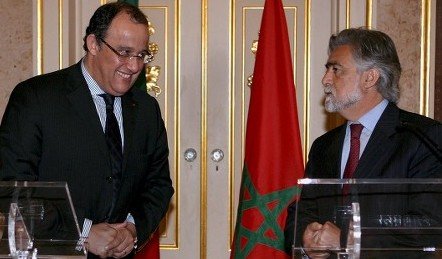
Inside the Session That Sparked Headlines
His most talked-about appearance came during the session titled “The conflict & the battle to redefine the regional order: What new Middle East?”
This particular discussion on 29 November drew strong reactions.
It pushed forward questions that diplomats everywhere have been whispering about for months.
One of those questions was whether peace-building efforts could still flourish in such a tense climate.
Moussa opened his remarks by extending respect to King Mohammed VI.
He highlighted the King’s message to the UN committee marking the International Day of Solidarity with the Palestinian People.
He suggested that the message laid out key parameters for moving toward meaningful peace.
Here’s where he broke them down —
• He emphasized the need to protect the political and administrative unity of the West Bank and Gaza Strip as part of a future Palestinian state with East Jerusalem as its capital.
A short pause swept the room.
He then pointed to the need for political and financial backing for the Palestinian Authority.
The third idea he stressed was boosting the Palestinian economy by easing restrictions on movement.
Moussa said these aren’t just Moroccan principles. They’re shared across Arab, regional, and even international circles. This statement created a ripple effect across the audience, many of whom nodded in agreement.
He also mentioned a “new window” emerging unexpectedly from U.S. President Donald Trump’s twenty-point initiative.
Interpreting Global Signals and the Region’s Shifting Ground
Some attendees admitted that Moussa’s comments about the U.S. initiative caught them by surprise.
His argument was straightforward.
Arab diplomats, he said, must use these signals in productive ways.
They must interpret ideas in ways that build toward fairness, instead of allowing the meanings of phrases to slide in favor of Israeli policy.
It was a subtle but sharp critique of long-standing patterns in global diplomacy.
He pressed the idea that a real opportunity is present — one that shouldn’t be dismissed.
A brief silence filled the room as he linked peace directly to global stability.
He called the establishment of an independent Palestinian state the key to easing instability in the Middle East and beyond.
The Call for New Leadership and Political Renewal
This part of his speech felt almost emotional.
He spoke clearly about the need for a new generation of leadership.
He said the region needs people with fresh thinking and renewed legitimacy to move toward true peace.
One sentence stood on its own.
The current Israeli government, he stated, is not capable of securing peace.
Moussa predicted a major shift in Israel after the 2026 elections.
He believes a different government will emerge, one more open to real dialogue.
This prediction sparked quick side discussions among delegates.
What Comes Next for Palestinians and Israelis?
Toward the end of his intervention, Moussa returned to a central point.
He said Palestinian elections must happen soon.
This process has been delayed for years.
He insisted that elections should cover every Palestinian territory and constituency.
And they should happen at the same time as the Israeli elections, he added.
His closing remarks lingered for a moment in the hall.
Some attendees later said the message felt like a plea, others said it felt like a warning.
