
When people think of pyramids, Egypt steals the spotlight. But the numbers tell a different story. South of Egypt, in Sudan, hundreds of ancient pyramids rise quietly from the desert, outnumbering their famous northern neighbours by a wide margin.
For centuries, this story sat in plain sight, mostly ignored.
Egypt’s pyramids made the headlines, but the math says otherwise
Ask almost anyone where pyramids come from and the answer lands fast. Egypt. Giza. Pharaohs. Sand and mystery.
That picture isn’t wrong. It’s just incomplete.
Egypt is home to around 118 known pyramids, spread across sites like Giza, Saqqara, Dahshur, Abusir and Abu Rawash. The Great Pyramid of Khufu still towers over them all, both physically and culturally.
But head south, cross the modern border, and the count changes dramatically.
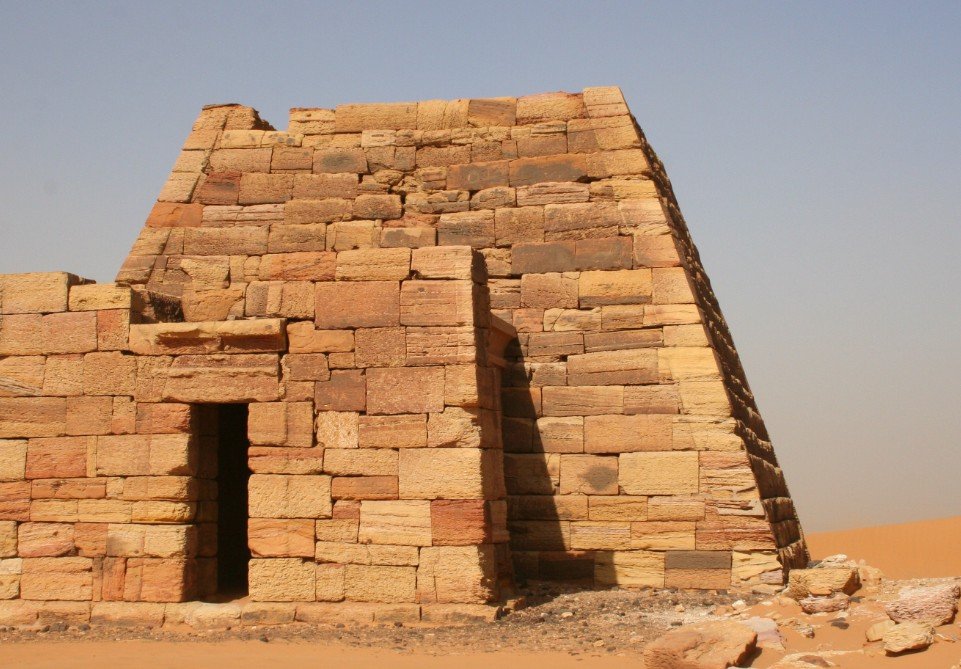
Sudan holds between 200 and 255 pyramids, depending on archaeological estimates. That’s almost double Egypt’s total.
One sentence pause here.
Most people never hear that fact.
These structures sit in the deserts of ancient Nubia, built across centuries by the rulers of a powerful African civilisation whose story rarely makes school textbooks or tourist brochures.
Nubia’s pyramids tell a different kind of story
The pyramids of Sudan look familiar at first glance. Triangular. Stone-built. Funerary in purpose.
Then you look closer.
They’re steeper. Narrower. Shorter. Some rise only 20 to 30 metres high. They cluster tightly, often dozens together, like stone teeth biting into the sand.
These are Nubian pyramids, built mainly between around 800 BCE and 350 AD.
They weren’t copycats. They were statements.
The builders belonged to the ancient Kingdom of Kush, a civilisation that thrived along the Nile and rivalled Egypt in wealth, military strength, and cultural influence.
At its peak, Kush didn’t just coexist with Egypt.
It ruled it.
The Kushite kings who ruled Egypt as pharaohs
History gets interesting in the eighth century BCE.
The Kushite rulers pushed north and took control of Egypt, establishing what historians now call Egypt’s 25th Dynasty. These kings are often referred to as the “Black Pharaohs,” a term tied more to modern labels than ancient reality, but still widely used.
The first of these rulers was Piye, who invaded Egypt around 770 BCE and ruled from the Kushite capital of Napata.
Piye admired Egypt’s burial customs. He respected their gods. He wanted the same treatment in death.
So he demanded something bold.
He asked to be buried beneath a pyramid.
That request changed Nubian history.
Piye became the first Kushite ruler buried in a pyramid, at the El-Kurru necropolis in modern-day Sudan. After him, pyramid-building became the standard royal tradition.
And once it started, it really took off.
Meroë, where pyramids crowd the desert skyline
While early Kushite pyramids appeared at El-Kurru and Nuri, the true explosion happened later.
When the Kushites lost control of Egypt around 656 BCE, they moved their capital south to Meroë.
That decision reshaped the landscape.
From roughly the 3rd century BCE onward, Meroë became the heart of Nubian pyramid construction. Around 200 pyramids were built in its royal necropolis alone.
That includes the tombs of 41 kings and queens.
One sentence again, because this number lands hard.
Two hundred pyramids. In one region.
Unlike Egypt’s widely spaced monuments, Meroë’s pyramids stand close together, forming dense fields of stone that feel almost surreal against the desert sky.
Why Sudan’s pyramids stayed hidden for so long
So how did all this stay off the global radar?
Part of the answer is timing. Part is politics. Part is colonial bias.
Sudan’s pyramids were largely unknown to the Western world until the 19th century. In the 1830s, French explorer Frédéric Cailliaud published detailed sketches and descriptions after visiting Meroë. His work, Voyage à Méroé, sparked curiosity across Europe.
Then came trouble.
Italian adventurer Giuseppe Ferlini arrived, chasing rumours of gold. He and his partner blew the tops off dozens of pyramids, looting artefacts and causing irreversible damage.
Ironically, European museums first dismissed his finds as fake. They couldn’t believe such craftsmanship came from sub-Saharan Africa.
That disbelief tells its own story.
How Sudan outbuilt Egypt in pyramid numbers
The difference in numbers comes down to tradition and scale.
Egypt built fewer pyramids, but bigger ones, mostly concentrated in specific dynastic periods. Sudan’s Kushite rulers built smaller pyramids, but did so consistently over centuries.
Here’s how the comparison roughly stacks up:
| Country | Estimated Number of Pyramids | Main Period |
|---|---|---|
| Egypt | ~118 | c. 2700–1500 BCE |
| Sudan | 200–255 | c. 800 BCE–350 AD |
The numbers don’t diminish Egypt’s achievements. They expand the map of African history.
And they challenge the idea that monumental architecture was a one-country story.
A country rich in history, closed to visitors for now
Under different conditions, Sudan would be one of the most remarkable archaeological destinations on Earth.
But reality bites.
As of late 2025, the UK’s Foreign Office advises against all travel to Sudan due to ongoing civil war. Khartoum International Airport remains closed. Infrastructure has broken down. Consular support is extremely limited.
The risks are severe. Indiscriminate violence. Drone strikes. Supply shortages.
For now, Sudan’s pyramids are sites to read about, not visit.
That’s the tragedy in the present moment.
Because few places on the continent match Sudan’s depth of ancient history, where empires rose, ruled Egypt itself, and left behind stone monuments that still stand, quietly outnumbering the most famous pyramids on Earth.
