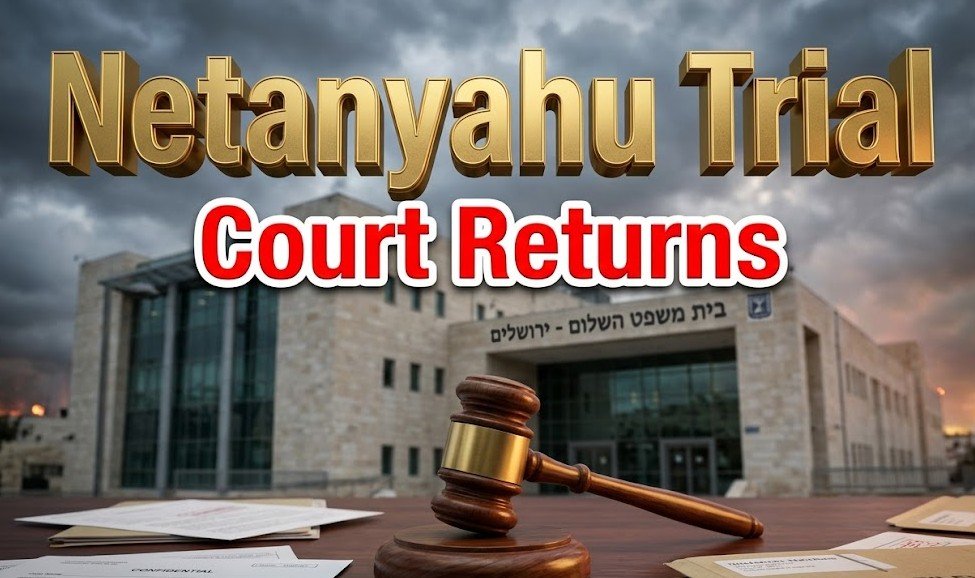
Israel’s long running legal battle involving Prime Minister Benjamin Netanyahu is set to restart on Sunday, as the country’s courts return to normal operations after lifting wartime emergency restrictions linked to the recent Iran conflict. The hearing marks a key moment in the high profile corruption case that has followed Netanyahu for years and continues to shape Israeli politics.
The case resumes amid renewed attention on governance, security, and political stability in Israel.
Court returns to normal schedule after Iran war pause
The Jerusalem District Court has confirmed that Netanyahu’s trial will resume at 9:30 am on Sunday with testimony from a defence witness. The decision follows the lifting of emergency measures that had restricted judicial activity during heightened security tensions with Iran.
Israeli courts had been operating under a special emergency format introduced after conflict escalation on February 28. During that period, only urgent cases were heard, while non urgent criminal and civil proceedings were paused or delayed.
With the emergency restrictions now lifted, the judiciary is returning to its standard weekly schedule:
- Sunday hearings in Jerusalem District Court
- Monday to Wednesday sessions in Tel Aviv District Court
Court officials stated that the return to regular operations applies across the system, not only to this case.
Inside Netanyahu’s long running corruption case
The trial of Benjamin Netanyahu is one of the most closely watched legal proceedings in Israel’s history. It involves three separate cases known widely as Case 1000, Case 2000, and Case 4000.
The charges include allegations of bribery, fraud, and breach of trust. Netanyahu has consistently denied all accusations, calling them politically motivated and insisting he has done nothing wrong.
At the center of the proceedings is Case 4000, considered the most serious. Prosecutors allege that regulatory decisions were influenced in exchange for favorable media coverage. Netanyahu’s legal team strongly disputes this claim.
Key allegations in brief:
- Case 1000: Claims of receiving gifts from wealthy businessmen
- Case 2000: Alleged attempts to influence media coverage
- Case 4000: Alleged regulatory favors linked to telecom interests
The trial began in 2020 and has faced repeated delays due to security events, political developments, and procedural disputes.
Cross examination phase resumes in Jerusalem court
The upcoming hearing is not the start of a new phase but a continuation of the ongoing cross examination stage. Before the war related pause, prosecutors were actively questioning the defense narrative, especially around Case 4000.
Netanyahu himself began testifying in December 2024, becoming the first sitting Israeli prime minister to take the stand in a criminal trial. Prosecutors began cross examining him in mid 2025 after earlier defense testimony.
A key focus before the interruption included:
- Regulatory decisions linked to major telecom transactions
- Alleged meetings involving senior communications officials
- Disputed claims about political influence and media coverage
Court proceedings have been held multiple times per week, though the schedule has been adjusted repeatedly due to national emergencies and security concerns.
Political impact and national attention in Israel
The trial continues to unfold at a sensitive time for Israel, where political divisions and security challenges remain intense. Netanyahu, who leads a right wing coalition government, has faced ongoing debate over his leadership while under trial.
Supporters argue that he remains capable of governing despite legal proceedings, while critics say the trial raises serious questions about accountability at the highest level of power.
The case also carries broader implications:
- It is the first time a sitting Israeli prime minister is standing trial while in office
- Proceedings have stretched across multiple years with repeated disruptions
- The outcome could influence Israel’s political future and upcoming electoral dynamics
Public attention remains high as each courtroom session is seen not only as a legal step but also as a politically significant event in Israel’s domestic landscape.
What happens next in the courtroom
With hearings now back on schedule, the trial is expected to continue through its established weekly structure. The next stages will likely focus on further cross examination and testimony from defense witnesses.
While no final verdict is expected soon, the resumption signals that the case is moving forward again after another pause caused by regional conflict.
For Israel, the return of the trial is a reminder of how closely law, politics, and security remain intertwined in a country facing constant external and internal pressures.
As proceedings continue, attention will remain fixed on the courtroom in Jerusalem, where one of the most consequential legal cases in modern Israeli history is once again underway.