
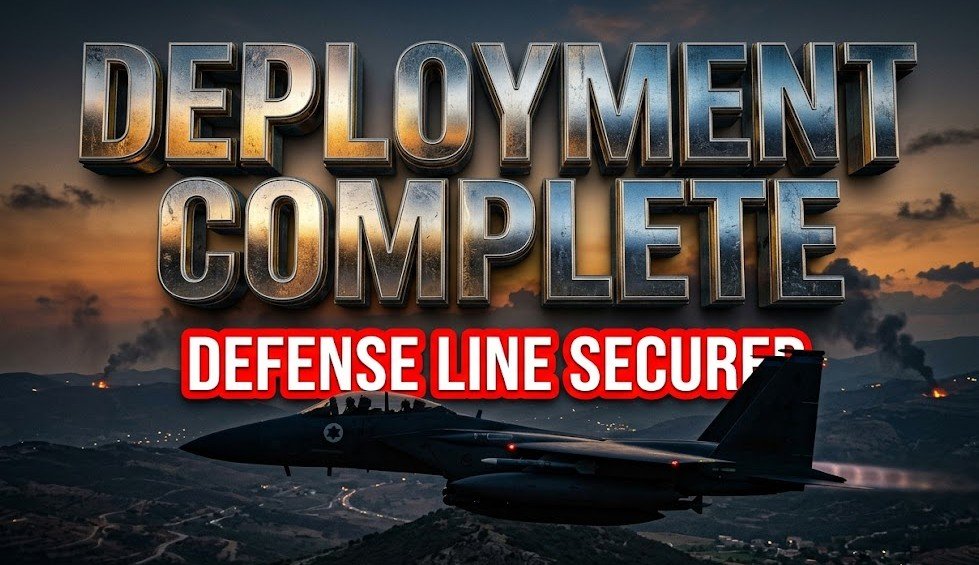
The Israeli military announced on Tuesday it has finished positioning ground troops along a defense line in southern Lebanon. Forces aim to block Hezbollah attacks on northern Israeli communities. This development comes amid ongoing clashes and raises fresh concerns about the conflict spreading further.
IDF Announces Completion of Key Defense Line
The Israel Defense Forces said soldiers from several units, including the elite 98th Paratroopers Division, have reached their positions along the anti-tank missile defense line.
The military gave no exact map of how far forces advanced. Israeli media reports suggest troops stopped around 20 kilometers north of the border for now. An Israeli Air Force F-15D Eagle flew over Marjeyoun in southern Lebanon the same day, according to images from the scene.
This marks a notable step in ground operations that began in mid-March. The IDF has deployed multiple divisions, including the 91st, 36th, and 146th, to target Hezbollah infrastructure. Soldiers focus on clearing sites used for rocket launches and anti-tank ambushes that have threatened Israeli border towns for years.
Hezbollah fighters have responded with rockets, drones, and ground clashes. The group has sent elite Radwan forces back into the area to challenge Israeli advances.
Defense Minister Outlines Plans for Security Zone
Defense Minister Israel Katz has spoken repeatedly about creating a security zone in southern Lebanon. He wants Israeli control to extend toward the Litani River, roughly 30 kilometers from the border.
Katz said the zone would prevent rocket, drone, and missile fire on northern Israel. He added that homes in some border villages could be demolished and displaced Lebanese residents would not return until Israel feels safe.
The IDF plans to present the government with details on controlling the first line of villages as part of this deeper buffer. Officials compare the approach to measures used in other conflict zones to create lasting separation from threats.
Critics warn such a zone could echo Israel’s earlier presence in southern Lebanon from 1982 to 2000. That period ended with withdrawal but left deep scars and ongoing tensions. Supporters argue it is necessary after years of cross-border attacks.
Heavy Toll on Civilians and Soldiers
The fighting has taken a severe human cost. Lebanese authorities report more than 1,400 people killed in strikes since early March, including many civilians and children. Over 1.2 million Lebanese have fled their homes.
On the Israeli side, soldiers have died in close combat with Hezbollah fighters. Recent clashes claimed the lives of several troops, with others wounded. Northern Israeli communities remain partly evacuated after months of rocket fire.
Families on both sides live with fear and uncertainty. Parents in northern Israel worry about schools and daily life under threat. In southern Lebanon, entire villages stand empty or damaged, and residents wonder when they might safely return.
The United Nations and European countries have called for restraint and respect for Lebanon’s borders. Peacekeepers from UNIFIL have faced dangerous incidents in the area.
Regional Powers Watch Closely as Tensions Rise
Hezbollah, backed by Iran, continues operations despite Israeli pressure. The group says it fights to defend Lebanon from occupation.
Iran and Israel remain locked in broader confrontation that has pulled in the Lebanon front. The United States has urged caution to avoid wider war while supporting Israel’s right to defend itself.
Lebanese officials condemn the Israeli moves and seek international help to stop the violence. Prime Minister Nawaf Salam and others warn the situation is critical for the country’s stability.
Analysts say the deployment could complicate ceasefire efforts. Some see it as preparation for long-term control of key terrain. Others hope it creates conditions for talks by reducing immediate threats.
The conflict has already stretched military resources on both sides. Hezbollah has lost many fighters and weapons caches, according to Israeli claims. Yet the group shows no sign of disappearing from the border region.
As operations continue, the coming weeks will test whether this defense line brings real security or leads to deeper entanglement. Northern Israel seeks quiet after years of alerts. Southern Lebanon hopes for an end to destruction.
The latest moves highlight how fragile peace remains along this border. Lives hang in the balance while leaders search for ways to protect their people without endless fighting.
