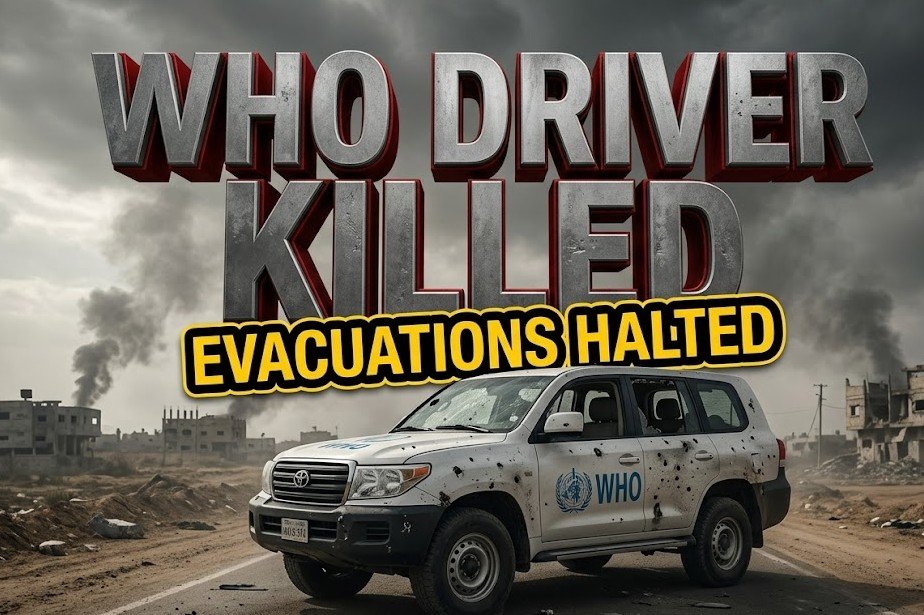
The World Health Organization has halted medical evacuations from Gaza after one of its contractors died in an Israeli shooting. This sudden stop leaves thousands of sick and wounded Palestinians stranded without access to vital care outside the territory.
Deadly Shooting Targets WHO Vehicle in Khan Younis
Israeli forces opened fire on a vehicle linked to WHO operations in eastern Khan Younis on Monday. Aslan, a local Palestinian driver from the Bureij refugee camp, was behind the wheel on Salah al-Din Street when the shooting occurred.
Local medical sources at Nasser and Al-Aqsa hospitals reported that Aslan was shot in the head. He was pronounced dead upon arrival at the hospital. Reports also mention a WHO doctor and several other Palestinians sustained injuries in the same event.
A funeral took place the same day in Deir al-Balah in central Gaza. Mourners gathered to pay respects to the longtime resident who had been supporting health efforts in the area.
The Israeli military described the vehicle as unmarked and said it approached their position near the Yellow Line, which marks Israeli-held territory. Troops fired warning shots first. When the vehicle kept moving forward, they responded with additional fire.
The military stated the incident is under review. They viewed the approach as an immediate threat.
WHO Leadership Condemns Killing and Halts Operations
WHO Director-General Tedros Adhanom Ghebreyesus expressed deep sorrow over the loss. He confirmed the contractor was killed in a security incident while two other staff members remained unharmed according to initial reports.
The organization immediately suspended medical evacuations via the Rafah crossing to Egypt until further notice. This move affects scheduled transfers of critically ill patients seeking treatment abroad.
Hanan Balkhy, WHO regional director, called the killing a devastating loss. She joined calls for stronger protection of civilians and humanitarian staff working in Gaza.
The decision came after a planned evacuation on Monday was canceled. WHO partners, including the Palestinian Red Crescent, were notified of the pause.
Patients Left Waiting as Rafah Crossing Halts Again
Thousands of Palestinians desperately need medical care unavailable inside Gaza. Estimates put the number of urgent cases between 18,000 and 22,000, including thousands of children.
Many suffer from severe war-related trauma, cancer, heart conditions, and other serious illnesses. Health officials report that six to ten patients die every day while waiting for approval to leave.
The Rafah crossing has seen limited reopenings in recent months. Since mid-March, only small groups have crossed in coordinated operations, sometimes just nine patients plus companions in a single day.
At the current pace, clearing the backlog could take years. Previous figures show over 1,200 patients have already died while stuck on waiting lists during earlier restrictions.
This latest suspension adds more pressure on Gaza’s overwhelmed hospitals. Medical teams there struggle with limited supplies and damaged facilities after months of conflict.
- Trauma injuries from ongoing violence top the list of evacuation needs
- Cancer patients require specialized treatments not possible locally
- Children make up a significant portion of those waiting for care
- Companions often travel with patients, further limiting daily numbers
The pause affects both outgoing patients and returns of those who completed treatment in Egypt or elsewhere.
Broader Dangers Facing Aid Workers in Gaza
This incident is not isolated. Humanitarian organizations have repeatedly raised alarms about attacks on their teams and facilities throughout the conflict.
Aid workers play a crucial role in delivering health services where local systems have been stretched thin. Drivers like Aslan help move patients, supplies, and staff across dangerous areas.
The WHO has stressed that all parties must respect international rules protecting medical and humanitarian personnel. Without safe conditions, life-saving work becomes impossible.
Local health authorities in Gaza have echoed these concerns. They point to the vehicle being associated with WHO operations at the time of the shooting.
International observers watch closely to see how this event might influence future aid coordination. Safe passage for medical evacuations remains a key humanitarian priority.
The killing has drawn attention on social media, with many expressing outrage over the risks faced by those trying to help civilians.
What This Means for Gaza’s Humanitarian Crisis
Aslan’s death and the resulting suspension highlight the extreme challenges of providing health care in active conflict zones. Families who pinned hopes on evacuation now face longer waits and greater uncertainty.
Every day of delay costs lives. Patients with time-sensitive conditions cannot afford prolonged halts in the process that offers them a chance at survival and recovery.
The situation calls for urgent dialogue between all sides to restore safe medical transfers. Humanitarian needs should not become another point of contention in the wider conflict.
Gaza’s health system has shown remarkable resilience, but it cannot meet every complex medical demand alone. External support through safe evacuations saves lives and eases the burden on local doctors and nurses.
This tragedy serves as a reminder of the human cost behind every statistic. A father, a colleague, and a dedicated worker is gone, leaving a gap in the community he served.
The world watches to see how quickly operations can resume and whether stronger safeguards can prevent similar losses in the future. For now, the focus remains on the patients whose journeys to treatment have been interrupted once again.