
In one of the most alarming escalations in the long‑running Iran‑Israel conflict, Iranian forces have launched a series of ballistic missiles loaded with cluster bomb warheads into Israeli population centers, including Tel Aviv and surrounding neighborhoods, prompting fear, disruption and casualties among civilians. This has highlighted stark differences between how Iran conducts its attacks and how Israel attempts to limit harm to noncombatants, raising intense debate about strategy, legality and moral responsibility in modern warfare.
The use of weapons that scatter dozens of smaller bomblets over wide areas has unleashed new dangers to civilians and international concern. Meanwhile, Israel’s controversial practice of “roof knocking” as a warning before airstrikes has become central to public discussion about proportionality and the ethics of warning methods in war.
Iran’s Use of Cluster Munitions in Missiles Toward Israeli Cities
Iran’s recent missile strikes mark a major shift in the nature of its offensive. Over the first ten days of the current conflict, Iran has fired around 300 ballistic missiles at Israel, and nearly half of them carried cluster bomb warheads. These cluster warheads open mid‑air, spreading dozens of explosive submunitions across a wide radius, typically six to ten kilometers, making them exceptionally dangerous in populated areas.
International critics and human rights groups have condemned the use of these munitions, characterizing them as “inherently indiscriminate weapons” because they cannot distinguish between military targets and civilians. Amnesty International described earlier similar attacks during the conflict as evidence of disregard for international humanitarian law.
Cluster weapons are banned under the 2008 Convention on Cluster Munitions, signed by more than 100 countries. However, important regional powers, including Iran, Israel and the United States, have not ratified the treaty. This legal status complicates assessments because Iran’s use is not technically a violation of that treaty by itself, though many legal experts argue that customary international humanitarian law still prohibits indiscriminate attacks on civilians.
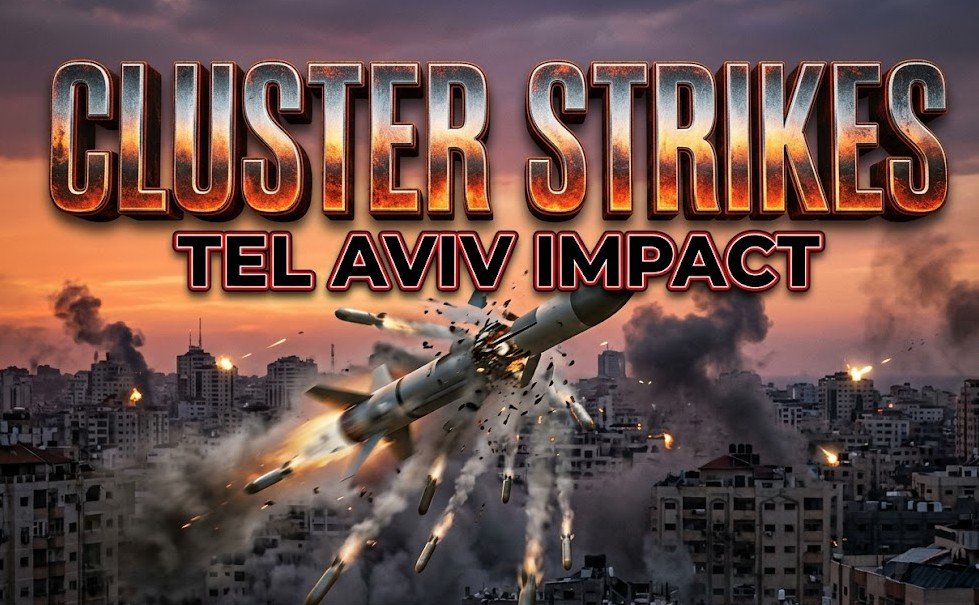
The effects on everyday life in Israel have been visceral. Sirens blare regularly across central and coastal regions as Iranian missiles approach. Videos and eyewitness reports shared on social media show bomblets raining down over wide areas, creating constant anxiety and forcing civilians to seek shelters repeatedly. At least three Israeli civilians have been reported killed by cluster bombs in the past week, with many more injured and damage to infrastructure.
How Israel Signals Warnings Before Strikes
By contrast, Israel has employed a different tactical approach in its own offensive operations, particularly when targeting areas believed to house combatants or military infrastructure. One of the most discussed methods is known as “roof knocking.”
Roof knocking involves dropping a low‑yield munition or sending an early signal to a civilian structure before a heavier strike. The intent, as described by the Israel Defense Forces, is to warn civilians to evacuate before the main attack occurs. This practice has been used in conflicts dating back to the early 2000s and was seen in Gaza wars over many years.
The Israeli military argues that roof knocking demonstrates an effort to reduce civilian casualties and complies with international law by providing notice of imminent danger. Senior military officials have pointed to such warnings as evidence that Israel tries to balance military necessity with the obligation to protect civilian lives.
However, human rights organizations and international observers have criticized the practice. They argue that roof knocking can be confusing, terrorizing and may not always give civilians sufficient time or safe options to flee. Some investigations have found that the shock and fear caused by the warning devices themselves can leave civilians trapped or worse off, particularly where shelter options are limited.
Broader Legal and Ethical Debate
The contrast between Iran’s use of cluster munitions and Israel’s warnings fuels a broader debate about the ethics of modern warfare and the protection of civilians.
Cluster munitions are widely condemned by human rights groups because bomblets often fail to explode on first impact, leaving unexploded ordnance that can maim or kill civilians years later. The fact that many countries, including Israel and Iran, have not banned these weapons complicates diplomatic efforts to hold users accountable.
Meanwhile, proponents of Israel’s roof knocking point to it as an attempt to “do more with less deadly geometry,” offering civilians notice that allows them to leave danger zones before an attack. Critics argue that such warnings may not always provide enough lead time or safe spaces for civilians to go, especially in dense urban environments.
The debate also highlights the challenge of applying existing international law to rapidly evolving warfare tactics. While the Geneva Conventions require parties to distinguish between civilians and combatants, modern weapons technology and missile systems complicate enforcement and monitoring in real time.
Impact on Civilians in Israel and the Region
The practical impact of these tactics is felt most acutely by families living in major Israeli cities. Tel Aviv, Haifa, Herzliya and the broader coastal region have endured repeated alerts and briefings to seek immediate shelter from incoming Iranian missiles. Residential neighborhoods have seen explosive debris, shattered windows and a constant threat of unexploded bomblets, prompting mass evacuations from affected blocks.
At the same time, the psychological toll on civilians cannot be underestimated. Frequent alarms disrupt sleep, schooling and work, creating an atmosphere of sustained stress. Civilians in areas where roof knocking warnings are issued face the gut‑wrenching choice of fleeing homes or risking staying behind. Humanitarian organizations warn that trauma related to repeated missile attacks and ambiguous warning systems will have lasting consequences on community well‑being.
International Reactions and Future Outlook
World powers and international bodies have expressed concern over civilian harm and the use of controversial weapons. Western governments have reiterated calls for restraint and adherence to international law, while urging both sides to explore diplomatic solutions to deescalate the conflict.
Humanitarian agencies continue to push for protections that go beyond technical legalities, advocating for clear civilian safe zones and stronger monitoring of indiscriminate weapons use. As the conflict continues, experts warn that unresolved legal grey zones over weapons like cluster munitions and contested warning methods like roof knocking will likely remain in the spotlight for years to come.
In the end, it is civilians — families, children and ordinary residents — who bear the brunt of these strategic calculations. The debate over cluster munitions and warning systems underscores an urgent global conversation about how warfare should protect, rather than imperil, human life.
