
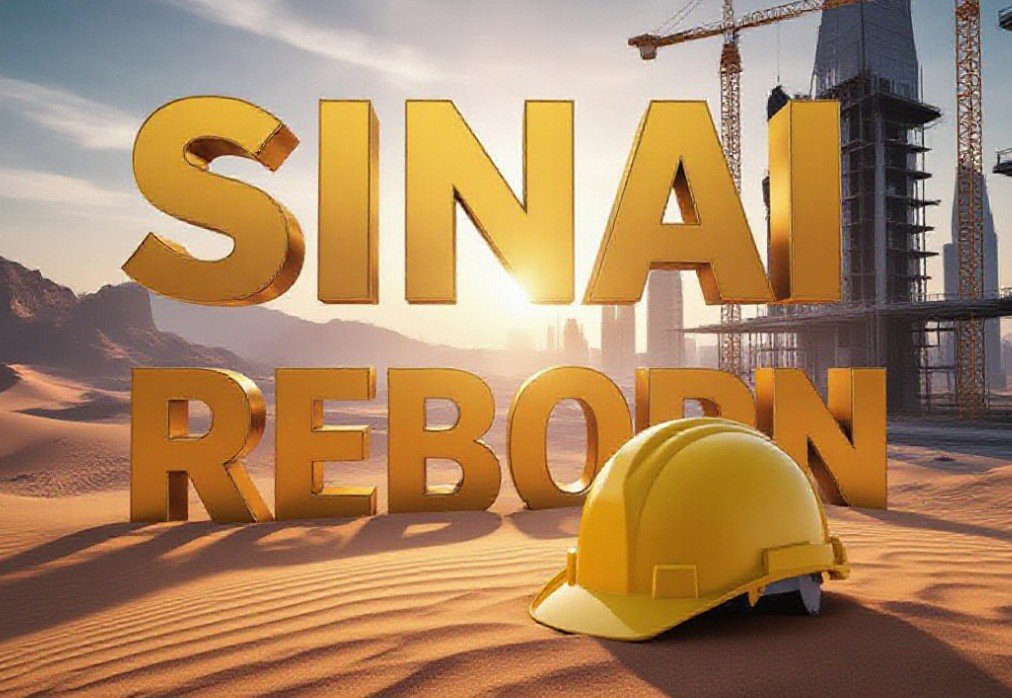
Egypt is rewriting the history of the Sinai Peninsula. The government has launched a massive development plan to turn this desert region into a global hub for trade and tourism.
This ambitious strategy aims to secure the land by boosting the economy rather than just relying on military force. Authorities believe that new cities and roads will finally integrate this isolated region with the rest of the country.
huge investments change the desert landscape
The Egyptian state is pouring money into the peninsula at a record pace. Recent reports indicate the government has spent over 600 billion Egyptian pounds on infrastructure projects in Sinai over the last decade.
This financial injection is visible everywhere you look. Workers are building new tunnels under the Suez Canal to speed up travel times. Engineers are constructing desalination plants to provide fresh water to arid areas.
The project aims to turn the area around the historic monastery into a spiritual tourist destination. Planners have designed eco-lodges and a peace center that respect the holy nature of the site.
Key Infrastructure Focus Areas:
- Transportation: Five new tunnels under the Suez Canal to end isolation.
- Housing: Building new residential cities like New Rafah.
- Agriculture: Reclaiming desert land for farming in the North Sinai.
- Tourism: expanding airports in Sharm El Sheikh and St. Catherine.
- Energy: massive solar power plants to support new industries.
These projects are creating thousands of jobs. They are also signaling to the world that Sinai is open for business.
Tribes play a key role in keeping peace
Security remains the foundation of this new growth. The Egyptian military has largely defeated the insurgency that plagued North Sinai for years.
This victory was not achieved by soldiers alone. The local Bedouin tribes played a critical role in gathering intelligence and securing their own lands.
The government now recognizes the importance of this partnership. Cairo is working harder to bridge the gap between the state and the tribal communities.
| Era | Relationship Status | Outcome |
|---|---|---|
| 2011-2015 | High Tension | Rise of insurgency and lack of trust. |
| 2016-2020 | Military Cooperation | Tribes unite with the army to fight terror. |
| 2021-Present | Economic Integration | State builds housing and offers jobs to locals. |
Tribal leaders are cautiously optimistic about these changes. They have long complained about being left out of the national conversation.
Now they see schools and hospitals rising in their towns. However, deep cultural differences still exist.
Many Bedouins want to ensure that modernization does not erase their traditions. They demand legal ownership of their lands and equal rights. Trust is building slowly, but the physical progress on the ground is undeniable.
Tourists return to famous beaches and holy sites
Tourism is the lifeblood of the South Sinai economy. Travelers are flocking back to the Red Sea resorts as stability returns to the region.
Sharm El Sheikh and Dahab are seeing high occupancy rates once again. Divers and sunseekers feel safe enough to explore the coast.
The government is also pushing to open up North Sinai to visitors. For decades, the north was a no-go zone for foreigners.
Now, officials are promoting the pristine beaches of Al-Arish. They hope to attract a different kind of traveler who seeks untouched nature.
Religious tourism is another major pillar of this revival.
Pilgrims visit Mount Sinai where Moses received the Ten Commandments. The new developments at St. Catherine will allow more visitors to stay comfortably.
Top Tourist Draws in 2024:
- Diving: The Blue Hole in Dahab remains a world-class site.
- History: St. Catherine’s Monastery is the oldest working monastery in the world.
- Luxury: Sharm El Sheikh hosts major international conferences.
- Adventure: The Sinai Trail offers hiking through Bedouin lands.
This tourism boom provides much-needed hard currency for Egypt. It also gives local people a stake in maintaining peace.
Border tensions test the new stability
Despite the internal progress, the region faces external pressure. The ongoing situation in Gaza casts a shadow over the border city of Rafah.
Egypt strictly manages this border to prevent the conflict from spilling over. The crossing point is a vital lifeline for aid but also a security concern.
Cairo walks a tightrope in managing this geopolitical hotspot.
The state must support humanitarian efforts while keeping Sinai secure. This delicate balance highlights the strategic value of the peninsula.
It acts as a buffer zone between major powers.
Fact Check: The Camp David Accords of 1978 limit the number of military forces Egypt can deploy in certain zones of Sinai, but recent agreements with Israel have allowed Egypt to increase troops to fight terrorism effectively.
The government knows that economic strength is the best defense. A populated and prosperous Sinai is harder to destabilize than an empty desert.
Development is now seen as a matter of national security. The leadership is determined to ensure that the peninsula never again becomes a breeding ground for chaos.
They are betting that concrete and commerce will be stronger than guns.
Egypt is racing against time to complete its vision. The Sinai Peninsula is no longer just a buffer zone on a map. It is becoming a vibrant part of the nation’s future. The Bedouin children playing near the new construction sites represent a generation that might finally know peace and prosperity.
