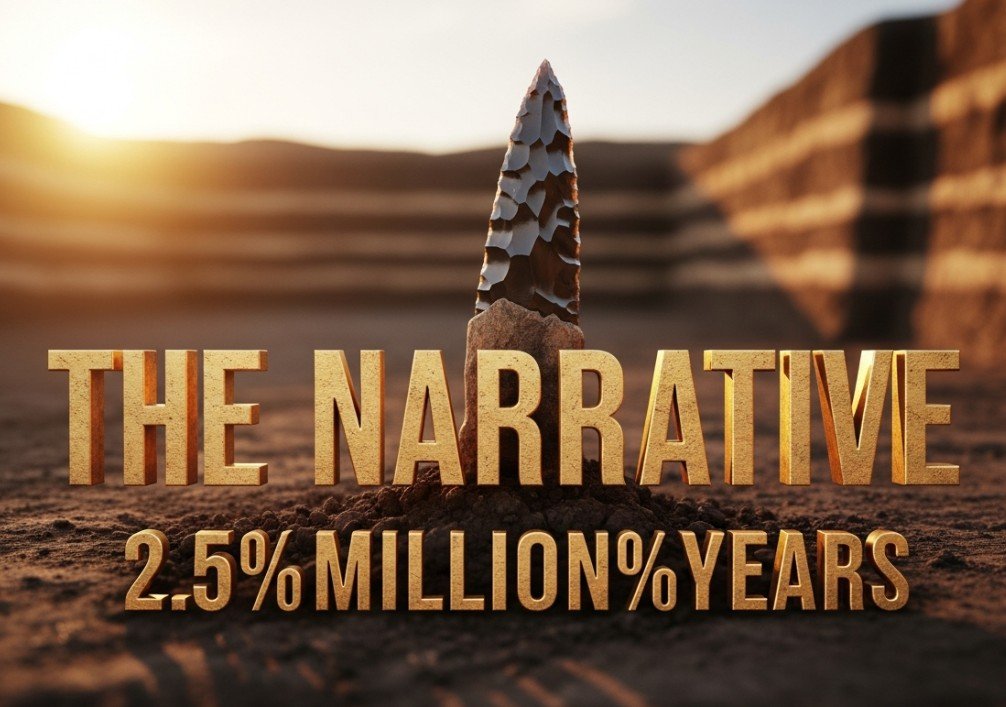
The Hashemite Kingdom of Jordan is taking a bold step to redefine how the world views its history. The Ministry of Culture has officially launched “The Narrative” project. This is a massive national initiative aimed at documenting the history of the land and its people. The project is not just looking at recent centuries. It covers a timeline extending back more than 2.5 million years.
This announcement comes as a direct response to the vision of His Royal Highness Crown Prince Al Hussein bin Abdullah II. The goal is to present a truthful and scientifically backed story of Jordan. It challenges the idea that the nation is a product of modern political borders. The project asserts that Jordan is one of the oldest regions of continuous human settlement in the world. This initiative promises to reshape the cultural understanding of the region for future generations.
A Royal Vision for National Identity
The driving force behind this project is a desire to solidify the Jordanian identity. Ministry of Culture spokesperson Salem Al-Faqir provided key details about the launch. He emphasized that this is not just about recording events. It is about documenting a narrative. There is a distinct difference between the two concepts. Recording might just list dates and wars. Documenting weaves these facts into a coherent story that explains the “why” and “how” of the nation.
The project emerged from an urgent need. The kingdom faces complex regional circumstances. There is a necessity for strong cultural references that shed light on the land and its people. Al-Faqir noted that the initiative seeks to explore historical continuity. It aims to show that the people living on this land today are connected to those who walked it millions of years ago.
Jordan needs solid historical foundations to present itself authentically to the world. This foundation must be cultural, political, economic, and social. The Crown Prince envisions a Jordan that understands its deep roots. This understanding is intended to empower the youth. It gives them a sense of belonging that transcends modern political shifts. The narrative is designed to be a shield against partial or reductionist views of the country’s history.
Science Confirms Ancient Roots in Al-Sukhnah
The most shocking part of the announcement is the timeframe. The project is not starting with the Great Arab Revolt. It is not starting with the Roman Empire. It begins in the Stone Age. The Ministry of Culture is basing this timeline on hard scientific evidence. They are relying on findings from specialized archaeological missions.
Recent surveys have changed the game. Excavations in the Al-Sukhnah area in northern Jordan have yielded incredible results. Archaeologists uncovered flint tools in this region. These are not ordinary artifacts. Scientific dating places these tools at approximately 2.5 million years old.
The dating process was rigorous. Experts used basalt geological layers to verify the age. They employed modern laboratory techniques to ensure accuracy. These findings provide undeniable proof of early human activity.
Key scientific confirmations include:
- Continuous Settlement: The land has been inhabited without major breaks for millions of years.
- Strategic Location: Jordan was a primary corridor for early humans moving out of Africa.
- Advanced Activity: The tools suggest purposeful crafting and survival skills in the region much earlier than previously highlighted.
This scientific framework lifts the project above mere storytelling. It grounds the national identity in tangible evidence. It proves that Jordan is a cradle of civilization in its own right.
From Stone Age to Modern State
The “Jordanian Narrative” covers a vast expanse of time. It seeks to connect the dots between widely different eras. The project argues that Jordan is the result of continuous human and civilizational accumulation. It is not an accidental state created by a political moment.
The timeline is extensive. It moves from the prehistoric findings in Al-Sukhnah through several major historical epochs. The project highlights the rise of ancient kingdoms that often get overlooked in general history books.
The narrative focuses on these key periods:
- The Stone Ages: The dawn of human tool-making and settlement.
- Ancient Kingdoms: The powerful states of Ammon, Moab, and Edom which thrived on this land.
- The Nabataean Era: The construction of Petra and the establishment of a regional commercial hub.
- Roman and Byzantine Periods: Times of architectural expansion and religious transformation.
- Islamic Era: The Islamic conquest and the flourishing of the Umayyad era.
- Modern History: The path to the establishment of the modern Jordanian state.
Each of these eras contributed to the personality of the Jordanian people. The project aims to show the thread that connects an Ammonite farmer to a modern Jordanian engineer. It is about resilience and adaptation across the ages.
Shaping the Future Through the Past
The ultimate goal of this project goes beyond history books. It is about the future. The Ministry of Culture wants to ensure that the next generation knows their true worth. In a world of fast information and social media clips, deep history often gets lost. This project aims to fix that.
Al-Faqir stated that the narrative responds to a national knowledge-based need. There is a hunger for an integrated account of history. Previous approaches may have been partial. They might have focused only on the last century. This project widens the lens.
The expected impact includes:
- Educational Reform: School curriculums may be updated to reflect this deep history.
- Global Perception: Tourism and diplomacy will benefit from presenting Jordan as an ancient continuous civilization.
- Social Cohesion: A shared deep history strengthens the bond between citizens.
The Ministry insists that Jordan is not a buffer zone. It is not a secondary player in history. It is a protagonist. By documenting this narrative, the state is reclaiming its story. It is telling the world that Jordan has been here for a very long time. And it plans to be here for a long time to come.
The “Al-Mamlaka” project is a declaration of confidence. It invites the world to look closer at the stones, the sand, and the people of Jordan. It promises that what they find will be much older and richer than they ever imagined.
This initiative by the Ministry of Culture marks a turning point. It is a shift from defense to celebration. Jordan is embracing its full, complex, and ancient identity. The story of the land is finally being told in full.