
In a rare diplomatic gathering that has drawn attention across continents, Arab foreign ministers from five key nations have publicly praised Slovenia for its steadfast stance on peace in the Middle East. Their high-level visit to Ljubljana on February 6, 2026 has underscored shared hopes for a diplomatic path to end the protracted Israeli-Palestinian conflict and move toward a lasting peace. Their message was clear: diplomacy, not division, is the route forward.
The interactions in Slovenia offered a platform to reaffirm commitment to a two-state solution and to salute Slovenia’s principled foreign policy — a position that has won trust from Arab capitals and captured global attention.
A Historic Meeting in Ljubljana
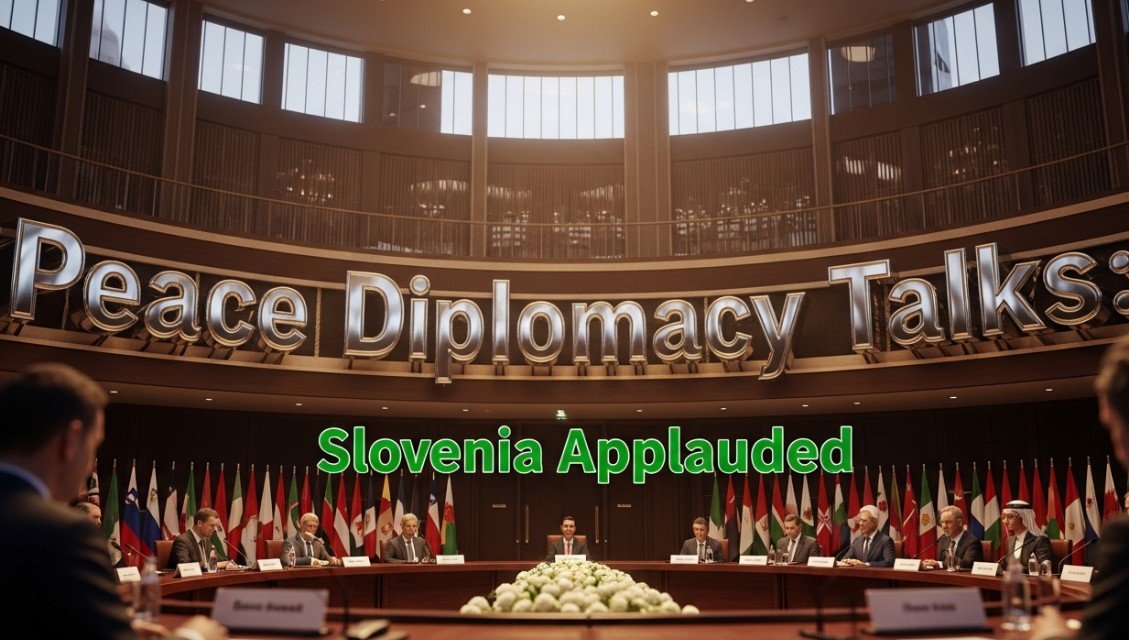
On Friday, February 6, foreign ministers from Egypt, Saudi Arabia, Jordan, Bahrain and Qatar convened in Slovenia’s capital of Ljubljana, engaging in deep discussions with Slovenia’s Deputy Prime Minister and Foreign Minister Tanja Fajon.
The meeting focused mainly on peace efforts in Gaza, broader regional stability and the urgent need to implement sustainable solutions for the Israeli-Palestinian conflict.
Leaders expressed appreciation for Slovenia’s consistent support for diplomatic initiatives, its recognition of Palestinian statehood and principled foreign policy rooted in fairness and international law.
A joint communiqué from the ministers stressed the critical importance of fully implementing the ceasefire in Gaza, expanding humanitarian aid access and moving toward a clear political horizon with an independent Palestinian state based on internationally recognised lines.
Praise for Slovenia’s Diplomatic Stance
Arab officials were unanimous in saying that Slovenia’s foreign policy approach has helped build trust between Europe and the Arab world.
Prince Faisal bin Farhan, Saudi Arabia’s Foreign Minister, commended Slovenia’s role in discussions about Gaza and regional stability.
Egypt’s Foreign Minister Badr Abdelatty echoed this sentiment by welcoming Slovenia’s support for an independent Palestine and its proactive diplomacy at international forums, including its role as a non-permanent member of the United Nations Security Council.
Jordan’s Ayman Safadi stressed the necessity of complete adherence to ceasefire terms in Gaza and highlighted the need to advance all provisions agreed under peace initiatives, including international frameworks proposed by global actors.
Ministers also expressed deep concern over developments in the occupied West Bank, condemning unilateral measures that threaten to derail de-escalation efforts, particularly in East Jerusalem.
Shared Vision for Two States and Humanitarian Relief
Across discussions in Ljubljana, the two-state solution emerged as a central theme. The group reaffirmed that a sovereign Palestinian state, living alongside Israel in peace and within the internationally recognised borders of 1967 with East Jerusalem as its capital, remains the only viable and just foundation for lasting peace.
Ministers noted that full implementation of ceasefire agreements, coupled with unimpeded humanitarian aid entering Gaza, is essential to relieve suffering and lay the groundwork for long-term reconstruction and stability.
Beyond immediate conflict concerns, the dialogue also touched on ongoing efforts to reduce regional tensions through negotiation and diplomacy, and how global cooperation could translate these discussions into tangible progress.
Slovenia’s Principled Foreign Policy in Focus
For Slovenia, a small European nation, these interactions highlight its growing diplomatic influence in international peace efforts.
Slovenia has repeatedly called for an immediate ceasefire in Gaza and supported the humanitarian imperative for the release of hostages and unfettered aid access. It has also consistently backed the two-state solution and recognised the Palestinian state as part of its foreign policy direction.
Prime Minister Robert Golob has publicly stated that Slovenia’s foreign policy is grounded in principles that respect human rights and international law, a stance that has helped build trust with Arab partners.
The active role Slovenia played as a non-permanent member of the UN Security Council further elevated its profile among Arab states, many of whom see its balanced approach as a constructive contribution to peace dialogue.
Wider Context of Regional Diplomacy
This meeting in Ljubljana comes amid heightened global attention on Middle East diplomacy. International efforts to convene peace conferences and reaffirm commitments to the two-state solution have intensified in recent times.
Arab foreign ministers have, in other forums, called for wider cooperation among global partners to uphold international law and establish a sustainable political horizon for Palestinian statehood.
The United States’ involvement in proposing peace frameworks and the continued advocacy for de-escalation and humanitarian priorities have also shaped the backdrop against which these talks took place.
What Diplomats Are Saying
The Lebanese capital Beirut was among many cities where people watched the developments closely, seeing diplomatic progress as a source of hope for a long-sought peaceful resolution.
Arab diplomats and European counterparts agreed that effective peace talks must be inclusive and grounded in mutual respect for sovereignty, human dignity and political rights. Monitoring mechanisms, long-term commitments and support from global institutions were highlighted as key to future success in peace efforts.
What This Means for the Future
While historic differences remain, the recent meeting signals an important moment of convergence between Arab nations and Slovenia’s government. It suggests that smaller states can play meaningful roles in high-stakes diplomacy when they act on principles and build trust across cultures.
Regional peace will require continued dialogue, implementation of agreed terms and support for humanitarian relief, but the renewed momentum out of Ljubljana adds fresh energy to ongoing conversations around peace and justice in the Middle East.
