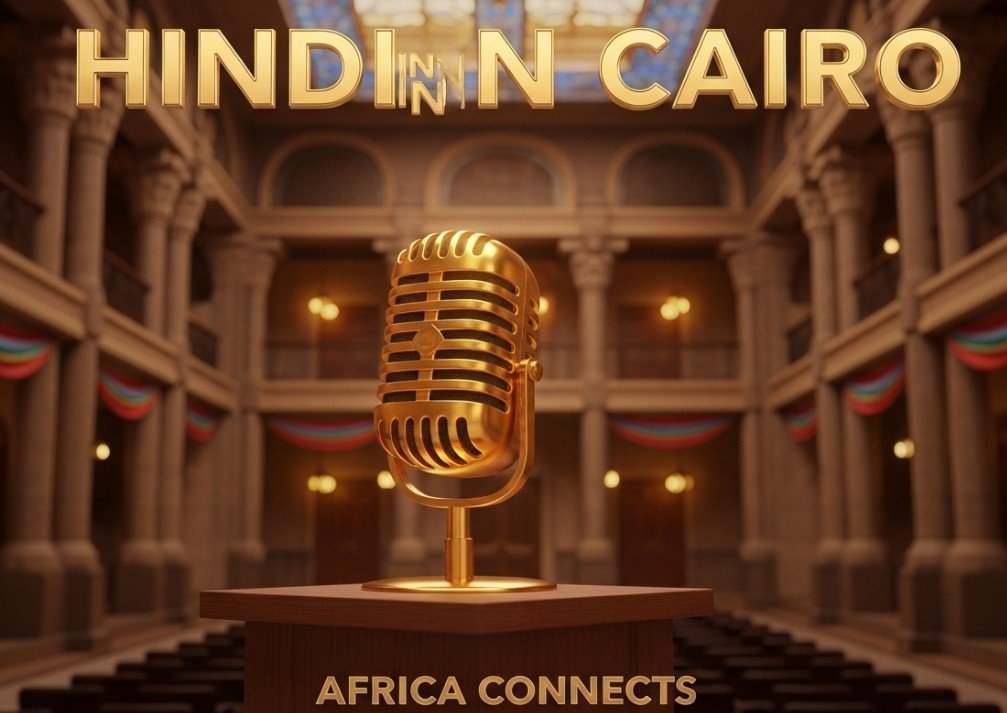
Historical ties revived as Cairo became the center stage for Indian culture this Sunday. Senior diplomat Neena Malhotra inaugurated the Africa Regional Hindi Conference in the Egyptian capital. This landmark event unites scholars from seven nations to celebrate language as a powerful tool for diplomacy. It marks a significant step in India’s engagement with the African continent.
Connecting Cultures from Ganges to Nile
The atmosphere at the venue was electric with the blend of Indian and Egyptian traditions. Neena Malhotra, Secretary (South) in the Ministry of External Affairs, officially opened the two day event. She emphasized the deep connection between the two civilizations.
This conference is not just about language. It represents a strategic effort to bring the Global South together. The event is a joint effort by the Indian Embassy in Cairo and Ain Shams University. This partnership highlights the academic rigor behind the celebrations.
Key Objectives of the Conference:
- Promote Hindi as a global language of communication.
- Strengthen educational ties between India and African nations.
- Facilitate dialogue on cultural diplomacy.
- Celebrate the shared heritage of the Nile and Ganges civilizations.
The theme of the conference is “Hindi for Cultural Contact and Cooperation from the Ganges to the Nile.” This poetic title suggests a flow of ideas similar to the flow of these mighty rivers. It aims to erase borders through words and literature.
Ambassador Suresh K Reddy was also present at the ceremony. He spoke about the growing interest in Indian culture across the region. The President of Ain Shams University, Prof. Mohamed Diaa Zain El-Abedeen, welcomed the delegates. His presence signaled strong institutional support from Egypt’s top academic circles.
Scholars Unite for Linguistic Diplomacy
The gathering is diverse and intellectually stimulating. Experts have flown in from across the African continent to share their views. They are discussing how Hindi serves as a medium for modern communication.
Participants include writers, teachers, and language enthusiasts. They are exploring how Indian values travel through language. The concept of Vasudhaiva Kutumbakam is central to these discussions. This ancient Indian philosophy views the world as one single family.
Participating Groups:
- Academics: Professors sharing research on Hindi literature.
- Diplomats: Officials looking for soft power opportunities.
- Students: Young learners eager to master a new skill.
The sessions cover a wide range of topics. One major focus is the influence of Indian cinema. Bollywood has long been India’s unofficial ambassador in Egypt. Movies help locals pick up Hindi phrases easily. This pop culture connection makes formal learning much smoother.
Another topic is translation. Scholars are looking at translating Hindi works into African languages and vice versa. This mutual exchange enriches both cultures. It allows African stories to reach Indian readers. It also brings Indian philosophy to African libraries.
Strategic Partnership Gets a Soft Power Boost
Language is a vital part of the growing strategic partnership between New Delhi and Cairo. Both nations share a history of leadership in the Non-Aligned Movement. Today, that relationship has evolved into a robust modern alliance.
Trade and defense are the hard pillars of this relationship. Culture acts as the soft glue that holds it together. Prime Minister Narendra Modi and President Abdel Fattah El-Sisi have upgraded ties recently. This conference adds a new layer to that diplomatic framework.
Areas of Cooperation:
| Sector | Focus Area |
|---|---|
| Education | University exchanges and language chairs |
| Culture | Festivals, art exhibitions, and cinema |
| Trade | Investments in technology and infrastructure |
| Defense | Joint exercises and equipment sharing |
Egypt acts as a gateway to both the Arab world and Africa. Promoting Hindi here has a multiplier effect. It allows India to reach a vast audience across two geopolitical zones.
The timing is crucial. India is positioning itself as a voice for the Global South. Cultural empathy is necessary for political trust. When people speak the same language, business becomes easier. Trust builds faster. This conference lays the groundwork for those future interactions.
Growing Popularity of Hindi in Egypt
The demand for learning Hindi in Egypt is rising steadily. This is not a sudden trend but the result of years of hard work. The Maulana Azad Indian Cultural Centre (MACIC) in Cairo plays a huge role here.
This center has been active for over two decades. It serves as a hub for all things India in Egypt. It offers regular classes, workshops, and competitions. The response from Egyptian youth has been overwhelming.
Impact by the Numbers:
- 20+ Years: Operational history of MACIC in Cairo.
- 2,500+: Students enrolled in Hindi courses over the years.
- 2,000+: Students who successfully completed the basic program.
These numbers tell a success story. Egyptian students see value in learning Hindi. Some do it for love of Bollywood stars like Shah Rukh Khan. Others see economic potential. As Indian companies invest in Egypt, knowing the language becomes a job skill.
Tourism is another driver. Egypt receives thousands of Indian tourists annually. Tour guides who speak Hindi earn better tips and get more business. The economic angle ensures that the language has a practical future in the region.
The conference serves to encourage these learners. It shows them that they are part of a global community. Seeing scholars from other African nations validates their efforts. It proves that Hindi is not just an Indian language but a global one.
The closing sessions of the conference will focus on future roadmaps. Delegates plan to create a network of Hindi scholars across Africa. This network will share resources and teaching methods. It aims to keep the momentum alive long after the event ends.
India’s soft power strategy is clearly working. The smiles and handshakes in Cairo prove it. Language has successfully bridged the distance between the Ganges and the Nile.
This event is a testament to the power of cultural exchange. It goes beyond treaties and trade deals. It touches the hearts and minds of people. By investing in language, India and Egypt are investing in a shared future. The success of the Africa Regional Hindi Conference sets a high benchmark for cultural diplomacy. It shows that in a divided world, words can still bring us together.