A 3,500-year-old stone head is finally going home to Egypt. The Netherlands officially returned the stolen artifact this week after uncovering a complex smuggling ring. It was looted from Luxor during the chaos of the Arab Spring and surfaced at a prestigious art fair. This return marks a major victory for international heritage laws.
Historic Handover at the Hague
The formal ceremony took place at the Egyptian embassy in The Hague this past week. It was a moment of quiet triumph for cultural heritage. Dutch authorities handed over the ancient limestone piece to Egyptian officials. The artifact had traveled thousands of miles through the black market before being intercepted.
Gouke Moes represents the Dutch Information and Heritage Inspectorate. He stood alongside the Egyptian Ambassador during the event. The atmosphere was respectful and serious. Both nations emphasized their commitment to stopping the illegal trade of history.
The handover was not just a simple exchange of property. It was the result of a multi-year investigation involving three countries. The Netherlands, the United Kingdom, and Spain all played a role. This cooperation highlights how connected the modern art world has become.
Key Figures in the Return:
- Gouke Moes: General Director of the Dutch Inspectorate.
- Hatem El-Sayed: Egyptian Ambassador receiving the artifact.
- Sycomore Ancient Art: The gallery that flagged the suspicious item.
- Dutch National Police: Led the criminal investigation.
This event strengthens the bond between Cairo and The Hague. It sends a clear warning to smugglers. Europe is closing its doors to looted goods.
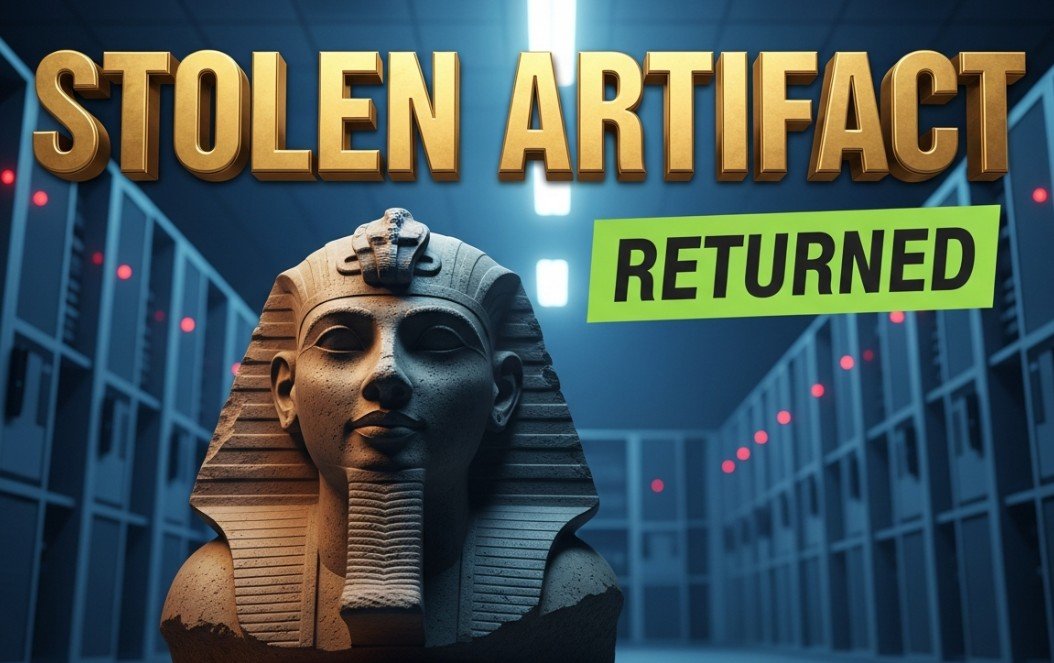
A Lost Piece of History from Luxor
The sculpture itself is a masterpiece of ancient craftsmanship. It depicts a high-ranking official from the New Kingdom era. Experts date it to the reign of Pharaoh Thutmose III. This period occurred between 1479 and 1425 BC.
The head is small but incredibly detailed. It is made of limestone and measures about 16 centimeters. The face shows the artistic style typical of the 18th Dynasty. This was a time of great wealth and power in ancient Egypt.
Artifact Specifications:
| Feature | Detail |
|---|---|
| Age | Approx. 3,500 Years Old |
| Material | Limestone |
| Origin | Luxor, Egypt |
| Period | Reign of Thutmose III |
| Condition | Damaged nose, otherwise intact |
Sadly, the piece was stolen during a time of great unrest. The Arab Spring in the early 2010s created a security vacuum in Egypt. Looters took advantage of the chaos. They raided archaeological sites in Luxor and other historic regions.
This stone head was ripped from its original context. It likely belonged to a tomb or a temple complex. When artifacts are stolen this way, we lose more than just the object. We lose the historical knowledge of where it stood and who it honored.
The face of the official is well preserved despite its rough journey. It wears a striated wig which was common for nobles of that time. The nose has some damage, but the eyes remain striking. It serves as a silent witness to centuries of history.
How the Smuggling Ring Was Busted
The recovery of this artifact reads like a detective novel. It all started at the TEFAF art fair in Maastricht. This is one of the world’s premier events for art and antiques. A gallery called Sycomore Ancient Art brought the piece to the fair in 2022.
The dealers at Sycomore were diligent. They did not just accept the paperwork provided by the seller. They looked closer at the documents. The provenance, or history of ownership, claimed the piece had been in a Spanish collection since the 1970s.
If this were true, it would be legal to sell. However, the dealers noticed inconsistencies. The font on the documents looked modern. The paper did not feel old enough. They suspected forgery.
The Investigation Timeline:
- 2010s: Artifact looted from Luxor during civil unrest.
- 2022: Item surfaces at TEFAF Maastricht art fair.
- Discovery: Gallery owners spot fake “Spanish Collection” papers.
- Verification: Experts from British Museum confirm the forgery.
- Action: Dutch National Police seize the object.
- 2025: Official return to the Egyptian government.
The gallery contacted experts at the British Museum and the National Museum of Antiquities in Leiden. These experts confirmed the worst. The documents were indeed fakes. The “Spanish collection” did not exist.
The Dutch National Police stepped in immediately. They seized the head to prevent it from vanishing again. They worked with Spanish police to track down the source. The trail led to a network of smugglers operating out of Barcelona.
Spanish authorities arrested two individuals connected to the sale. They are accused of laundering antiquities and forging documents. This bust revealed a larger operation designed to clean “blood antiquities” for the European market.
Fighting the Black Market Trade
The return of this sculpture is a win for the 1970 UNESCO Convention. This international treaty helps countries prevent the illicit import and export of cultural property. Both the Netherlands and Egypt are strong supporters of this agreement.
The black market for antiquities is massive. It is often linked to other criminal activities. Buyers often do not realize they are purchasing stolen goods. This case proves that due diligence is vital.
If the gallery had not checked the papers, the head would be in a private living room today. Instead, it is going back to a museum in Egypt. The public will finally be able to see it.
The Dutch Inspectorate emphasized that this is standard procedure now. They actively monitor art fairs. They look for red flags. They work with dealers to ensure transparency.
Why this matters for the future:
- Deterrence: Smugglers now know that European markets are being watched.
- Precedent: It establishes a legal framework for returning items even years later.
- Awareness: It educates collectors to ask for solid proof of history.
The fight is far from over. Thousands of artifacts are still missing. But every return is a step toward justice. It restores dignity to the culture that created these masterpieces.
Egypt has been aggressive in reclaiming its heritage. They have recovered thousands of artifacts in the last decade. This cooperation with the Netherlands serves as a model for other nations. It proves that diplomacy and law enforcement can work together to correct the wrongs of the past.
The stone official is now packing his bags for the final time. He will fly to Cairo. He will be studied by Egyptian scholars. And most importantly, he will rest in the land where he was carved three millennia ago.