The rusty gates of the Rafah border crossing finally creaked open this Tuesday. Yet the air was thick not with relief but with frustration and despair. Thousands of Palestinians remain trapped in a suffocating bottleneck between the ruins of Gaza and the safety of Egypt. What was promised as a humanitarian lifeline has quickly dissolved into a bureaucratic nightmare of intense interrogations and agonizing delays.
Families waited under the exposed sky for hours. They hoped to finally cross into the Sinai Peninsula after years of conflict. The reopening comes after a fragile ceasefire agreement. However, the reality on the ground paints a starkly different picture from the diplomatic announcements made just days ago.
Despair Grows at the Crossing Points
The scene at the border was chaotic and heartbreaking. On the Egyptian side, medical teams stood ready. They waited to receive patients who had fled Gaza for treatment at the start of the war. But the flow of people remained a trickle.
Ambulances lined up at a hospital in Khan Younis on the Gazan side. They carried patients desperate for clearance. Authorities in North Sinai confirmed that some patients eventually crossed. However, the process was excruciatingly slow.
Monday set a grim precedent for the days ahead.
It took more than ten hours for just a handful of people to cross in either direction. This pace has sparked outrage among aid workers. They argue that the current system is designed to fail.
We spoke to families waiting near the crossing. They described a scene of confusion. No one knew who was on the list. No one knew if the gates would remain open.
The mismatch between expectation and reality is staggering. The initial reports promised 50 people per direction daily. The actual numbers are far lower. This leaves tens of thousands of Palestinians in limbo. They are caught between the hope of medical treatment abroad and the desire to return to what remains of their homes.
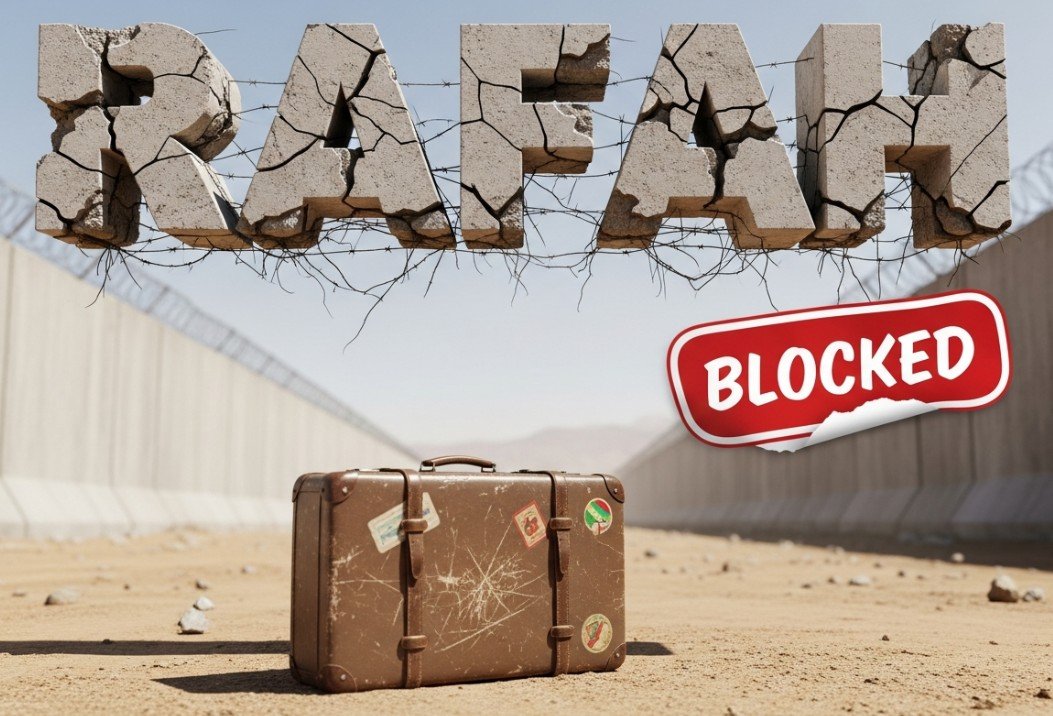
Strict Interrogations Hamper Movement
Security concerns have turned the crossing procedure into an ordeal. Reports emerging from the border indicate severe screening processes. These measures are slowing movement to a standstill.
Three women who returned to Gaza shared harrowing accounts. They reported being handcuffed and blindfolded. They described hours of interrogation by soldiers before being released. These stories have spread fear among those waiting to cross.
Logistical hurdles are adding to the misery.
Disagreements have erupted over luggage allowances. Palestinians fleeing the devastation explained they were forced to make impossible choices. Border officials informed them of a strict new rule.
- Travelers are allowed only the clothes on their backs.
- One single bag is permitted per person.
- All other belongings must be abandoned at the gate.
This policy has forced families to leave behind heirlooms and winter clothing. They are entering Egypt with almost nothing. It is a final indignity for a population that has already lost so much.
Healthcare System Collapse Deepens Crisis
The medical situation in Gaza has moved beyond critical. It is now catastrophic. The evacuation convoys organized around the Red Crescent hospital in Khan Younis are a drop in the ocean.
Teams from the World Health Organization are present. But they are overwhelmed. Medical officials state the number of patients allowed to leave is negligible. This is especially alarming given the total collapse of Gaza’s healthcare infrastructure after two years of fighting.
Key Statistics on the Medical Crisis:
| Metric | Status |
|---|---|
| Patients Needing Evacuation | Estimated 20,000+ wounded and sick |
| Egyptian Capacity | 150 hospitals ready to receive patients |
| Actual Crossings | Less than 20 patients per day |
| Casualties Since Ceasefire | 500+ killed by sporadic fire |
The director of Shifa Hospital in Gaza City did not mince words. He denounced the current border operations. He called it “crisis management” rather than a solution. He urged the international community to send medicines immediately if patients cannot leave.
The Palestinian Red Crescent reported dismal numbers for Tuesday. Only 16 patients were transported to Rafah. They were accompanied by 40 relatives. This is far fewer than the hundreds anticipated by aid groups.
Ceasefire Fragility and Diplomatic Tensions
The reopening of Rafah was supposed to be a cornerstone of the peace process. It is considered a key element of the second phase of the ceasefire. But political tensions threaten to derail this progress entirely.
Israeli Prime Minister Benjamin Netanyahu met with US envoy Steve Witkoff in Jerusalem this week. The Prime Minister reaffirmed a hardline stance. He insisted on the full disarmament of Hamas before any major reconstruction begins.
This demand complicates the logistics of the reopening.
Trust remains nonexistent between the parties. The violence has not fully stopped despite the truce. Just this Tuesday, tragedy struck again in southern Gaza.
A 19-year-old Palestinian man was shot dead. Nasser Hospital confirmed the fatality. The Israeli army stated it was unaware of the incident. This death adds to a grim tally. The Gaza Health Ministry reports more than 500 Palestinians have been killed by Israeli fire since the ceasefire theoretically took effect in October.
The current pace suggests an interminable wait for the wounded. Egyptian authorities maintain they are ready. But without a streamlined political agreement, the gates of Rafah will remain a choke point rather than a passage to safety.
The world watches as Rafah reopens by inches. For the people stranded there, every hour of delay is a matter of life and death. The promise of a ceasefire rings hollow when freedom of movement remains a distant dream. Families are torn apart by paperwork and protocols while the wounded wait for care that sits just across a fence.