
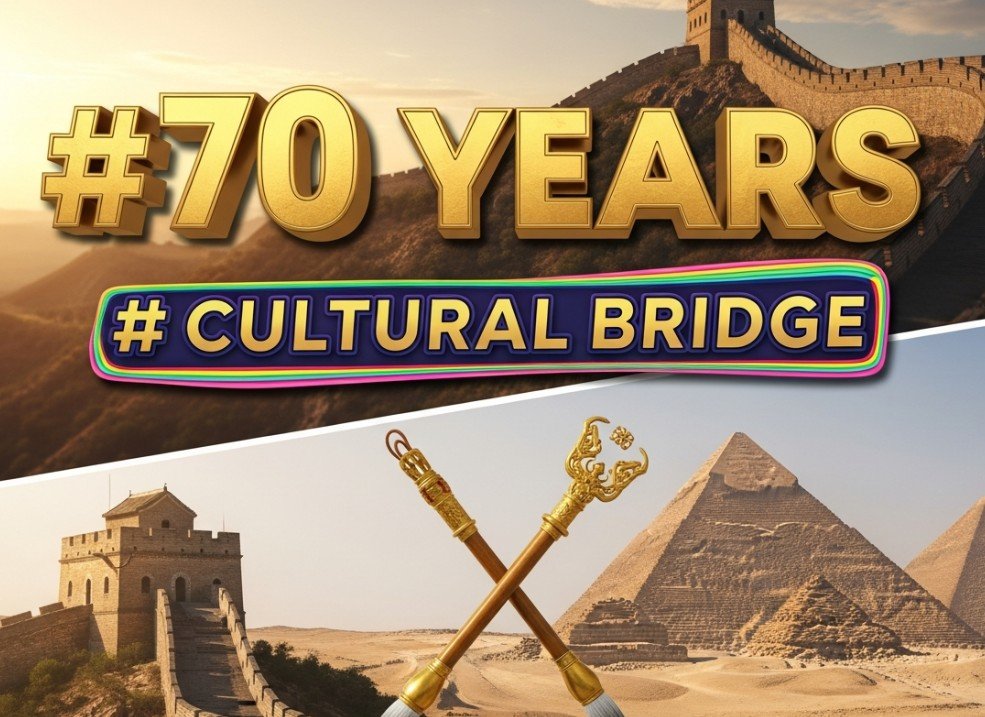
The bond between the Nile and the Yangtze is growing stronger than ever before. China and Egypt are currently witnessing a historic surge in cultural and diplomatic exchanges as both nations pave the way for their 70th anniversary of diplomatic ties. This renewed partnership focuses heavily on archaeology, tourism and education to connect two of the oldest civilizations on Earth.
Ancient Treasures Spark Modern Curiosity
The centerpiece of this cultural renaissance is the colossal exhibition titled “On Top of the Pyramid: The Civilization of Ancient Egypt.” Hosted by the Shanghai Museum, this event has shattered attendance records and captivated the Chinese public. It represents the largest collection of ancient Egyptian artifacts ever displayed outside Egypt in recent history.
Key Highlights of the Exhibition:
- Scale: Over 780 rare artifacts are on display.
- Source: Items were selected from major Egyptian museums including the Cairo Museum.
- New Discoveries: Recent finds from the Saqqara archaeological site are featured for the first time.
- Duration: The exhibition runs through August 2025 to accommodate massive crowds.
Chinese citizens have shown an insatiable “thirst” for Egyptian history. Tickets for the opening weeks sold out almost instantly. This enthusiasm is not just about viewing static objects. It reflects a deep desire to understand a civilization that mirrors their own long history.
Fan Di’an, a prominent figure in the Chinese art community, noted that these exchanges act as a “civilizational bridge.” He emphasized that art allows people to communicate beyond language barriers. The shared respect for pottery, ceremonial masks and ancient symbols like the lotus flower creates a natural emotional connection between the two peoples.
Strategic Diplomacy Through Education
While museums display the past, universities are building the future. Educational cooperation has become a primary pillar of the China-Egypt relationship. The demand for learning the Chinese language in Egypt has skyrocketed in recent years.
Educational Milestones:
- Pilot Programs: Egyptian middle schools have introduced Chinese language courses as an optional second foreign language.
- Confucius Institutes: Multiple institutes across Egypt are operating at full capacity to teach Mandarin and Chinese culture.
- Vocational Training: The Luban Workshop in Egypt helps train young Egyptians in modern technical skills using Chinese standards.
These initiatives ensure that the next generation of Egyptians can work seamlessly with Chinese companies. China is currently a top investor in Egypt’s Suez Canal Economic Zone. Cultural understanding is now seen as a business asset.
“The partnership has evolved into a comprehensive strategic friendship,” said Yang Yi, a senior Chinese diplomat. He believes that translating core values into practical cooperation is the best way to honor the upcoming 70th anniversary.
Tourism Returns to Pre-Pandemic Heights
Direct flights and visa policies are fueling a new wave of travel. Tourism is the lifeblood of the Egyptian economy and Chinese visitors are returning in droves. Travel agencies in Beijing and Shanghai report a sharp increase in bookings for Cairo, Luxor and Aswan.
The two governments are actively working to facilitate this movement.
| Metric | Trend | Impact |
|---|---|---|
| Flight Capacity | Increasing | More direct routes from secondary Chinese cities. |
| Visa Process | Simplified | Visa-on-arrival options for Chinese tour groups. |
| Guide Training | Expanded | More Egyptian guides are learning fluent Chinese. |
This tourism boom is not one-sided. Egyptian citizens are also exploring opportunities in China for trade and education. The physical movement of people is the most effective way to dispel stereotypes and build genuine friendships.
A Shared Vision for the Future
The road to the 70th anniversary in 2026 is paved with ambitious plans. Both nations view their relationship as a model for “South-South cooperation.” This term refers to the exchange of resources, technology and knowledge between developing countries.
Experts point out that China and Egypt often hold similar views on global issues. They advocate for a multipolar world where no single culture dominates. This shared political stance strengthens their cultural bonds.
President Xi Jinping and President Abdel Fattah El-Sisi have met multiple times to solidify this vision. Their personal rapport sets the tone for officials at all levels.
The legacy of the ancient Silk Road is being revived through the modern Belt and Road Initiative. Egypt acts as a crucial hub connecting Africa, Asia and Europe. This geographical advantage makes the cultural exchange even more vital.
As the 70th anniversary approaches, the focus remains on sustainability. The goal is to create institutions and programs that will last for another 70 years. Whether through joint archaeological digs in Luxor or student exchange programs in Beijing, the seeds being planted today will yield a harvest of peace and prosperity for decades to come.
China and Egypt are aggressively expanding their cultural and educational ties as they approach the 70th anniversary of diplomatic relations. The massive “On Top of the Pyramid” exhibition in Shanghai serves as the current anchor for this partnership, drawing millions of visitors. Beyond museums, the two nations are collaborating on language education, vocational training and tourism growth. This multi-layered approach ensures that the strategic partnership is rooted in genuine people-to-people connections.
