Cairo and Doha have taken a massive step to lock shields against cross border crime.
A high level delegation sealed a crucial judicial deal this week to unify legal efforts. This move marks a pivotal moment in the rapidly warming relations between the two Arab powerhouses. It signals a zero tolerance approach to criminals trying to exploit jurisdictional gaps.
Strengthening Legal Ties
Qatar and Egypt have officially formalized their commitment to combating crime together.
The agreement focuses on mutual judicial assistance in criminal matters.
It was signed in Cairo amidst a high profile diplomatic visit.
This pact allows both nations to share evidence and legal support faster than ever before.
Qatar’s Attorney General Dr. Issa bin Saad Al Jafali Al Nuaimi led the delegation to Egypt.
He met with his Egyptian counterpart to finalize the terms.
Egyptian Minister of Justice Counselor Adnan Fangari represented Cairo at the signing ceremony.
The atmosphere was described as warm and cooperative by attendees.
Both officials stressed the importance of upholding national laws while working together.
Public order remains a top priority for both administrations.
The deal streamlines how the two countries handle complex criminal cases.
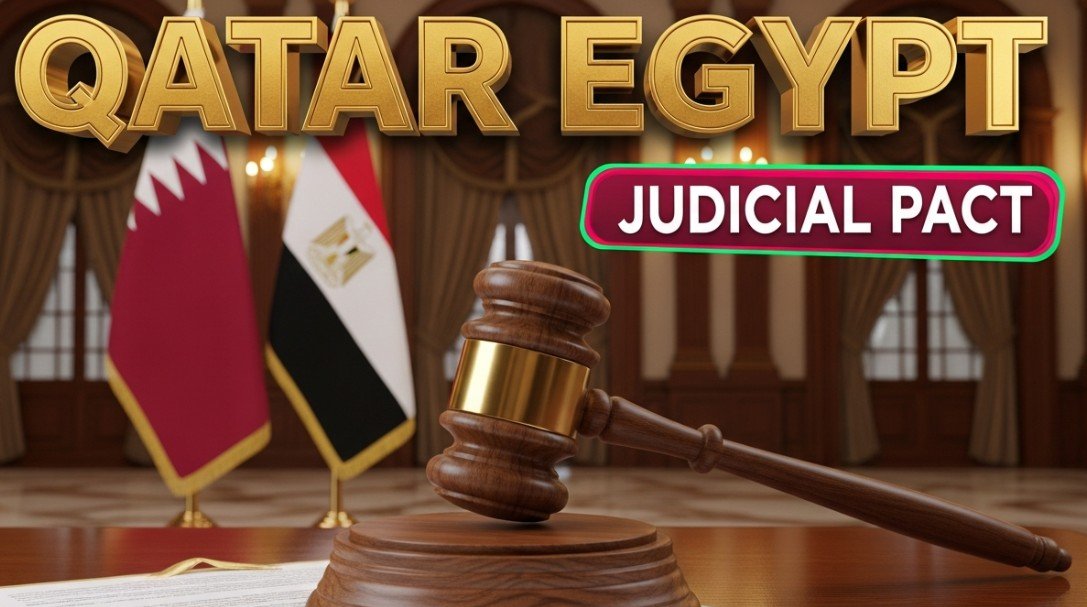
It removes bureaucratic hurdles that often delay justice.
Ambassador of Qatar to Egypt Sheikh Jassim bin Abdulrahman Al Thani also attended the pivotal meeting.
His presence underscores the diplomatic weight Doha places on this relationship.
Key Pillars of the Agreement
Experts suggest the agreement likely covers several critical areas of modern law enforcement.
- Evidence Sharing: Rapid exchange of documents and digital footprint data.
- Witness Testimony: Mechanisms to hear witnesses across borders via video link.
- Asset Recovery: Legal pathways to track and freeze proceeds of crime.
- Extradition Logistics: Clearer protocols for handing over wanted fugitives.
A Diplomatic Renaissance
This judicial agreement is the latest fruit of a blossoming friendship.
Relations between Cairo and Doha have improved dramatically since 2021.
The Al-Ula declaration ended years of diplomatic tension.
Since then, the two nations have moved from rivalry to strategic partnership.
They are now key pillars of stability in a volatile Middle East.
Both countries are currently working closely to mediate the conflict in Gaza.
This shared geopolitical goal has accelerated their bilateral trust.
Trust in the diplomatic room is now translating to trust in the courtroom.
The speed of this reconciliation has surprised many regional analysts.
It shows a pragmatic approach adopted by leadership in both capitals.
Timeline of Thawing Relations
| Year | Key Event | Impact |
|---|---|---|
| 2021 | Al-Ula Declaration | Diplomatic relations restored. |
| 2022 | World Cup Visit | Egyptian President attends opening in Doha. |
| 2023 | Investment Deals | Qatar pledges billions to Egypt’s economy. |
| 2025 | Judicial Pact | Deepening legal and security integration. |
Why This Matters Now
Criminals today do not respect national borders.
Financial crimes and cyber threats move at the speed of light.
Old legal treaties were too slow to catch modern offenders.
This new pact modernizes the toolset available to prosecutors in both nations.
It prevents criminals from using one country as a safe haven from the other.
This is particularly vital for financial crimes and money laundering cases.
Dr. Al Nuaimi and Counselor Fangari exchanged views on several common interests.
They discussed specific ways to tighten the net around organized crime groups.
The meeting went beyond just the signing ceremony.
It served as a strategy session for future legal collaboration.
The Security Context
Security experts believe this pact will deter potential offenders.
Knowing that Doha and Cairo are sharing data creates a psychological barrier for criminals.
It closes the loopholes that often exist between different legal systems.
This proactive stance is necessary for regional security.
Economic and Regional Impact
Legal cooperation often paves the way for economic prosperity.
Investors crave stability and the rule of law.
When two nations align their legal frameworks, business confidence skyrockets.
Qatar is a major investor in the Egyptian economy.
Providing a clear legal structure helps protect these massive investments.
It assures Qatari businesses that their assets in Egypt are legally secure.
Conversely, it helps Egypt attract more foreign direct investment from the Gulf.
The economic ripple effects of this judicial pact could be substantial.
It reduces the risk premium associated with cross border business.
Expected Outcomes
- Faster Trials: Delays caused by international requests will decrease.
- Higher Conviction Rates: Better access to evidence leads to stronger cases.
- Deterrence: Criminals will fear the combined reach of both states.
This agreement sets a precedent for other Arab nations to follow.
It demonstrates that sovereignty and cooperation can coexist perfectly.
The Middle East needs more of this integrative legal architecture.
Qatar and Egypt are leading the charge toward a more unified Arab legal front.
This signing is a victory for justice and a defeat for lawlessness.
It cements a bond that goes deeper than just politics.
It is now a bond of law, order, and mutual protection.
Security and justice are the bedrock of any thriving bilateral relationship.
As these two nations grow closer, the entire region benefits from their stability.
The world will be watching how this pact is implemented in the coming months.
Early signs suggest it will be a game changer for regional law enforcement.
Both nations have shown they are ready to walk the walk.
Justice has a new, stronger address in the Middle East today.
This is a clear message that crime will find no shelter in Doha or Cairo.
The deal is signed, sealed, and ready to be delivered.
We are witnessing a new chapter of Arab unity written in the language of law.
It is a hopeful sign for the future of the region.
The focus now shifts to the implementation phase.
Legal teams on both sides will begin the hard work of operationalizing the pact.
But the political will is undeniably strong.
And in international relations, political will is half the battle.
The other half is the legal framework they just established.